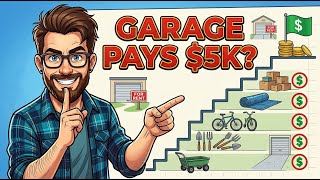
A Reddit user recently revealed he earns $4,000–$5,000 per month renting his unused garage space and driveway to 34 different renters through a platform called Neighbor.com — without buying a single piece of inventory or hiring any staff. That discovery captures exactly why rental businesses represent one of the highest-leverage low-capital business ideas in 2026: the asset does the work, not the operator.
Key Takeaways
- Six rental businesses can each be started this weekend for under $1,000
- Underused space — driveways, garage bays, and spare shelves — converts directly into recurring monthly cash flow
- The best rental models scale by adding identical units, not by adding labor hours
- Deposits, written agreements, and access cameras are required operating infrastructure, not optional upgrades
- Real operators are generating $200 to $5,000+ per month from single-category rental operations
- The "No Insurance Reset" — skipping deposits and documentation on the first rental — is the most common failure mode for new operators
Why Rental Businesses Outperform Service Side Hustles
Most side income strategies rely on service work: delivery shifts, rideshare driving, freelance projects. Every dollar earned requires an equivalent investment of time. Rental businesses operate under a fundamentally different logic. You acquire or list an asset once, and tenants pay repeatedly to use it. As Josh Kaufman explains in The Personal MBA, the underlying framework reduces to three principles: improve the asset, reduce the risk, and never sell your time.
Applied to physical assets — a garage bay, a bicycle fleet, or a shipping container — that framework means a single acquisition decision can generate income for months or years without ongoing labor. The six rental models below are ranked from easiest entry point to highest revenue ceiling. Each satisfies three filters: the asset is already owned or available for under $1,000; income scales by adding identical physical units rather than additional labor hours; and risk can be controlled through deposits, documentation, and basic insurance. For a broader look at low-capital business models, see 6 Boring Businesses That Make Money (Under $500 to Start).
The 6 Rental Businesses Ranked by Entry Point
1. Peer-to-Peer Storage (Neighbor.com)
Peer-to-peer storage is the lowest-barrier entry point in the rental category. Hosts list available space — a garage bay, a driveway, a basement, or a spare room — on Neighbor.com. Renters, typically contractors, seasonal retailers, and small businesses, pay monthly to store equipment or inventory. Neighbor reports that typical hosts earn $100 to $400 per month. A case study on the Neighbor blog features a host named Mark earning $1,393 per month. The Reddit operator referenced in the introduction earns $4,000–$5,000 per month across 34 simultaneous renters.
The startup cost is zero dollars. Neighbor charges a 4.9% processing fee plus $0.30 per reservation. A $35 Wyze Cam mounted in the space adds a basic layer of access documentation. The key positioning insight: target renters who stay. Long-term contractors and seasonal retailers commit to six- to twelve-month agreements. One-off movers typically stay two weeks and leave. Pricing for the long-stay renter converts occasional income into predictable recurring cash flow.
2. Parking Space Rental
Parking space rental applies the same peer-to-peer logic to a single driveway or dedicated spot. A driveway host on a passive income forum recently reported clearing $160 per month from one driveway over eight months of consistent listings. Typical earnings range from $100 to $400 per month per spot, and stacking multiple spots scales the income proportionally.
The startup floor remains zero dollars if a suitable space is already owned. The critical variable is location over quality. A mediocre driveway adjacent to a hospital, college campus, sports stadium, or concert venue consistently out-earns a pristine suburban driveway. A written agreement covering operating hours, exact parking boundaries, and tow policy eliminates roughly 90% of disputes before they arise.
3. Bicycle and Electric Bike Rental
Don DiCostanzo and Terry Sherry founded Pedego Electric Bikes in Fountain Valley, California in 2008. Don personally invested $300,000 from his own savings. Their positioning insight: while most electric bikes targeted young athletic riders, Pedego built a comfort-first, beach cruiser-style electric bike designed for older riders — the demographic with actual purchasing power. The first dealers ran rental and tour operations alongside retail. Customers would rent a Pedego on vacation, fall in love with it, and purchase one from a dealer near home. By 2012 the company was profitable. Today Pedego generates $15 million per year in revenue with close to 60 branded stores and dealers in 20 countries.
A small operator does not need a $300,000 investment to apply the same rental-first wedge. A Lectric XP 3.0 electric bike costs $999 on sale; a three-bike fleet totals $2,997. One Reddit operator in the bike mechanics community reported $40,000–$50,000 in pure profit from a fleet that cost less than $10,000 to acquire. The scale strategy is business-to-business contracts — hotels, resorts, college campuses, and property managers as recurring clients — with walk-up tourist rentals treated as bonus revenue rather than the revenue base.
4. Photo and Video Drone Rental
Platforms including ShareGrid and Fat Llama connect drone and camera gear owners with videographers, photographers, and marketing professionals who need equipment on a per-project basis. A real ShareGrid operator on a cinematography forum reported earning $50–$100 per pickup a few times per month. Top renters on Fat Llama reportedly earn more than $15,000 per month from a full gear catalog. Typical single-asset operators earn $200–$1,000 per month.
A DJI Mini 4 Pro starts at $759 from the DJI store. Add an extra battery at $99 and the total startup investment is $858 — with everything fitting on a single garage shelf.
The higher-margin positioning is productizing the kit rather than listing a bare drone. A complete "real estate drone kit" — drone, extra batteries, ND filters, SD card, and rugged carry case — commands higher rental rates and attracts more serious recurring clients: real estate photographers, wedding videographers, and small marketing agencies. Note: most platform insurance policies do not cover drones, so a damage deposit collected before every pickup is a non-negotiable requirement.
5. Wedding Decor Rental
Lauren Bercier and Laken Swan, cousins from Lafayette, Louisiana, founded Something Borrowed Blooms in 2015. Their core insight: real wedding flowers are expensive, last one day, and get discarded after the ceremony. Something Borrowed Blooms rents silk wedding flower arrangements that are visually indistinguishable from fresh flowers, last indefinitely, and rent to a new bride every weekend. The same set of bouquets and centerpieces generates revenue 30 times or more before retirement. Today the company serves over 700 weddings per month and has raised $5.1 million in venture capital across two funding rounds. Their average bouquet rental is approximately $800 and total reclaimed value across the company has crossed $100 million.
Entry-level capital is manageable: a starter set of silk arrangements can be built for under $500 from craft store and Amazon sourcing. A Reddit operator in the passive income community confirmed that party rental owners pull a 30% margin off $4,000–$12,000 per month in gross weekly revenue. The scale strategy is themed collections — five collections (rustic, modern, garden, beach, classic), one wedding planner partnership, and one venue partnership — which generates near-zero-marketing repeat bookings for two years or more.
6. Shipping Container Rental
Robert Balderas and Guillermo Lopez started Bob's Containers in Austin, Texas with $15,000 from a 401(k) and business credit cards. Their first paying contract was with the City of Austin to convert six shipping containers into temporary office space. Year one revenue reached $1.5 million. By year five the company was generating $15 million in annual sales — from $15,000 to $15 million in five years.
Entry at the individual operator level starts with one container. A used single-trip shipping container costs approximately $5,500. Park it on rented land or a back lot and list it for monthly rent to a contractor on a local construction site. Real BizBuySell listings show portable storage rental companies with 159 containers generating $122,930 in annual cash flow — approximately $10,000 per month from a single operating yard. The contract model is the leverage point: three-month minimum terms, delivery and pickup fees added on top, and lock upgrades as an upsell. One general contractor account requiring containers across five job sites equals five simultaneous recurring rentals from a single agreement. For a comparison with other capital-deployment options at similar investment thresholds, see 6 Boring Cash-Flow Machines to Buy With $30,000 (No Skills Needed).
The "No Insurance Reset" — Why Setup Matters More Than Asset Selection
The most common failure mode for new rental operators has nothing to do with which asset they choose. It happens in the first rental agreement. An operator lists a garage bay, receives inquiries within days, signs the first renter — and skips the deposit, the written rules, and any documentation. Weeks later, the renter abandons broken equipment in the bay and stops paying. With no deposit on file, no signed damage policy, and no entry photos, the operator has no recourse.
The fix is inexpensive: a refundable damage deposit, a signed one-page agreement covering access rules and damage liability, entry and exit photos, and a $35 Wyze Cam recording every access event. These four controls convert an informal arrangement into a documented, enforceable agreement. Operators who install these controls before the first rental tend to stay in the business. Those who skip them and get burned tend to quit and blame the asset category rather than the missing operating infrastructure.
Three Filters for Evaluating Any Rental Opportunity
Josh Kaufman's framework from The Personal MBA produces three practical filters applicable to any rental business.
- Underused space becomes inventory. The driveway, the garage bay, the spare shelf, the back lot. If an asset is already owned and sitting idle, the income generated is pure conversion of dead weight to monthly cash flow.
- Stackable units, not stackable labor. The best rental models scale by adding an identical physical unit — one more parking spot, one more bike, one more drone kit, one more container. Income grows without adding employees or labor hours.
- Control the risk. Deposits, damage policies, insurance, cameras, and written agreements convert an informal arrangement into predictable recurring income. Documentation is the operating layer that makes the business repeatable.
Watch the Full Video Walkthrough
For a complete visual walkthrough of all six rental businesses — including exact platforms, pricing benchmarks, real operator case studies, and first-month income figures — watch the full breakdown on the HS YouTube channel. The video covers the Neighbor.com host setup, the Pedego Electric Bikes origin story, the Something Borrowed Blooms funding timeline, and the Bob's Containers five-year growth trajectory in detail. Drop a number 1 through 6 in the comments for whichever rental business you would start first — the most-voted option gets a full deep-dive the following week, including how to source the first asset, what deposit and policy paperwork should look like, and real first-month numbers from a real operator.