In 2026, Public Storage paid $10.5 billion to acquire National Storage Affiliates. Blackstone wrote a $2.5 billion check for an HVAC platform. Leonard Green & Partners took Mister Car Wash private for $3.1 billion. These are not tech unicorns or biotech breakthroughs — they are laundromats, storage units, and heating systems. The same twelve industries that look unremarkable on every street corner are being acquired more aggressively than almost any other asset class in the country. And the ladder connecting a $50,000 first-time buyer to a $10 billion institutional deal runs through every single one of them.
Key Takeaways
- Twelve fragmented, recurring-revenue industries form a single acquisition ladder stretching from Main Street to Wall Street.
- Vending routes, laundromats, and self-storage offer verified entry points under $300,000 with documented monthly cash flow.
- Blackstone acquired an HVAC platform at 18.5× EBITDA in 2026; the same business type trades at roughly 2.75× earnings for small buyers.
- More than 70% of HVAC, plumbing, and electrical contractors remain owner-operated — the consolidation wave is still in early innings.
- Small buyers compete by targeting sub-$2 million enterprise-value deals that institutional capital cannot efficiently pursue.
- The proven playbook: acquire at 3–5× earnings, operate for a decade while cash flow compounds, then sell into a roll-up at a higher multiple.
What the Boring Business Billionaire Ladder Actually Is
The term "boring businesses" is not a pejorative — it is a precise investment thesis. These businesses do not trend on social media, do not appear in venture pitch decks, and do not attract angel investors. They fix heating systems, pump septic tanks, wash cars, and service pools. What they attract is private equity, because they consistently exhibit four characteristics that financial buyers will pay a premium to own: boring (which keeps competition low), recurring (which makes revenue predictable), fragmented (which keeps acquisition prices reasonable at the small end), and sticky (which means customers almost never switch).
PitchBook reports that since 2014, more than $31 billion has poured into home services acquisitions alone. LightningPath Partners notes that capital flowing into home services has more than doubled since 2019. The US home services sector generates roughly $650 billion in annual revenue and remains one of the largest, fastest-consolidating sectors in the entire economy. The ladder built on top of it runs from a $90,000 vending route at the bottom to the $10.5 billion Public Storage deal at the top.
The 12 Rungs: Real Deal Numbers at Every Entry Point
Rung 1: Vending Fleets and Micro-Markets
Vending is the most accessible entry on the entire ladder. Operators stock and service snack and beverage machines alongside self-checkout micro-markets in offices, hospitals, and factories. Revenue lands cashless and daily — no invoicing, no collections cycle. At the institutional level, 365 Retail Markets agreed to acquire Cantaloupe, a public vending technology company, for approximately $848 million in an all-cash deal. Sodexo, Compass Group, and Performance Food Group continue buying independent route operators to expand their footprints.
For individual buyers, BizBuySell data shows the median small vending business sells for around $90,000 — median revenue of $72,500 and median owner earnings of $38,000 per year, or roughly $3,175 per month before debt service. Valuations sit at approximately 1.15× revenue or 2.4× owner earnings. The global vending market is projected at $23.9 billion in 2026, growing at approximately 7.4% annually through 2030. The primary operational risk is anchor-location concentration: losing a single hospital or factory account can erode profitability quickly. Experienced operators diversify across at least eight to ten host sites, lock written contract terms, and replace aging machines on a proactive schedule before equipment failures damage location relationships.
Rung 2: Laundromats
The US laundromat industry generates roughly $7.2 billion annually across approximately 17,461 businesses — nearly all family-owned and nearly all sellable. BizBuySell pegs the median sale price at $250,000, with median owner earnings around $76,560. Valuation multiples run between 2.5× and 5× seller's discretionary earnings. For an SBA-financed buyer with around $28,000 down, post-debt cash flow lands near $2,900 per month in year one. Adding a pickup-and-fold delivery service can materially improve those numbers by year two.
The primary due diligence risk is deferred maintenance combined with unrecorded cash income. Sub-metering water consumption before bidding and installing card-reporting systems that log every load are the two moves that separate disciplined buyers from those who overpay for tired equipment. For a detailed breakdown of pricing and red flags, see How to Buy a Laundromat: Real Costs, Returns, and Red Flags.
Rung 3: Self-Storage Facilities
Public Storage's $10.5 billion all-stock acquisition of National Storage Affiliates in 2026 added more than 1,000 properties and 69 million square feet, creating a combined portfolio of nearly 4,600 facilities. The major REITs pay around $200 per square foot for trophy facilities in top metros. Nick Huber's firm, Bolt Storage, acquires rural drive-up row-storage facilities at $40 to $70 per square foot across 68 locations in 11 states — the same product at one-quarter the price.
For a small buyer, a 20,000-square-foot facility in a secondary market typically trades at $800,000 to $1.4 million. A facility generating $100,000 in annual revenue tends to run net operating income of $60,000 to $70,000, or roughly $5,000 per month before debt service. Average cap rates in 2025 sat near 5.7%. The discipline that separates sound deals from bad ones is consistent: buy on trailing twelve-month actuals, never on seller projections, and confirm local market absorption before committing.
Rungs 4–6: Pool Service, Pest Control, and Mosquito Control
Pool service routes offer recurring revenue, route density, and high customer retention — a combination private equity consistently pays up for. SPS PoolCare has consolidated more than 80 pool brands since 2021 and, through the 2026 acquisition of Pool Troopers, became the largest pool service company in the United States. Small-end multiples sit at 3–4× EBITDA; larger residential platforms trade at 6–8×. Well-run routes can reach 25% EBITDA margins.
Pest control consolidation operates at a larger scale. Rollins — parent of Orkin — completed 44 acquisitions in 2024 and another 26 in 2025. EQT-backed Anticimex executed more than 240 add-ons globally before selling at a value of approximately $7.2 billion. Rentokil acquired Terminix for around $6.7 billion. Pest companies with strong recurring-contract books transact at 6–10× EBITDA in 2026, and the US pest control market sits near $29.7 billion. Mosquito control follows the same recurring-revenue logic at a seasonal, franchise-territory scale. Neighborly — owned by private equity firm Harvest Partners — acquired Mosquito Joe in 2018, adding approximately 288 territories in one transaction. The global mosquito control market is estimated at $7.24 billion in 2026 and is projected to reach $10.7 billion by 2033.
Rung 7: Car Wash Chains
The modern express car wash is a subscription business, not a transactional one. Mister Car Wash operates more than 470 locations and carries roughly 2.3 to 2.5 million Unlimited Wash Club members — predictable recurring revenue that compounds with every location added. In 2026, Leonard Green & Partners agreed to take Mister Car Wash private at approximately $3.1 billion, paying $7 per share in cash for the shares they did not already own. Smaller car wash operations still trade at 3–4.3× EBITDA. The US car wash market is approximately $1.4 billion today and is forecast to reach $2.1 billion by 2033.
Rung 8: HVAC Service Companies
HVAC is where the gap between small-buyer and institutional pricing becomes most striking. In 2026, Blackstone agreed to acquire Champions Group Holdings — a residential HVAC, plumbing, and electrical platform — at approximately $2.5 billion, at roughly 18.5× EBITDA on approximately $140 million in EBITDA. That multiple is normally reserved for software companies. HVAC earned it through recurring maintenance plans, non-discretionary emergency repair demand, license-protected barriers to entry, and bundling potential with adjacent trades. The Wall Street Journal reported that since 2022, private equity firms have purchased nearly 800 HVAC, plumbing, and electrical businesses.
For small buyers, BizBuySell shows median HVAC sale prices of $750,000 to $800,000, median revenue of $1.48 million, and median owner earnings of approximately $304,000 per year — roughly $25,360 per month before financing. The average earnings multiple at the small end sits around 2.75×. The 2026 US HVAC services market is estimated at $18.98 billion and is projected to grow to $25.35 billion by 2031 at approximately 5.9% annually. The most common failure point is technician retention: granting meaningful equity to the top two technicians within the first six months, building a formal apprenticeship pipeline, and funding NATE certification out of pocket are the moves that protect the asset long-term.
Rungs 9–11: Plumbing, Tree Service, and Septic Pumping
Plumbing and electrical businesses are frequently acquired alongside HVAC as part of platform roll-ups. P3 Services, a Stellex Capital portfolio company, acquired six local plumbing and septic businesses across the United States in 2024. Median plumbing sale prices land near $638,730; electrical and mechanical contractors sit closer to $950,000. Earnings multiples run 2.4–4.5×. Private equity penetration stands at approximately 18% in HVAC, 13% in plumbing, and 11% in electrical contracting — meaning more than 70% of the market remains owner-operated and available to independent buyers.
The global tree care market is estimated at $83.36 billion in 2026 and is projected to reach approximately $120 billion by 2035. Davey Tree Expert Company and BrightView Holdings both continue acquiring regional arborist firms, with Davey adding VanCuren Services and Midwest Land Clearing in 2024. Revenue is project-based and seasonally lumpy, but utility and municipal contracts can lock in multi-year work. Septic pumping is the most overlooked rung on the ladder. Georgia Oak Partners built out Septic Blue with add-ons including Advanced Septic in Florida. MFG Partners invested in Chuck's Septic Tank and Drain Cleaning. Liquid Environmental Solutions absorbed FloHawks Plumbing and Septic. Multiples sit at 2–3× EBITDA or roughly 1× revenue, but gross margins of 55–65% on residential pumping tickets averaging $400, combined with mandated pump-out intervals, create reliable recurring demand without significant marketing spend. For more overlooked cash-flow opportunities in this space, see 6 Boring Businesses That Make Money (Under $500 to Start).
Rung 12: Funeral Homes
Service Corporation International operates more than 1,400 funeral homes and 374 cemeteries across North America, with a stated annual acquisition budget of $75–$125 million — a figure they exceeded in 2024, deploying $181 million to acquire individual homes including Glueckert Funeral Home in Illinois and Brown Funeral Home in Kentucky. In early 2026, SCI expanded into Canada with two homes in Fort Erie, Ontario. The 2013 SCI acquisition of Stewart Enterprises closed at approximately 11.9× EBITDA. SCI itself trades near 11.76× today. The US funeral homes market is approximately $23.9 billion — mature, fragmented, almost entirely family-owned, and built on decades of community goodwill that no new entrant can replicate on a short timeline.
The Shared DNA Behind Every Rung
Twelve industries that appear completely different on the surface share four characteristics that explain why the same investment playbook works across all of them. Boring keeps new competition out. Recurring makes cash flow predictable. Fragmented keeps entry prices reasonable at the small end. Sticky keeps customers from switching. That four-word combination is precisely what every private equity firm is hunting for — and it describes every rung on this ladder simultaneously.
Since 2014, more than $31 billion has poured into home services acquisitions alone, with capital inflows more than doubling since 2019. The US home services sector generates roughly $650 billion in annual revenue and remains one of the fastest-consolidating sectors in the economy.
How a Small Buyer Competes Without Competing With Blackstone
Institutional buyers need platforms with $5 million or more in EBITDA, audited financials, regional density, and enterprise-grade operating systems. That is a different sport entirely. Deals below $2 million in enterprise value are too small, too operationally scattered, and too geographically dispersed for private equity to pursue efficiently. Since 2022, PE firms have acquired nearly 800 home services businesses — but those were already mid-market platforms. The 30,000 independent vending operators, the 17,000 laundromats, and the tens of thousands of HVAC shops, septic outfits, and pool routes still on Main Street are structurally outside institutional reach.
The small buyer's playbook is the same trade at a different scale: acquire at 3–5× earnings, operate for a decade while cash flow compounds, and sell into a roll-up at a higher multiple than the original purchase price. Same boring business. Same recurring revenue. Same sticky customers. The starting capital is just smaller — which is precisely why the opportunity remains open.
Watch the Full Breakdown
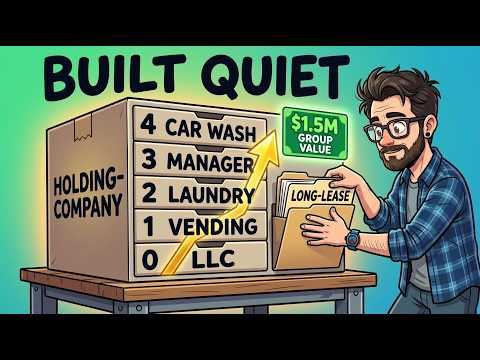
For a visual walkthrough of all twelve rungs — including side-by-side deal numbers from the $90,000 vending route to the $10.5 billion Public Storage acquisition — watch the complete breakdown on the Harry's Stash YouTube channel: 12 BORING Businesses Billionaires Are Quietly Buying in 2026. The video covers EBITDA multiples, monthly cash flow benchmarks, and the honest answer to how a buyer with limited capital competes in a market where Blackstone is writing billion-dollar checks. This content is for educational purposes only and is not financial advice.