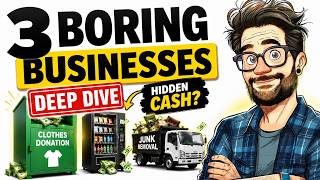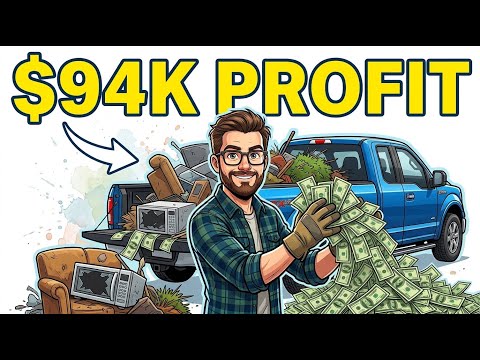
Three businesses are hiding in plain sight right now — in parking lots, laundry rooms, and driveways across North America. Quiet operators are using them to generate anywhere from $1,000 to $94,000 in annual take-home profit. After 90 hours of investigative research across three separate deep dives — 30 hours each — here is what the numbers actually look like for clothing donation bins, vending machines, and junk removal.
Key Takeaways
- Profitable donation bin operators earn 34 cents per pound vs. just 2 cents for poorly-run routes — a gap exposed by a CBS Detroit investigation.
- Vending machine startup costs run $1,500–$10,000 per machine; location quality is the single largest profit variable.
- Walk-in location pitches outperform email outreach by 15x in securing vending machine placements.
- A solo junk removal operator documented $94,000 take-home on $270,000 in gross revenue using one pickup truck.
- The real minimum startup cost for junk removal is $3,500 — not the $10,000 figure pushed by online courses.
- Brian Scudamore turned a $700 used pickup at age 18 into 1-800-GOT-JUNK, a $600 million/year empire.
Why These Three Businesses Stay Hidden
The donation bin in the grocery store parking lot. The vending machine in the apartment lobby. The pickup truck with a junk removal logo. Most people walk past these without a second thought. That invisibility is exactly why they work — there is no viral moment, no social media launch, no waitlist. There is just a route, a machine, or a truck doing the same job every week while the operator collects the margin.
All three share a common structure: low-skill entry, route-based scaling, and cash-first revenue. None require a degree, a patent, or proprietary technology. What they require is research, a willingness to do physical work, and the patience to build volume. If you are already exploring this category, the broader list at 6 Boring Businesses That Make Money (Under $500 to Start) covers lower-capital alternatives with the same cash-flow structure.
Deep Dive #1: Clothing Donation Bins
Those green, blue, and yellow bins in strip mall and grocery store parking lots are not charity collection points — at least, most of them are not. The majority are for-profit operations that collect used textiles, sort them by grade, and sell them by the pound to textile recyclers and secondhand clothing exporters. The unit economics are real, but they are not evenly distributed.
The 34-Cent vs. 2-Cent Gap
A CBS Detroit investigation into the donation bin industry exposed the margin divide: profitable operators earn approximately 34 cents per pound, while operators with poor routing, low volume, or contaminated loads earn closer to 2 cents per pound. That 32-cent spread is the entire business model in a single number. Getting to the high side of that gap requires three things: high-traffic bin placement, consistent collection frequency, and diligent sorting to eliminate dead weight.
Dead weight — wet fabric, non-textile items, mildewed clothing — costs money to dispose of without generating revenue. The Dead Weight Test separates operators who survive their first year from those who do not. Experienced operators refuse loads or locations that consistently produce high dead weight ratios, because each bad load erodes the per-pound average across the entire route.
Donation Bin Startup Costs: Independent vs. Franchise
Independent operators pay between $2,060 and $2,139 per bin, covering the bin itself, initial placement fees, and municipal permits. Franchise operators pay significantly more — $4,275 to $4,775 per bin — in exchange for brand recognition and sometimes pre-negotiated placement agreements. The franchise route reduces startup friction but compresses the per-pound margin and limits the long-term equity in the operation.
The 30-day action plan for new operators focuses on researching local permitting requirements, identifying 5–10 potential high-traffic placement sites, and securing written placement agreements before purchasing any equipment. The permit comes before the bin. For a complete breakdown of how donation bins generate income, including the full operator workflow and permit research process, read: I Researched Donation Bins For 30 Hours — Here's How They Actually Make Money.
Deep Dive #2: The Vending Machine Business
The vending machine business has been aggressively over-hyped on short-form video, with creators posting gross revenue screenshots from premium locations while burying the math on bad ones. The TikTok Hype Gap — the difference between what gets posted and what operators actually earn — is the single biggest risk for new entrants who have not done the research before buying a machine.
Per-Machine Profit Across Location Tiers
Startup costs run from $1,500 for a used machine to $10,000 for a new smart-reader unit with remote inventory monitoring. The machine cost is not the variable that matters most. Location is. Profitability breaks across four tiers:
- Bad location: Low foot traffic, weak placement — often losing money after product cost and location commissions
- Average location: Moderate traffic, predictable restocking cycle — thin but positive margins
- Good location: High foot traffic with a captive audience (offices, gyms, building lobbies) — solid per-machine returns
- Great location: Captive audience, limited food alternatives, high daily dwell time — the vending machine sweet spot
Location commissions to property owners typically run 10–25% of gross revenue. Subtract that, plus product cost and restocking time, before building any income projection. Gross revenue screenshots without those deductions are not profit — they are marketing.
The Walk-In Pitch That Beats Email 15x
Email outreach to secure vending placements has a conversion rate that is functionally near zero for most new operators. Walk-in pitches — arriving in person with a one-page proposal, a machine photo, and a clear value statement — outperform email by 15 times in documented operator data. Business owners and property managers respond to visible commitment. Someone who walks in has already passed the first filter that most cold outreach never clears.
The property management trick targets apartment buildings specifically. Building managers control common area decisions and have a direct incentive to improve tenant amenities. Framing a vending machine placement as a tenant service upgrade — rather than a revenue pitch — shifts the conversation in a way that email outreach cannot replicate. This single reframe is responsible for unlocking access to apartment building lobbies that route-building operators consider their most valuable placements.
Deep Dive #3: The Junk Removal Business
In 1989, Brian Scudamore spent $700 on a used pickup truck at age 18 and began hauling junk in Vancouver, British Columbia. That single truck became 1-800-GOT-JUNK, which now generates over $600 million per year in system-wide revenue. The business model has not meaningfully changed in 35 years: charge by the truckload, haul to the dump, repeat.
What One Solo Operator Actually Earns
A Reddit AMA from an independent junk removal operator produced one of the most widely referenced real-world income figures in this category:
$94,000 in take-home profit on $270,000 in gross revenue — operated from a single pickup truck with no employees and no commercial premises.
That is a 35% net margin. The operator's key advantages were route density — keeping jobs geographically tight to minimize dead drive time between hauls — and firm pricing that did not chase lowball competitors. The $94K figure is not typical for year one, but it illustrates the ceiling available to a well-run single-operator business without staff or office overhead.
Real Startup Costs vs. the $10,000 Guru Number
Online courses and guru content routinely cite $10,000 as the minimum to start a junk removal business. The real number is closer to $3,500: a used pickup or trailer, basic liability insurance (required before the first job), a dump account at a local transfer station, and simple job management software. The $10,000 figure typically includes franchise fees or equipment upgrades that are unnecessary to run a first job. For a complete cost breakdown and income model, see: How to Start a Junk Removal Business: Real Costs, Margins & Income.
The 5 Failure Modes That End Junk Careers
Junk removal has a predictable set of failure modes that eliminates a significant share of new operators within their first year:
- Back injuries: The leading cause of operator exit — improper lifting technique on heavy or awkward loads
- Hoarder homes: Extreme-volume jobs with potential biohazard conditions that require disposal expertise most operators lack
- Dump fees: Transfer station surcharges on tires, appliances, and mattresses collapse margins on jobs priced without accounting for them
- Lowballers: Local competitors pricing below cost force a race to the bottom that operators running real margins cannot survive
- Hot tubs: The item most commonly cited in operator cautionary stories — heavy, awkward, and expensive to dispose of legally
The 30-day cold-start plan begins with securing liability insurance, creating a Thumbtack or Facebook Marketplace listing with clear load-based pricing, and opening a dump account at the nearest transfer station. The first job can be booked before a truck is even purchased.
Which Business Fits Your Starting Position?
All three businesses share the same fundamental structure: low barrier to entry, route-based operations that compound as you add capacity, and cash-first revenue models. The right fit depends on your capital and what you already own.
- $2,000–$5,000 and access to parking lot space: Donation bins offer the most passive income structure once routes are established and permits are secured.
- $1,500–$3,000 and willingness to pitch in person: Vending machines reward location persistence and scale predictably as you add machines.
- A pickup truck and capacity for physical work: Junk removal has the lowest skill floor and the fastest path from zero to a first paid job.
Watch the Full 90-Hour Research Breakdown
The numbers above cover the core framework for each business. The full video goes deeper — with chapter-by-chapter deep dives, real operator interview segments, the exact walk-in pitch script for vending machine placements, the Dead Weight Test breakdown for donation bins, and the complete 30-day action plans for all three businesses. Watch 3 BORING Cash Machines I Researched For 90 Hours on YouTube for the full visual walkthrough. Each chapter is self-contained, so you can jump directly to the cash machine that fits your situation.