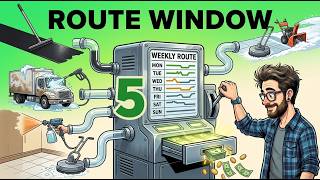
Five outdoor service businesses sit within reach of any operator who owns a pickup truck and can read a weather forecast. None require a college degree, venture capital, or a commercial office address. Each one starts for under five thousand dollars in equipment, and the entry-level option breaks even after roughly twenty-five hours of billed work. The difference between operators who earn three thousand dollars a month and those who earn ten thousand is not effort volume — it is a single routing framework called the Recurring Route Window.
Key Takeaways
- All five outdoor businesses start for under $5,000 in gear; driveway sealing breaks even after just 25 hours of work.
- A Reddit operator scaled a solo painting business from one sprayer and one ladder to $920,000 in annual revenue over three years.
- Fleet washing solo operators have documented $150,000–$180,000 annual income on a one-person model.
- Tile and grout cleaning generates $375–$750 per kitchen in under two hours — the highest effective hourly rate on this list.
- The Recurring Route Window is built on three filters: route density, pre-season contracts, and insurance positioned as a competitive moat.
- Signing pre-season contracts during the off-season is the clearest separator between amateur and professional route operators.
What Is the Recurring Route Window?
Before examining each business, it helps to understand the mechanism connecting all five. The Recurring Route Window is a routing framework built on three measurable filters: tight geographic clustering of jobs, contracts signed before the busy season begins, and a verified general liability insurance certificate used as a competitive advantage rather than a reluctant expense. Operators who ignore these filters spend their season chasing scattered one-off jobs. Operators who stack all three build predictable monthly income on a pre-booked calendar.
The underlying acquisition approach draws from Eric Ries's minimum viable demo concept in The Lean Startup: build the smallest possible proof that earns the next paying customer. A free ten-square-foot tile cleaning demo. A sealed driveway for the corner-house neighbor. A painted fence section left at a property manager's door. Each one closes a first paying account the same day it runs — no website or pitch deck required.
1. Driveway Sealing and Repair
Driveway sealing carries the lowest barrier to entry of any business on this list. Asphalt Kingdom's 2026 startup data pegs basic supply costs at $3,206 total. Average hourly revenue lands at $125 per working hour, and the break-even point arrives after just 25 hours of billed work — roughly one working weekend. After that, every job flows directly to profit.
A Reddit r/sweatystartup operator documented running five to eight driveways daily, generating $2,000–$4,000 in daily gross sales at 60-percent margins. A 60-percent margin on a one-weekend break-even is a combination that is genuinely difficult to find in any startup category.
For a broader look at low-cost service business models with strong margins, the six boring businesses that make money under $500 to start covers several complementary options worth considering alongside this list.
First Customer Playbook
The fastest path to a first paying driveway job is a targeted subdivision door knock. Drive one neighborhood after work, identify three driveways with visible cracks and faded color, and leave a door hanger at each address. The higher-leverage move — the one most beginners overlook — is asking the HOA property manager for a whole-subdivision quote in a single conversation. Twenty driveways scheduled over one weekend within tight geographic clustering puts the Recurring Route Window into full effect. Drive time between jobs drops to minutes; hourly revenue rises accordingly.
The July Sealcoat Mistake to Avoid
The most common early failure is sealing asphalt during a 90-degree afternoon. Heat above 90°F prevents proper curing, leaving tire marks in the fresh coat and generating callbacks within 48 hours. The fix costs nothing to implement: check the 48-hour weather forecast before every job, never seal above 90°F, and never seal with rain forecast within 24 hours. That single rule eliminates the most common service complaint new operators face.
2. Fleet Vehicle Power Washing
Fleet washing requires more upfront gear than driveway sealing but compensates with weekly recurring accounts concentrated at a single commercial address. Startup costs run $1,850–$5,700 and include a pressure washer, a water tank, and an EPA-compliant containment berm — the most frequently overlooked piece of equipment on the list, and the most consequential for landing commercial contracts.
A Reddit r/pressurewashing operator launched in 2020 after eight years in the oil field and reached 400 trucks per week by 2024 at $45–$150 per truck, posting 100-percent year-over-year growth. Southeast Softwash documents solo annual revenues of $150,000–$180,000 on the same one-person model.
Landing Your First Fleet Account
Cold-walking industrial parks before 6 a.m. opens direct access to fleet managers at construction yards, food truck commissaries, and plumbing supply lots before the day's activity begins. The pitch is brief: on-site washing with no driver downtime and EPA-compliant containment, offered as a weekly contract on ten trucks. A $300 containment berm — frequently skipped to cut startup costs — is exactly what separates operators who land commercial accounts from those who cannot. Most cities fine operators whose wastewater reaches a storm drain unfiltered. Showing up with the berm, the insurance certificate, and the EPA paperwork eliminates roughly 90 percent of weekend competitors before the conversation ends.
3. House Painting
The residential and light commercial painting market exceeded $40 billion in annual revenue in 2025, according to IBISWorld. Startup costs run $1,450–$4,500 for a sprayer, ladders, brushes, and drop cloths. Clients typically supply their own paint, which removes the largest working-capital burden from day one of operations.
A Reddit r/sweatystartup operator scaled a solo painting business — started at age 26 with one sprayer and one ladder — to $920,000 in annual revenue over three years with nine employees. Community consensus holds that a solo operator clears $50,000 or more annually before hiring the first helper.
For a comparable single-person service-route trajectory, the breakdown of how a $500 mobile auto detailing kit scales to $88,000 in year one illustrates the same pattern of geographic concentration driving revenue growth in outdoor service businesses.
The Property Manager Pitch
Cold-emailing property management firms with the subject line unit turnover repaints with 48-hour turnaround targets the specific pain point dominating property managers' calendars: vacant units losing rent daily. A painter who starts Friday afternoon and hands back lease-ready keys Monday morning commands a consistent price premium. The standard protection protocol — photographing the entire property before spraying and laying a ten-foot drop cloth radius around every spray zone — eliminates nearly all overspray disputes before they escalate into formal claims.
4. Tile and Grout Cleaning
Tile and grout cleaning generates the highest effective hourly rate on this list and remains largely unknown as a standalone route business — which is precisely why margins stay strong for early entrants. Startup costs run $1,800–$5,800 for a hot water extractor, a rotary spinner tool, and pH-neutral chemicals. A Reddit r/CleaningProfessionals operator posted in September 2025 that a 500-square-foot kitchen yields $375–$750 in under two hours of labor. At the upper end of that range, the effective hourly rate exceeds $375 — a figure most professional service categories never reach.
The Restaurant Demo Close
The most effective acquisition method for tile cleaning requires no formal sales presentation. Visit restaurants in the quiet window between lunch and dinner service, ask for the manager directly, and offer a free demo on a ten-square-foot section of the dirtiest kitchen floor grout on the premises. The visual contrast between the cleaned strip and the surrounding floor closes the deal without further explanation. Restaurants book monthly recurring service because commercial kitchen grease accumulates on an unbroken schedule — the Recurring Route Window running on a self-renewing calendar with no additional sales effort required after the first booking.
One technical rule prevents the most common callback: wait 24 hours after cleaning before applying any grout sealer, and confirm dryness with a moisture meter. A moisture meter costs $40 at any hardware store and eliminates callback risk for the operational life of the business.
5. Snow Removal
Snow removal is currently out of season, which makes the present window exactly the right time to act on it. Upper Inc's 2026 snow removal industry guide documents $50,000 or more per truck per winter season for solo operators with optimized routes and pre-season contracts in place.
Startup costs split into two paths. The plow truck route runs $15,200–$43,800. The budget snow blower path runs $2,500–$5,000 and is accessible without additional financing for most operators. The first customer playbook mirrors every other business on this list: door-knock commercial plazas and medical offices in October, pitch a flat monthly retainer from November through March with a two-hour post-snowfall response guarantee, and carry a certificate of general liability insurance to every meeting. Medical offices cannot operate with icy parking lots and will sign on the spot when presented with documented coverage. A $2,000 reserve fund and a mutual coverage agreement with another local operator resolves the January truck-breakdown scenario without losing a single contract.
The Three Filters Inside the Recurring Route Window
All five businesses run on the same underlying mechanism. Understanding the three filters that power it is what separates operators who end the year at $30,000 from those who end it at $150,000.
Filter one: route density per square mile. More paying jobs within one square mile means less drive time between stops and a higher effective hourly rate across the working day. A single HOA quote covering twenty driveways over one weekend earns more per hour than twenty scattered driveways across a metro area. Drive time is the silent drain on every small route operator's income — filtering for density first makes the rest of the math work.
Filter two: pre-season contracts. Beginners chase work in season when every competitor is also marketing. Professional operators quote spring sealcoat work in February, summer painting in March, and snow removal in October — signing contracts before competitors begin advertising. Pre-booked work converts income from unpredictable to calendar-scheduled, which makes every subsequent equipment and reinvestment decision straightforward.
Filter three: insurance as a marketing moat. General liability coverage for a solo outdoor operator runs $600–$1,200 per year. When a property manager requests a certificate of insurance — which commercial accounts always do — roughly 90 percent of weekend competitors cannot produce one. The insured operator gains immediate pricing leverage: typically 10–20 percent above the uninsured competitor, because the client's risk transfers entirely to the policy. A certificate of insurance is a commercial account closing tool, not an operating expense.
Stack all three filters together and the business stops trading hours for dollars. It trades routes for dollars — a fundamentally different income model that scales without requiring proportional increases in hours worked.
Watch the Full Video Breakdown
The YouTube companion to this article — The Most Profitable Boring Outdoor Routes Almost Nobody Starts — covers the detailed startup math for each route, the exact sealcoat crew invoice moment that shifted the perspective from employee to operator, and a live look at how each minimum viable demo closes a first paying customer the same day. Watch the full breakdown at