- Key Takeaways
- What Is a Cottage Food Business?
- The Repeat-Order Kitchen: The System That Separates Income from Hobby
- Business 1: Home Bakery Business
- Business 2: Personal Chef Business
- Business 3: Home Catering
- Business 4: Microgreens Farming Business
- Business 5: Gourmet Mushroom Farming (The Highest-Margin Option)
- How One Person Built $30,000 in Year-One Side Income
- Three Filters to Choose the Right Business
- Watch the Full Video Walkthrough
Most people believe selling food requires a restaurant, a signed lease, and tens of thousands of dollars in commercial kitchen build-out costs. That belief has stopped more potential food entrepreneurs from ever starting than any regulation ever has. The reality is far more accessible: a legal framework called the cottage food business allows ordinary people to produce and sell food legally from a home kitchen — and in some cases, from a single spare shelf in a spare room.
This guide covers five legitimate home food businesses, each with real startup costs, verified income ranges, and the exact license required to operate legally. No storefront. No culinary degree. In most U.S. states, a food-handler card and a one-page health-unit notification is enough to start selling within two weeks. For more low-capital business models that generate recurring cash flow, see the breakdown of 6 boring businesses that make money under $500 to start.
Key Takeaways
- A cottage food business license is typically a health-unit notification costing $0–$50, not a years-long permitting process
- A home bakery business can net $1,600–$2,400 per month after ingredients once repeat orders are established
- A personal chef business operates at close to 90% margin by cooking in the client's kitchen with groceries the client pays for
- One corporate catering account with 25 employees can generate $5,400 per month in recurring revenue
- Microgreens have the fastest cash cycle of any home food business — seed on Monday, deliver an invoice within 14 days
- Gourmet mushroom farming produces the highest net margins of all five options, clearing $3,500–$6,000 per month at modest two-room scale
What Is a Cottage Food Business?
A cottage food law creates a legal pathway for individuals to produce and sell certain food products made in a home kitchen without the full licensing requirements applied to commercial restaurants. Covered products vary by state but typically include shelf-stable, low-risk items such as baked goods, jams, dried herbs, and in many states, fresh produce sold direct to restaurants or consumers.
Most U.S. states allow cottage food businesses to sell $50,000–$75,000 per year under these laws, with several states already pushing annual caps past $100,000. The barrier to entry is intentionally low: notify your local health unit, obtain a food-handler card, and you can be legally operating within one to two weeks. The paperwork that discourages casual competitors is exactly the same paperwork that protects serious operators who actually complete it.
The Repeat-Order Kitchen: The System That Separates Income from Hobby
Before examining each business individually, there is one principle that applies to all five: every first sale should be structured to convert into an automatic recurring order. This is what separates a real food income from an expensive hobby.
A single dozen cookies sold once earns roughly $9 in profit. That same customer on a weekly bake box subscription generates $2,704 per year — and over $1,000 in annual profit at a 40% margin — from a single household.
The math changes entirely when operators stop chasing new customers and start building standing orders from existing ones. Michael Gerber explored this failure mode in The E-Myth Revisited: most small food operators work as technicians, executing every task by hand indefinitely, rather than building a system that repeats without them. Every business on this list is most valuable when evaluated through that lens.
Business 1: Home Bakery Business
The home bakery is the most accessible entry point on this list. Operators profiled by UpFlip and Starter Story report $2,000–$5,000 per month from a home bakery once repeat orders are established. A realistic take-home figure at scale — typically months six through twelve — runs $1,600–$2,400 per month after ingredient costs.
The subscription structure is the engine. A customer who buys a $22 dozen of cookies once becomes a $52-per-week subscriber when offered a bake box with a free fifth week included. That one household is worth $2,704 per year in revenue. Fifteen standing customers at that level produces a meaningful side income without a single new sales call each week. A single post on Nextdoor announcing small-batch weekly bake boxes typically generates five to fifteen replies within two days at no cost.
Startup Requirements
- License: Health-unit notification for low-risk baked goods (breads, cookies, muffins, brownies) — $0–$50, clears in one to two weeks
- Certification: ServSafe food-handler card — $45–$75, completed online in an afternoon
- Startup capital: $250–$700 total, covering the license, ingredients, packaging, and a market table
Business 2: Personal Chef Business
The personal chef business is lighter than the home bakery from a capital standpoint, because the operator barely purchases anything. A personal chef cooks in the client's kitchen, using groceries the client pays for, on top of a weekly service fee. One steady client paying $350 per week generates $18,200 per year from a single household. Operators interviewed by Starter Story commonly report $3,000–$8,000 per month at solo scale.
Because clients supply the groceries, profit margins sit near 90%, and the operator's own cash outlay is minimal. Four steady weekly clients alone can approach $60,000 per year — serving four busy dual-income households out of the thousands in any city who would gladly hand off Sunday meal prep.
The most common pricing mistake is discounting rates to win initial reviews. Charging full rate from day one and bundling grocery sourcing as a paid add-on lifts effective hourly income by approximately 25% without adding a single hour of work.
Startup Requirements
- Certification: ServSafe food-handler card — $45–$75
- Insurance: Small liability policy — $400–$700 per year, funded after the first booking
- First client: Post on Nextdoor offering one free trial meal-prep session in exchange for a review; first paid booking typically comes within two to three weeks
Business 3: Home Catering
Catering offers the largest single-account paydays of the five, which is also why it carries the most complexity. A corporate office-lunch account with 25 employees ordering three days per week at $18 per head generates $1,350 per week — or $5,400 per month from a single client who simply needed their lunch problem solved. After food, commissary, and insurance costs, a solo operator at this stage nets roughly $2,000–$3,500 per month.
UpFlip profiled a caterer who grew from a $500 home setup to $120,000 per year within three years. The engine was not one-off events like weddings but corporate recurring contracts — the same repeat-order principle applied at a larger account size.
For hot-food catering, most jurisdictions require prep in a licensed commercial kitchen rather than a home oven. In practice, this means renting a commissary kitchen by the hour at $15–$25 per hour, or a few hundred dollars per month. On days without events, overhead drops to zero.
Startup Requirements
- Certification: ServSafe Manager certificate
- License: Food-premises permit, $100–$400 per year; processing takes six to ten weeks
- Bridge strategy: Operate the first event under a temporary event permit, which clears in one week, while the full license processes
- First account: Walk one small-business strip with a sample tray and a one-page menu; target offices with 10–30 employees
Business 4: Microgreens Farming Business
Microgreens shift the model from cooking to growing — quietly, on a shelf in a spare room. One restaurant account buying ten trays per week at $30 per tray generates $300 per week, or $15,600 per year. At the low input costs involved, operators keep approximately $11,700 of that annually from a single account. A small spare-room setup producing 30 trays harvested three times per month at $30 each brings in roughly $2,700 per month.
Growers profiled by Starter Story and the On The Grow community regularly report $3,000–$10,000 per month at home-basement scale. One operator reached $8,000 per month within 14 months starting from approximately $500.
Peas, sunflower, and radish microgreens are ready to harvest in 7–14 days. Seed on a Monday and deliver your first invoice in under two weeks — the fastest cash cycle of any food business on this list.
The critical beginner mistake is growing more than can be sold, which results in product rotting in week two. The correct move is to lock in standing orders from at least two restaurants before planting week one. Walk into five local restaurants between 2 and 4 p.m. with a sample bag and a one-page price list. The entire first harvest should be spoken for before a single seed goes into a tray.
Startup Requirements
- Equipment: Trays, seed, grow rack, shop lights, and a fan — $360–$765
- License: Raw produce sold direct to chefs is generally exempt from food-premises licensing; a food-handler card satisfies most restaurant buyers
- Training: Weekend course through Cornell Small Farms or Epic Gardening — $0–$150
Business 5: Gourmet Mushroom Farming (The Highest-Margin Option)
Gourmet mushroom farming is the quiet best-in-class business on this list, producing the highest net margins from the smallest physical footprint. Oyster mushrooms and lion's mane grow on shelves in a spare bedroom or garage, on substrate made from straw and agricultural waste. One restaurant account buying five pounds of oyster mushrooms per week at $12 per pound generates approximately $260 per week. Because spawn and straw are inexpensive, operators keep 70–75% of that revenue.
Ten standing restaurant accounts produce north of $23,000 per year in net profit from a basement or garage. Scale to 200 fruiting blocks across a spare bedroom and a garage, and operators report $5,000–$8,000 per month in sales, with $3,500–$6,000 landing as profit. Chefs increasingly want a reliable same-week local grower rather than commodity mushrooms shipped from out of state, and specialty varieties like oyster and lion's mane consistently command premium prices.
The proof at scale comes from documented cases. North Spore, founded by Eric Milligan and Matt McInnis in Portland, Maine, started as two people growing gourmet mushrooms in a small space before becoming one of the largest specialty suppliers in the country. GroCycle, built by Eric Jong and Adam Sayner in Devon, England, grew mushrooms on coffee waste using a deliberately low-tech method and publicly cites $2,000–$5,000 per month as an achievable target for solo home growers.
Nearly every beginner loses early batches to green mold contamination. The solution is to start with pasteurized straw rather than sterilized grain — straw is far more forgiving of imperfect technique. Work in batches of five to ten blocks until contamination rates drop below 10%, then scale. Not a day before.
Startup Requirements
- Equipment: Spawn, straw, humidity tent, and a hygrometer — $565–$1,055
- License: Same produce exemption as microgreens; food-handler card required for restaurant accounts
- Training: GroCycle beginner course — $300–$500
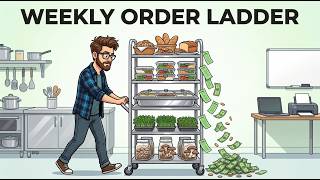
How One Person Built $30,000 in Year-One Side Income
Harry is a school vice-principal earning $92,000 per year with a $2,400 monthly mortgage and a budget tighter than his salary suggests. He had Saturday mornings and a three-month summer break and wanted a side business built around both. He did not attempt all five businesses at once. He laddered.
- Month 1: Food-handler course ($75) + health-unit notification + municipal license ($120) + first 30 microgreens trays seeded in a spare bedroom
- Month 2 (spring break): Cold-walked two restaurants with sample trays; invoiced approximately $300
- Month 4: Three restaurant accounts on weekly standing orders, approximately $1,000 per month
- Months 5–6: Added eight mushroom blocks; began selling oysters to the same chef accounts
- Summer (months 6–8): Scaled to 80 trays and 40 blocks; cleared $3,500–$4,500 per month — enough to cover the full mortgage
- Month 12: Four restaurant accounts plus a farmers market stall; grossing $3,500–$5,000 per month, netting approximately $2,943 after costs
The full-year total came to roughly $30,000 in additional income. The entire operation ran on Tuesday and Thursday mornings and a Saturday routine. Once the standing orders were in place, the income continued without a single new sales call. The same recurring-client model that drives home catering success applies equally well here — as explored in the breakdown of mobile auto detailing and how a $500 kit builds an $88K recurring route.
Three Filters to Choose the Right Business
The Credential Filter: If getting legal takes longer than a few weeks and costs more than a few hundred dollars, the business is hiding complexity you do not want at the start. Pick the option where the license is a notification, not a six-month application.
The Rebuy Filter: If the ideal customer has no natural reason to buy again on a schedule, you have built a hobby, not a business. Only build around products that solve a recurring problem — weekly meals, weekly produce, a weekly snack or bake box.
The Footprint Filter: If the business cannot physically fit inside your current home, spare room, or garage, it has already left the home-business tier. Start where your existing space is sufficient, and upgrade only after recurring revenue is real and proven.
Watch the Full Video Walkthrough
This article covers the framework and income numbers, but the video walks through each business with real operator examples, the income ladder Harry used month by month, and the specific first-customer move for each option. Watch the full breakdown here: 5 Cottage Food Businesses You Can Legally Run From a Home Kitchen.
This article is for educational purposes only and is not financial advice. Cottage food laws vary by state and municipality. Search your state name plus the words "cottage food law" to verify what your home kitchen is already permitted to sell before making any business decisions.