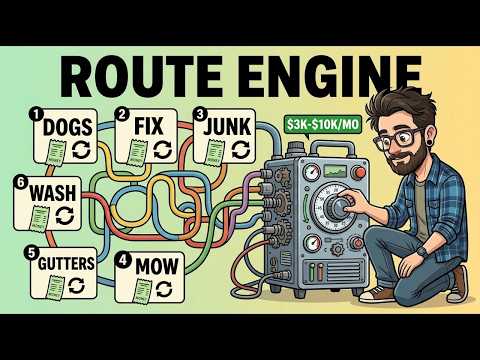
A journeyman plumber and the engineer who hired him work the same job site in the same city. The engineer spent four years earning a degree and takes home $74,000 a year. The plumber never did — and quietly clears $120,000 a year running his own route. The only thing standing between those two paychecks is one piece of paper from the state.
That gap is not a fluke. It repeats across ten trades covered in this breakdown — five that are legally protected by licenses most people will never bother to get, and five backyard trades that a single weekend course is enough to start legally. The credential is the moat. Here is how each one works.
Key Takeaways
- A licensed plumber running his own route can net $120,000/year — $46,000 more than the supervising engineer who hired him.
- Five "license-locked" trades use state paperwork to block casual competitors and preserve high margins.
- Five backyard trades — deck building, fence building, irrigation, tree service, and hardscaping — require only a weekend course or single credential to start legally.
- Hotshot trucking can be licensed for as little as $300 with no CDL required for rigs under 26,000 lbs GVWR.
- A ghost kitchen can launch on a delivery app for $5,000–$22,000 with no storefront required.
- The One Yard Stack turns one homeowner into five separate paying jobs, spring after spring.
What Is the License-Locked Margin?
Every trade on this list shares one structural advantage: a piece of paper — a license, a permit, or a weekend certificate — that the state makes just difficult enough to obtain that most casual competitors never bother. That friction is not a bug. It is the business model. The licensed plumber is not simply better at fixing pipes than the unlicensed handyman down the street. He is legally permitted to pull permits, take on jobs above a certain dollar threshold, and charge accordingly. The barrier is what creates the margin.
This breakdown splits the ten trades into two stacks. Stack one covers five license-locked businesses that require formal credentialing before a single dollar of revenue is legal. Stack two covers five backyard trades where a single weekend course — often under $500 — is the only gate between you and a booked spring schedule. Both stacks operate on the same principle: the credential is the competitive moat.
Stack 1: 5 License-Locked Trades Almost Nobody Can Start
1. Ghost Kitchen ($5,000–$22,000 to Launch)
A ghost kitchen — also called a dark kitchen or virtual restaurant — operates entirely through delivery apps like DoorDash or Uber Eats with no storefront required. The license requirement is a commercial kitchen certification from your local health department, which covers food handling, prep surfaces, and storage. Rent a licensed commissary by the hour, build a delivery-only menu around one concept, and your entire startup cost sits between $5,000 and $22,000 depending on market and equipment. The moat is the commercial food handler certification and health permit — without them, listing on a major delivery platform at scale is not possible.
2. Niche Garage Manufacturing
Manufacturing sounds industrial, but the model here is narrow: identify one winning product — a SKU with documented demand and limited local supply — and produce it from a garage or small workshop. The license requirement varies by product category but typically includes a business license, a sales tax permit, and in many cases a manufacturer's permit from the state. Starting on one product keeps overhead low and margins high until volume justifies expansion. The moat is a combination of the permit and the product knowledge required to build something worth buying consistently.
3. Plumbing Route ($5,000–$15,000/Month Net by Year Two)
A licensed plumbing business is one of the highest-margin skilled trades available. A journeyman or master plumber's license — the specific tier required varies by state — is the gatekeeping credential. Without it, the work is either illegal, uninspectable, or uninsurable. With it, a solo operator on a residential service route can net $5,000 to $15,000 per month by the end of year two. Licensing exams typically cost a few hundred dollars, and apprenticeship programs are available in most states through local union halls or trade schools. Most journeyman licenses require 4,000–8,000 hours of documented work, but the income ceiling justifies the timeline.
A plumber on his own route clears $120,000 a year. The engineer who hired him takes home $74,000. The difference is a state license, not a degree.
4. Hotshot Trucking (License for ~$300, No CDL Required)
Hotshot trucking — hauling time-sensitive freight with a pickup truck and flatbed trailer — is one of the most accessible license-locked businesses on this list. If your rig stays under 26,000 lbs gross vehicle weight rating (GVWR), no commercial driver's license (CDL) is required. The business requires a USDOT number and an MC (Motor Carrier) authority number, which together can be obtained for approximately $300. Add commercial freight insurance and a load board subscription, and you are legally hauling paying freight. The credential barrier is the lowest of any trade in Stack 1, making speed-to-revenue the primary advantage — but the insurance and regulatory compliance requirements still filter out competitors who do not do their homework.
5. Food Truck
A food truck sits between a ghost kitchen and a full restaurant in terms of setup complexity. The license stack includes a mobile food facility permit, a commissary agreement (most cities require food trucks to prepare food in a licensed commercial kitchen), a health department inspection, and a business license. In some cities, a lottery or permit system controls where trucks can legally park and sell. That regulatory friction is the moat — it filters out operators who are not committed. Trucks that clear the permit process consistently out-earn informal competition because they can operate at permitted events, festivals, and business parks where customer density is highest.
Stack 2: 5 Backyard Trades a Weekend Course Turns Into Spring Cash
The second stack trades license complexity for seasonal demand. These five trades book out every spring, and they all serve the same homeowner — which is where the One Yard Stack strategy comes in. Each requires a different credential, but none requires years of formal apprenticeship or a four-year degree. For context on how these compare to other low-barrier income plays, the breakdown of six boring businesses that cost under $500 to start covers the credential-free end of the spectrum.
6. Deck Building
Deck building is one of the highest-ticket backyard trades available without a full general contractor license. In many states, decks under a certain square footage or height threshold are exempt from contractor licensing requirements, making a weekend carpentry course and a local building permit application enough to start legally. First customers typically come from neighborhood Facebook groups and NextDoor, where homeowners actively post contractor requests. Average deck projects range from $8,000 to $25,000 depending on size and materials — among the highest per-job revenue in the backyard stack.
7. Fence Building
Fence installation requires fewer permits than deck work in most jurisdictions — often just a business license and working knowledge of local setback and HOA rules. A weekend fencing course covers post spacing, concrete mixing, panel installation, and gate hardware. The entry barrier is low, but demand is consistent: every new homeowner eventually needs a fence. First customers come through the same neighborhood platforms used for deck referrals, and the two services are natural cross-sells on the same property.
8. Irrigation
Irrigation installation and repair is a growing trade as water conservation regulations expand across dry and drought-prone markets. Some states require an irrigation contractor license or a backflow prevention certification, both of which are typically weekend or two-day courses offered through local trade associations. An irrigation technician with a truck and a few hundred dollars in PVC fittings and spray heads can bill $75–$150 per hour for diagnostic and repair work. The seasonal demand cycle — spring system startup, summer adjustments, fall winterization — generates recurring revenue from the same customer year after year.
9. Tree Service
Tree service ranges from basic trimming and shrub removal to full hazardous-tree takedowns. The entry point is straightforward: a chainsaw safety course, a business license, and liability insurance. The International Society of Arboriculture (ISA) Certified Arborist credential — achievable without a four-year degree — adds credibility and opens access to higher-value removal jobs and municipal contracts. Tree service is one of the few backyard trades with a built-in referral chain: a homeowner who needs one tree removed almost always has neighbors with the same problem.
10. Hardscaping (Pavers and Patio Installation)
Hardscaping — patios, retaining walls, pavers, and walkways — carries the highest average ticket in the backyard stack. A paver patio for a mid-size suburban yard typically runs $10,000–$30,000. The credential requirement in most states is a general business license and working knowledge of grading and drainage, both covered in weekend hardscape training courses offered by major paver suppliers like Belgard and Unilock. Those same suppliers provide contractor referrals to homeowners searching their dealer networks, making them a reliable first-customer source alongside Houzz and local landscaping directories.
The One Yard Stack: How One Homeowner Pays You Five Times
The five backyard trades share a customer. A homeowner who hires you to build a deck in April may also need a fence along the property line, an irrigation system for recently laid sod, tree trimming before summer heat sets in, and a paver walkway from the gate to the deck by fall. That is five separate invoices — spread across spring, early summer, midsummer, fall, and the following spring — from a single relationship built on showing up on time and doing clean work.
The One Yard Stack does not require aggressive upselling. It requires leaving a business card for each service you offer and letting the homeowner connect the dots. The customer who would otherwise make five separate calls to five separate contractors makes one call to you instead. That customer lifetime value — multiplied across multiple services and multiple seasons — is what separates a seasonal side hustle from a full-time trade operation that books out without advertising spend.
Which Stack Fits Your Starting Point?
If you have $30,000 in the bank and want a business with a defensible long-term moat, the license-locked stack offers the clearest path from credential to recurring monthly income. The plumbing route and hotshot trucking operation both scale predictably once the initial permit and insurance requirements are in place. If you want to test a trade this spring with minimal capital, the backyard stack — deck building, fence building, or irrigation — can generate paying work within weeks of completing a weekend course.
For those evaluating the $30,000 starting point across acquisition-based options alongside build-from-scratch trades, the analysis in 6 boring cash-flow machines to buy with $30,000 maps out the buy-versus-build decision in detail.
For educational purposes only. License rules, permits, fees, and income figures vary significantly by state and market. Always verify your city and county registration, permit, and licensing requirements before accepting paid work in any trade.
Watch the Full Video Breakdown
The video version of this breakdown follows Harry, a diesel mechanic in Houston, as he ranks all ten trades from easiest to hardest to legally open — walking through the exact credential, realistic startup gear, and first-customer source for each. The One Yard Stack is visualized in full at the end of the video, showing how each backyard trade connects to the next on the same property. Watch the complete breakdown on YouTube: 10 Boring Trades a License or Weekend Course Turns Into Real Money.