- Key Takeaways
- The Driveway Premium: Why One Truck Can Beat a Shop
- 1. Mobile RV Repair Business
- 2. Mobile Welding Business
- 3. Mobile Fleet Oil Change Business
- 4. Mobile Hydraulic Hose Repair Business
- 5. Mobile Forklift Repair Business
- 6. Mobile Marine Engine Repair Business
- What One Operator's Month Looks Like
- Three Filters Before You Pick a Truck Business
- Watch the Full Video
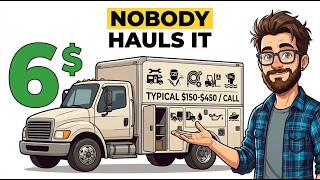
A repair shop pays rent on a building. A mobile repair business pays for one truck and drives to the money. That single difference is why several boring businesses you can run from a truck quietly out-earn a brick-and-mortar shop. Tri-Cities RV Services in Kingsport, Tennessee posts $160 an hour for one technician and a mobile repair truck, while a dealer's service bay can have a waiting list measured in weeks. This guide walks through six service truck businesses, easiest first and best last, with the published prices, startup costs and certificates for each.
For educational purposes only; this is not financial advice. Rates change from town to town, and most cities and states ask for some kind of business license, so check your local rules before you start.
Key Takeaways
- Six truck-based repair businesses: mobile RV repair, mobile welding, mobile fleet oil changes, mobile hydraulic hose repair, mobile forklift repair and mobile marine engine repair.
- All six run on the "Driveway Premium": the customer pays more for the truck to come to them, and the truck pays no rent.
- Bozeman Welding Company charges $125 an hour in its shop and $150 an hour for mobile welding, with the same welders.
- A two or three bay repair shop costs about $50,000 to $150,000 to open, plus $2,000 to $5,000 a month in rent and fixed costs, according to StartupCostHub.
- Most certificates (NRVTA, AWS, ASE, ABYC) are optional, but they build trust with customers.
- New mobile owners often lose money on two hours of unbilled driving; the fix is a trip charge.
The Driveway Premium: Why One Truck Can Beat a Shop
Look at Bozeman Welding Company in Montana. Its shop rate is $125 an hour. When the truck drives out, the rate is $150 an hour. Same welders, and the customer pays more for the convenience of having the work done where the equipment sits. That is the Driveway Premium.
The other half is cost. StartupCostHub says a two or three bay repair shop costs about $50,000 to $150,000 to open, with $2,000 to $5,000 a month in rent and fixed costs. Every single month. A truck pays no rent at all. So the shop charges less and pays more, while the mobile owner charges more and pays less.
The shop charges less and pays more. You charge more and pay less. That is how one truck can quietly out-earn a shop.
If you like this style of low-overhead model, see our guide to mobile auto detailing, or browse other boring businesses that make money.
1. Mobile RV Repair Business
The slide-out on a camper won't move two days before a family trip. The dealer's list is long: La Mesa RV once told customers that in peak season, a service appointment could take twenty to thirty business days.
What it charges
Tri-Cities RV Services charges $160 an hour, plus a trip fee of 75 cents a mile with a $125 minimum, billing only the drive out, not the drive home. Fish's Mobile RV Repair in Anaconda, Montana charges $100 an hour plus a $75 service call. Take twenty-five hours at $100, which is $2,500, add ten service calls at $75, and you reach $3,250 a month from one truck.
Is there enough demand?
The RV Industry Association says 8.1 million US households own an RV. Every one has a roof that leaks, a water heater that quits, or a slide that sticks. Twenty-five hours could be eight or nine campers a month.
Cost and certificate
The biggest piece is the course. The National RV Training Academy in Athens, Texas runs a Registered RV Service Technician program: about one week, forty-eight hours, and its 2023 catalog listed about $2,200, exam included. Prices change, so look up the current number. A cheaper door is the RV Technical Institute in Elkhart, Indiana, where Level One training is $663 for a year of online access, or one week in person. Both are optional, but RV owners trust the patch. If you already drive a pickup, start with that and a good tool kit; one guide to mobile repair vans puts a used high roof van at about $15,000 to $30,000.
Jim Cline runs Cline and Company Mobile RV Services in Granbury, Texas. He came from heavy equipment mechanics, took the NRVTA training, and brings RV repair to North Central Texas. Customers come from RV parks, storage lots, campgrounds and local RV Facebook groups. People stuck on a dealer's long list are your best customers, because they already know what waiting costs. A useful tip: ask for photos and the model number before you drive, so you bring the right part the first time.
2. Mobile Welding Business
A cracked trailer hitch on a farm, a snapped gate, a broken bracket on a dump truck at a job site. Nobody drives a broken gate to a shop.
What it charges
Beyond Bozeman Welding's $150 an hour, GoWelding puts mobile welding at $75 to $150 an hour with a $150 to $250 minimum per visit. One owner on Reddit charges a $295 mobilization fee plus $95 an hour with a two hour minimum, about $500 a visit. Ten visits a month is about $5,000. Customers include farms, trailer owners, contractors and plants.
Cost and certificate
Atlantic Business Brokers puts a lean rig on a truck you already own at $8,000 to $25,000, plus $500 to $1,500 for safety gear. A new Miller Bobcat welder generator lists at $6,990, and a used 1999 GMC welding truck in Muscatine, Iowa was listed at $30,000, welder included. The American Welding Society Certified Welder program often costs a few hundred to around $1,000 with testing, plus a $70 application fee. It is optional for most repair work but opens doors at plants and with contractors. To start, set up a Google Business Profile, post photos of real repairs, and leave a card at the feed store.
3. Mobile Fleet Oil Change Business
Nothing has broken yet, and that is the point. A plumber's van is overdue for an oil change, and taking it to a shop costs a whole morning.
What it charges
TyParts Mobile in Franklin, Tennessee charges $99 per fleet vehicle for a synthetic oil change when you book three or more, with $10 for each extra quart. Boston Fleet Services lists $90 to $150 per cargo van. A regular shop ticket is about $55 to $75, so the fleet pays more because you came to the parking lot. Twenty vans a month at $99 is $1,980, and oil and filter run about $12 to $25 a service. US oil change services were a $10.8 billion market in 2024, and FleetOwner reports mobile maintenance is growing because fleets want convenience.
Cost and certificate
A new Maintainer lube skid, with pumps, a used oil tank and a grease system, lists at about $19,500, truck not included. Franchise routes cost more: Go Oil runs $23,000 to $56,000 with a pre-built van. The ASE certificate costs $34 to register and $62 per test; it is optional, but fleet managers like seeing it. Customers are plumbers, landscapers and delivery fleets, and a fleet of ten vans comes back every few months.
4. Mobile Hydraulic Hose Repair Business
An excavator blows a hose in the middle of a dig, fluid sprays everywhere and a whole crew stands around waiting. That machine is not going on a flatbed to a shop today.
What it charges
Emergency Hydraulics publishes a range of about $150 to $450, parts and labor, for many single hose repairs, plus a service call fee. ZenBusiness puts heavy equipment labor at $100 to $200 an hour. Thirty hose calls at $300 is $9,000 a month, though hose and fittings come out of that. Every excavator, loader, tractor and dump truck runs on hydraulic hose, across construction sites, farms, mines, plants and rental yards.
Cost: the biggest startup on the list
Bizbite puts an outfitted van at $40,000 to $80,000, opening hose and fitting stock at $15,000 to $30,000, and the crimper and cutter at $5,000 to $15,000. The total is $35,000 to $120,000. Start lean: stock the hoses local machines use most and grow the shelf as calls come in. Hydraulic lines carry real pressure, so learn crimping and safety from your hose distributor before your first paid call, and never open a line that is still loaded. The certificate is optional, and no license is required for this work in most places, but check local rules. The International Fluid Power Society and hose makers offer training, so ask for prices first.
Equipment rental yards are the best customers, followed by construction companies, farms and quarries. Put your number on a magnet for every cab. Keep a log of every machine you fix with the hose part number, so the second call from the same excavator takes half the time.
The two free hours that eat your profit
A new welder prices a job at $95 an hour, then drives an hour out and an hour back and never bills it. That is two hours of free driving. The fix is a trip charge: a mobilization fee like the $295 example, or $1.50 to $3 a mile. Bill the driving, not just the work.
5. Mobile Forklift Repair Business
One forklift won't lift and the trucks at the dock are waiting. You cannot put a forklift in your trunk. This is fixing the machine itself, not forklift driver training.
What it charges
PulseRevOps puts break-fix forklift repair at $110 to $165 an hour with a one hour minimum, and parts are marked up 25% to 45%. Forklift Exchange posted $198 an hour for labor and travel starting in January 2025. The steady money is maintenance, at about $45 to $95 per truck per visit. Twenty-five repair hours at $135 plus forty maintenance visits at $70 comes to about $6,175 a month. OSHA counted about 855,000 powered industrial trucks in American industry back in 1996; that is an old count, so look at your own area.
Cost and certificate
PulseRevOps puts the start at about $35,000 to $80,000: a used high roof van at $15,000 to $30,000, the upfit at $12,000 to $25,000, and parts stock at $8,000 to $20,000. Insurance runs about $3,000 to $8,000 a year. Forklift makers run their own technician training, which is optional; ask the dealer first. Customers come as contracts: warehouses with five to thirty trucks that you visit on a schedule.
6. Mobile Marine Engine Repair Business
An outboard won't start on a trailer in a backyard, two weeks before the lake opens. If the boat is already in the water, somebody pays to pull it out. Sea Fix Marine points out that a mobile mechanic skips haul-out and transport fees.
What it charges
A One Marine charges $125 an hour for mobile diagnosis and repair, with a one and a half hour minimum and travel inside its service area included, so every call starts at about $187. Forty hours at $125 is $5,000 a month, roughly a dozen boats in the spring rush. The US Coast Guard counted about 11.7 million recreational vessels registered in 2024, and many sit all winter before coming out with a motor that won't start.
Cost and certificate
There is no single clean number for a mobile marine truck. Most of it is the truck and tools, and the same used van range of $15,000 to $30,000 is a fair place to start your math. The ABYC (American Boat and Yacht Council) certifies techs in marine systems, marine electrical, and marine engines and fuel systems. The technician designation asks for the exam plus two years of hands-on experience and lasts five years. The Marine Standards exam is $295 for members or $595 for nonmembers, a three hour test. It is optional in most places, but boat owners look for it. First Elite Mobile Marine Services in Williston, Florida started in 2017 as a mobile outboard repair and service company, and the boat stays in the driveway while the mechanic comes to it.
Customers include marinas without their own shop, boat storage yards, lake association groups and dealers with a spring backlog. Sell the spring start-up in the fall, at the winterizing visit, so your spring is already full.
What One Operator's Month Looks Like
Harry drives a flatbed tow truck for a roadside service and watched broken campers, boats and forklifts sit in shop lots for weeks. His path: RV repair paid for the first year, then he added a small oil setup for the roadside company's box trucks. His best month, month eighteen, looked like this: 26 RV hours at $100 is $2,600, nine service calls at $75 is $675, and sixteen fleet vans at $99 is $1,584. That totals $4,859. After about $480 for oil, filters, parts and fuel, he kept about $4,379.
Three Filters Before You Pick a Truck Business
- Does the thing break where it stands, too big or too stuck to haul?
- Can you learn the repair on your own gear, or a friend's, before charging anybody?
- Will the same customer call you again next season?
Three yeses and your truck could be on the road this month. Fastest first paid month: fleet oil. Biggest single call: the hose. Best spring: the boats. The book Customers for Life by Carl Sewell makes the same point: stop counting one visit and start counting the years. For more ideas, see 5 high-paying trades most grads ignore.
Watch the Full Video
Want the full walkthrough with every price on screen? Watch the video on YouTube: 6 Boring Businesses That Run From One Truck and Quietly Out-Earn a Shop. Then comment a number from one to six for the business you would start, and vote for the next list: trucks, trailers or garages.
Your first step costs nothing: call one RV park, storage lot or marina near you and ask who they call when something won't start. If the answer is weeks, your town is waiting for a truck.