- Key Takeaways
- The Landed Cost Gap: Why the Factory Price Misleads
- Machine 1: Balloon Stuffing Machine
- Machine 2: Hydrogel Screen Protector Cutter
- Machine 3: Latte Art Printer
- Machine 4: Rice Cake Popping Machine
- Machine 5: Sugarcane Juice Press
- Machine 6: Concrete Paver and Hollow Block Machine
- Machine 7: Tire Crumb Rubber Line (The Best One)
- How Harry Put the Gap to Work
- Try This in the Next 24 Hours
- Watch the Full Video
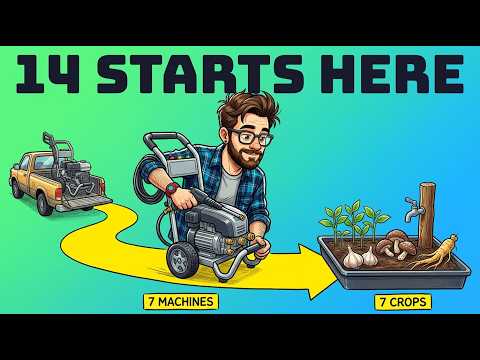
Every video and listing about machines from China shows you one number: the factory price. Almost nobody shows the price at your door, or what American customers already pay. That missing comparison is where a boring business lives. This guide walks through seven small business machines from China that very few American operators are running yet, from a balloon stuffer that fits on a kitchen table to a tire crumb rubber line that gets paid twice for the same tire.
Each machine gets the same walk: what its product sells for in America (income first), where the machine comes from, the factory listing price, what it really costs once it lands, and why it is not everywhere yet. Where no small American operator could be found, we say so plainly.
Key Takeaways
- One Buffalo shop charges $65 for a single stuffed balloon, while a balloon stuffing machine lists for about $100 on Alibaba.
- Freight and duty change the math: express freight runs about $5 per kilo (Freightos), a 20-foot container to the West Coast runs $1,500 to $3,500 (AMZ Prep), and many Chinese machines carry an extra 25% duty (some sit at 7.5%).
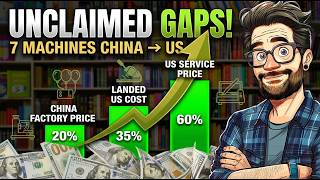
- Every machine has three prices: the factory price, the landed price at your door, and what an American customer already pays. The business lives between the last two.
- Food machines fall under state or county health rules, plug-in machines should carry a UL or ETL mark, and tire processing needs a state permit.
- The Landed Cost Gap is the idea behind all seven: the machine is not the secret, the empty spot on the map is.
The Landed Cost Gap: Why the Factory Price Misleads
Here is what applies to all seven machines. A small machine usually flies. Freightos puts express freight from China at about five dollars a kilo. Bigger machines ride the ocean, and a whole twenty-foot container to the West Coast runs fifteen hundred to thirty-five hundred dollars, according to AMZ Prep. The boat takes two to three weeks to reach the West Coast.
Then there is duty. Customs Broker USA lists a twenty-five percent extra duty on a lot of Chinese machinery, while some goods sit at seven and a half percent. It depends on your machine's customs code, so it is not a wall. It is one more line on the receipt. Write it next to the freight and you know your real number.
Every machine has three prices: the factory price everybody shows, the landed price at your door that almost nobody shows, and the price an American customer already pays.
Harry, who checks containers in at an inland rail yard, learned this the hard way. His first order was a coffee printer. He saw the factory price and assumed that was the price. Then came express freight, then the duty line, because his broker said his code carried the extra twenty-five percent. The machine cost far more at his door than on the screen. He did not panic; he fixed the method. Now, before he clicks buy, he writes three numbers on one index card: the factory price, the landed price at his door, and what an American customer pays. If the third number does not beat the second by a wide margin, he walks away.
This is for educational purposes only and not financial advice. Permits, duty codes and local rules change by state, county and product, so check yours before you order anything. If you like this kind of real-cost thinking, see our guide to 6 boring businesses that make money under $500.
Machine 1: Balloon Stuffing Machine
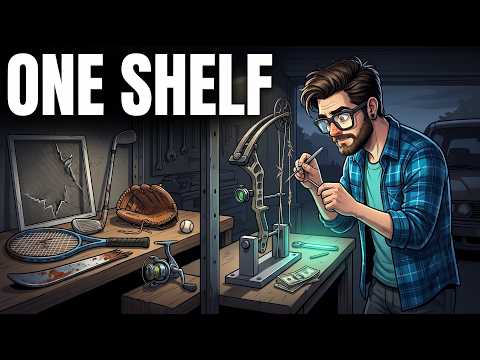
This is the easiest machine on the list. Balloon Masters in Buffalo starts its stuffed balloons at sixty-five dollars, with a plush animal or candy inside, wrapped and ready. Agape Balloons and Events in Sterling Heights, Michigan lists its stuffed balloon from sixty dollars. Buyers are birthdays, Valentine's Day shoppers, graduations and hospital visitors: anyone who wants a gift that looks expensive the second it walks through the door.
Chinese suppliers sell these as small sets. Air opens the balloon wide, you slide the gift inside, and it closes around it. One Alibaba listing shows a set at about $102 with free shipping from US stock (read the whole listing before you buy). The rare part: here the landed cost and the sticker price are almost the same.
Why isn't it everywhere? Most party stores sell balloons by the bunch, and very few put a stuffed balloon on the menu. Grand View Research puts the US party supplies market at about $14.5 billion in 2025. That covers the whole party aisle, not just balloons, but you would only need a tiny slice: twenty gifts a month at sixty dollars is $1,200. Balloon Masters does not say which machine it uses, and that is fine; the price on their page is the proof that people pay it. Pro tip: photograph every balloon you make, since each one is an ad you did not pay for.
Machine 2: Hydrogel Screen Protector Cutter
The honest part first: no American shop could be found that publishes a price for a custom-cut hydrogel protector. The Fix, inside a Walmart in Fountain, Colorado, advertises custom-cut screen protectors with professional installation, but there is no price on the page. That is how early this is.
Dongguan Siteng Electronics lists an automatic film cutter on Alibaba at $379 to $417. Most of these machines run $169 to $450, and film sheets cost sixty cents to a dollar fifty each. You pick the phone model, the machine cuts the film, and you apply it while the customer waits. The market is almost everyone: Pew Research says ninety-one percent of American adults own a smartphone.
Most people still grab a boxed protector off a hook and hope it fits. The machine plugs into the wall, so look for a UL or ETL mark on the listing, and as a small parcel it flies in by express. Pro tip: test one cut before you cut ten, because a wrong film size ruins a whole batch.
Machine 3: Latte Art Printer
A Place Coffee Brewers in Jackson Heights, New York lists its coffee art printer at $280 per event. Asulon Collective, a woman-owned coffee cart in Clarksville, Tennessee, starts at $250 with latte art printing included: faces, logos, even a couple's names printed on the foam. Buyers are weddings, company events, product launches and baby showers, anyone who wants guests to pull out a phone.
Asulon uses a printer brand called Ripples. The Chinese version: Shenzhen Eve Innovations lists one on Alibaba at about $1,500 to $1,700, and ink runs about eight cents a print, according to Accio's buying guide. At around twenty kilos, it flies in for roughly $100. Because it is food, your local health rules apply, and the ink is sold as a food-grade cartridge, so check with your county before your first event.
Why isn't it common? Most coffee carts still do not offer it. It is an add-on almost nobody prices.
Machine 4: Rice Cake Popping Machine
At Gourmet Garage, a 2.6-ounce bag of Kim's Magic Pop costs $3.99, and the listing says it is made fresh in store on Friday, Saturday and Sunday. Roche Bros. lists the same snack at $3.69, or $2.99 on sale. Those thin, round crackers start as grain and pop into shape under heat and pressure.
Henan Penghui Machinery lists an automatic rice cake popping machine on Alibaba at $2,998 a set, shipping extra. Other puffing machines list from about $1,290 to $2,850. This one rides the ocean, so budget for freight, the duty line, and a few weeks on the water.
Here is the surprising part: no owner-run stall in America popping these fresh could be found, with a name and a town. The closest is a grocery store making them in store on weekends, which is the opening. Buyers include health food shoppers, parents, kids who have never watched a cracker come out of a machine, and farmers market crowds that love a show. It is food, so you will work under a cottage food permit or in a commercial kitchen; your state or county health department decides which. Pro tip: pop it where people can see it, because the sound does your marketing.
Machine 5: Sugarcane Juice Press
Nia Cane in the Houston area sells fresh-pressed sugarcane juice at $6 small, $7 medium and $10 large. Tom Boba in Houston lists a ten-ounce cup at $6.75. One cane stalk is pushed through steel rollers and poured over ice.
Alibaba lists electric cane juicers at $310 to $420 a set, before freight and duty. Amazing Streetbeans Foodtruck sells fresh sugarcane juice from a Chevron lot on Clay Road in Houston. They do not say where their press was made, but the menu is real. In a lot of towns you would drive a long way to find a fresh cup. Check your county's permit for a stand or truck, and press it right in front of the customer: the machine is the sign.
Machine 6: Concrete Paver and Hollow Block Machine
Home Depot lists a concrete block at $2.38 each, and Lowe's lists a small gray patio stone at seventy-eight cents. It is cement, sand, gravel and water pressed into a mold and left to cure. Buyers are landscapers, contractors and homeowners laying a patio on a Saturday.
One Alibaba listing shows a diesel hollow block machine at $2,650 a set, molds not confirmed. Others list from about $1,300 to almost $8,000. It is heavy, so it rides in a container. Block Lite in Flagstaff, Arizona is a third-generation, family-owned block maker. They do not say their machine is Chinese, but they prove a small block maker can win local work.
Most people picture blocks coming from giant plants, so a small local yard is rare. Check your county's zoning before you pour a single block.
Machine 7: Tire Crumb Rubber Line (The Best One)
The best machine is last for a reason: it gets paid twice for the same tire. First State Tire Recycling in Isanti, Minnesota charges a drop-off fee starting at $1.25 per tire. Then the rubber goes back out: TJB Inc in Hamden, Connecticut sells crumb rubber infill, the black granules under artificial turf, at $885 for a two-thousand-pound lot.
The pond is large. The US Tire Manufacturers Association says America throws off more than 250 million end-of-life tires every year. Tire shops, fleets and towns send them, according to GradeAll, a tire recycling equipment company, and turf field builders buy the crumb.
Nanjing Fante Machinery lists complete crumb rubber lines at $118,000 and up; GradeAll puts smaller entry shredders at $20,000 to $50,000.
Permitting and compliance run $5,000 to $20,000, and you will work under a state tire processor permit. Rent runs $1,000 to $6,000 a month, and processing costs about fifty cents a tire. GradeAll says well-run operations pay back in two to four years. Champlin Tire Recycling in Concordia, Kansas is run by the Champlin family; they do not say their line is Chinese, but they show a family can build this in a small Kansas town.
This is the opposite problem from the other six: the tires are everywhere. The permit, the space and the patience keep most people out, which is exactly what protects the ones who get in. For other ways to put capital to work, see 6 boring cash-flow machines to buy with $30,000.
How Harry Put the Gap to Work
Harry ordered the balloon stuffer first because it shipped from US stock. He then added the coffee printer as an event add-on, priced like the shops he had studied. By month eleven he had sold twenty-three stuffed balloons at $60 and booked five coffee events at $250. That is $2,630 in revenue, and after ink, balloons, toys and wrap he kept about $2,377.
The book he keeps in the guard shack explains why this works at all: The Box by Marc Levinson, about the plain steel shipping container. One boring box made shipping so cheap that a factory on one side of the world could sell to a shop on the other. But the box only carries the machine. It does not carry the customer. That part is still yours.
Try This in the Next 24 Hours
Pick one machine from this list. Search it on a map within thirty miles of your home and count how many you find. Write the number down. If the answer is zero, that is the empty spot on the map, and you are the one who checked.
Watch the Full Video
Want to see each machine and the numbers side by side? Watch the full walkthrough, 7 Boring Machines from China Almost Nobody in America Is Using (Yet), then drop a number from one to seven in the comments for the machine you would start.
Factory listings, freight rates and duty rates change, and duty depends on your machine's customs code. Food machines fall under state or county health rules, plug-in machines should carry a UL or ETL mark, and tire processing needs a state permit.