- Key Takeaways
- Why Boring Businesses Are Changing Hands Right Now
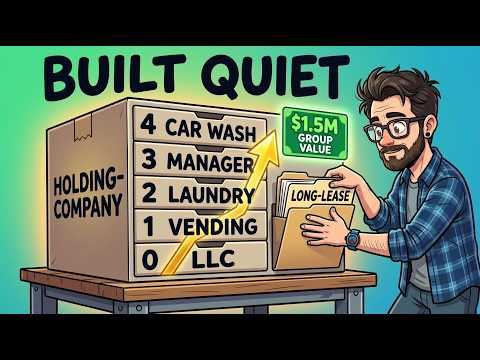
- Level Zero: A Plain Holding Company and a Cheap Exam
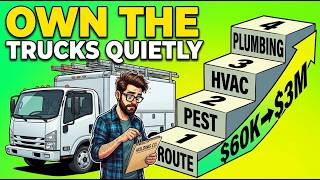
- Level One: Buy a Pest Control Route and Run It Yourself
- Level Two: Buy a Small Pest Control Company With an SBA Loan
- Level Three: Buy an HVAC Company From Its Founder
- Level Four: The Plumber Who Chose the Quiet Buyer
- What the Whole Group Looks Like After Eleven Years
- The One Expensive Mistake to Avoid
- Watch the Full Story on YouTube
Somewhere in your town, a pest control truck, an HVAC van and a plumbing rig carry another man's name on the door. Each one may belong to a quiet owner nobody has ever heard of. This guide follows one buyer through four levels, starting with a pest control route and ending with a plumbing company whose owner turns down a bigger private equity offer. It shows what each boring business earns, what it costs, and the opponent that tries to break the deal at every step. Every figure is a market range, not a promise.
For educational purposes only. This is not financial advice. Licensing and SBA rules vary by state and change over time, so check your state's rules and talk to a business attorney and a CPA before buying a business.
Key Takeaways
- About 2.3 million small businesses are owned by baby boomers getting ready to retire (Project Equity), and about 70 percent of owners in a Chase survey said they have no formal succession plan.
- 61 percent of those owners said finding the right next owner was a priority, not just the highest bidder.
- SBA 7(a) buyers typically bring 10 percent in, and half of that can come from a seller note on standby.
- Pest control companies have sold for around 2.5 times owner earnings, HVAC for around 2.75 times, and plumbing for around 2.5 times.
- Customers buy the person they trust, so keep the name, keep the key people, and have the seller stay through the handoff.
- The one expensive mistake is buying a business that lives entirely in the owner's head.
Why Boring Businesses Are Changing Hands Right Now
The idea starts with counting trucks. Pest control, heating and plumbing vans carry family names and founding years like 1976 or 1982. Eventually you wonder who runs these companies when the name on the door retires.
The numbers explain why this matters. One research group, Project Equity, counts about 2.3 million small businesses owned by baby boomers who are preparing to retire. In a Chase small business succession survey (2026), about 70 percent of owners said they do not have a formal succession plan. That is the pond: millions of good, boring companies whose owners have no idea who takes over.
In that same survey, 61 percent of owners said finding the right next owner was a priority. Not just the highest bidder. The right one.
That finding shapes the whole strategy. The buyer writes one rule on the back of a receipt and keeps it in a wallet: buy what someone is ready to leave, keep the name and the people, and stay in the background. If you like this kind of low-glamour ownership, our guide to 6 boring businesses that make money covers cheaper starting points.
Level Zero: A Plain Holding Company and a Cheap Exam
Two boring steps come before any purchase. First, form one plain holding company, the kind of name nobody reads twice. Second, study for your state's pest control applicator exam. Depending on the state, the exam runs from about $25 to a couple hundred dollars.
That license is the moat. Most people who daydream about a business never sit a single test for it. It sounds small, and it is, but it is what makes the later levels possible.
Level One: Buy a Pest Control Route and Run It Yourself
The first trigger is a retiring exterminator whose knees give out. Call him Hal. He has run a one-man route for 26 years with about 120 homes on a recurring plan, and his doctor says no more crawl spaces. His kids do not want the truck.
What the route earns
Homes on a recurring pest plan commonly pay between $400 and $700 a year, so Hal's route brings in roughly $60,000 a year. A solo operator who does the work personally typically keeps around half of that (FieldRoutes margins; HomeGuide and Housecall Pro pricing). It is not life-changing money, and that is fine. Level one is about learning the trade from the inside.
What it costs
Routes like this usually sell for one to two times their yearly recurring revenue. The buyer offers about one times, around $60,000. They put $20,000 down from savings and Hal takes the rest in monthly payments. He likes that the buyer passed the exam and asked about his customers before asking about price.
The first opponent: customer loyalty
The first opponent is a nice older customer we will call Doris. She has had Hal for 19 years, does not want a stranger, and cancels. Over the first three months about a dozen of Hal's homes drift away with her, roughly one in ten.
The fix is simple. Hal writes a short letter to every customer in his own words, introducing the new owner, then rides along on the next round. The truck and the name stay the same, and Hal's Pest Control stays Hal's Pest Control. Doris comes back in the spring. The lesson shapes every later level: customers do not buy a company, they buy the person they trust. So you do not replace that person, you get introduced by him.
Level Two: Buy a Small Pest Control Company With an SBA Loan
Another retiring owner asks Hal who bought his route. Call him Ron: three technicians, three trucks, a small office with a wall calendar. He is 70, and his wife wants to see the grandkids before they are in college.
What the company earns
Across pest control companies sold on BizBuySell, the middle one takes in about $264,000 a year, and the owner keeps about $124,000 of that. Ron's company sits right there, with recurring customers paying every quarter in good or bad economies. There is also a bonus nobody lists on the ad: Hal's homes sit in the same neighborhoods as Ron's, so folding the route into Ron's trucks means fewer miles and more stops per day. Moving the paper wall calendar into simple routing software over a weekend stops the trucks from crossing town twice a day.
What it costs
Pest companies like this have sold for around 2.5 times what the owner earns, so the price lands near $250,000. The purchase uses an SBA 7(a) loan. Under the SBA SOP 50 10 8 equity injection rules, the bank wants 10 percent in, and Ron carries half of that as a seller note on standby. The buyer's cash in is about $12,500 plus closing costs. The payment comes to a little over $3,000 a month, and the company pays it, not the buyer.
The second opponent: the senior technician
This time the opponent is Luis, Ron's senior tech of 14 years. Every customer knows his first name, and on the first morning he stands by his truck with his arms crossed. If Luis walks, half the customers might follow him.
The boring answer is to keep his pay exactly where it is. Pest control workers earn a median of around $44,000 a year nationally (U.S. Bureau of Labor Statistics), and Luis earns more because he is worth more. Ron stays on for the transition, answering the phone and riding along, and the buyer's own license means the company never depends on one person's card. By the end of year one Luis has trained two new techs. He still calls it Ron's company, and the owner lets him.
Level Three: Buy an HVAC Company From Its Founder
In year five, a founder who has been watching makes a phone call. Call him Gene: 74 years old, 45 years of furnaces and air conditioners, 14 trucks. He does not want to sell to a giant. He wants someone who will keep his name on the vans.
What an HVAC company earns
Across HVAC companies sold on BizBuySell, the middle one takes in about $1.5 million a year, and the owner keeps about $300,000. The quiet engine underneath is the maintenance plan. Hundreds of homes pay around $200 to $330 a year for two tune-ups and a spot at the front of the line (PickComfort and DoorstepHQ).
What it costs
HVAC companies have sold for around 2.75 times what the owner earns, so the agreed price is about $750,000 using the same SBA playbook. Ten percent in, with half from Gene's standby note, means about $37,500, mostly from the two pest companies. The payment is about $9,000 a month, covered by the company with room to spare. Under SBA rules, Gene can stay on to help for up to a year (J.B. Warranties), and the buyer asks him to stay the full year.
Three opponents in one heat wave
Then July arrives with nine straight days over 100 degrees. Phones ring before the office opens and keep ringing after it closes. On day four, the lead tech, Danny, asks for a minute. A private equity backed company has offered him a big signing bonus. Private equity has bought roughly 800 HVAC, plumbing and electrical companies since 2022. Meanwhile a customer of 30 years calls, having heard Gene sold, and wants to know if the new owner is going to ruin it.
The response follows the receipt rule:
- Customers first. Maintenance plan members get their techs first every day of the heat wave. Everyone else gets an honest arrival window and a callback. The owner answers phones until eleven at night.
- The founder. Gene drives in on Saturday, sits at the front desk and calls the oldest customers himself: it is still his name on the truck, and he picked this buyer. The worried customer renews her plan before he hangs up.
- The key employee. You cannot outbid a private equity fund, so you ask Danny what he actually wants. He wants to stop working every Saturday, train the young guys, and know there is a future. The offer is a four-day schedule from October, a lead trainer title, and a retention bonus paid over two years. HVAC techs earn a median of about $60,000 nationally, and Danny earns well above it. The bonus costs real money, but it is cheaper than replacing him. Danny later says the schedule, and the fact that he was asked, mattered more than the bonus.
The heat breaks on day ten. A handful of customers who could not wait are lost, and the company is kept. On Gene's last morning he hands over the keys to truck number one, the van he bought in 1979, with his name hand-painted on the door. Do not paint over it, he says. The buyer understands the receipt at last: keeping the people is not kindness, it is the whole business.
Level Four: The Plumber Who Chose the Quiet Buyer
In year nine, a third-generation plumber we will call Kessler gets two offers. His company does about what the middle plumbing business sold on BizBuySell does: roughly $1.2 million a year, with about $310,000 left for the owner.
The biggest opponent: a class of money
This opponent is not a person. Platforms backed by firms like Apollo and Blackstone have paid huge prices for scale, and one platform, Apex Service Partners, was valued close to $10 billion. Private equity now accounts for about half of all HVAC service deals (Beancount, PipelineOn and DealSeam).
The platform's number is bigger, but its letter promises a new name, new uniforms and a call center three states away. The quiet buyer's letter promises the same name, the same crew and the same phone number his grandfather answered. After a week, Kessler asks to meet the buyer's people, not the banker. Luis and Danny come in work boots and talk shop with his crew for two hours about water heaters and bad crawl spaces. Then Kessler picks the quiet buyer, which matches the survey: most owners want the right next owner, not just the highest number.
The price and the funding
Plumbing companies have sold for around 2.5 times what the owner earns, so a fair price is a little under $800,000. The bank wants its 10 percent in, close to $80,000, and this time the check comes entirely from the companies already owned. No savings are needed.
What the Whole Group Looks Like After Eleven Years
By year eleven, one plain holding company owns pest control, heating and plumbing. Adding up what the owners kept at the three median companies gives roughly $740,000 a year, before the loans and the managers. At the prices small shops actually sell for, the whole group would likely be worth somewhere around $2 million.
There is a bigger, louder version. Jerod Pierce bought an HVAC company in Gig Harbor, Washington, in 2017 for $1.75 million with an SBA loan, and learned sales by riding along with the old owner. Five years later, revenue had grown from $3.5 million to about $35 million, and he shared more than $2 million of the sale with his key employees (Acquiring Minds interview). The quiet version takes the same road, but over eleven years, not eleven months. That is what nobody sees. For a smaller entry point into acquisitions, see how to buy a laundromat.
The One Expensive Mistake to Avoid
The costly mistake on this path is buying a business that lives entirely in the owner's head: his phone, his customers, his techs. If he leaves the day after closing, a great company becomes an empty truck.
The fix is straightforward. Get the seller to stay through the handoff, keep the name on the door, and put a plan for the key people inside the deal. This is the same logic behind the seller transition rule and the standby note: the seller stays invested in the outcome.
Watch the Full Story on YouTube
This article covers the numbers, but the video tells the full second-person story, from the soccer sideline to the heat wave, level by level. Watch Nobody Knows You Own These BORING Businesses, Level by Level for the visual walkthrough, then tell us in the comments which level you would stop at.
You can start tomorrow at no cost: drive around your town and count the trucks with a family name and a 1970s founding year on the door.