- Key Takeaways
- A $500 Billion Market With a Quiet Crack in It
- How the Mobile Fuel Delivery Model Actually Works
- The Federal License Stack: Your Moat, Not a Barrier
- Real Startup Costs: Lean Build vs. Full Rollout
- The Income Math: How One Route Reaches Seven Figures
- Your First 30 Days: A Week-by-Week Launch Plan
- Who This Business Is — and Isn't — For
- Watch the Full Breakdown on YouTube
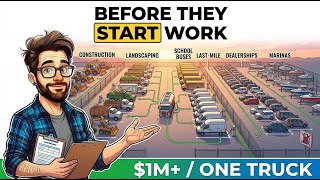
At 4:30 a.m. in Charleston, South Carolina, a tanker truck rolls quietly into a construction yard before the crews have even arrived. In under two hours, fifteen pickup trucks are fully fueled and ready for the day — without a single worker making a gas station run. The man behind the wheel is Korey McDavid, a former U.S. Army Apache helicopter pilot. He launched his company, Juiced Fuel, with $77,000. Today it generates over $1 million per year from a single truck. The business model powering those numbers — what he calls the Pump-Free Subscription Loop — is sitting inside fleet yards in every city in America, waiting to be unlocked.
Key Takeaways
- One used fuel tanker and roughly $2,000 in federal licensing fees can unlock a legally protected market niche
- The two-layer revenue model — monthly subscription plus a per-gallon markup — generates $49–$75 per fleet vehicle per month
- Startup costs range from $33,000–$60,000 for the lean build to up to $200,000 for a fully equipped operation
- The 60–90 day federal licensing wait functions as a competitive moat, filtering out the majority of would-be operators
- The global on-demand fuel delivery market is projected to reach $9.3 billion by 2027, growing at 25%+ annually
- Route density — not subscriber count — is the real inflection point that turns one truck into a seven-figure business
A $500 Billion Market With a Quiet Crack in It
The National Association of Convenience Stores reported that c-stores sell roughly 80% of all fuel purchased in the United States, with retail fuel revenues hitting $501.9 billion in 2024. But here is the detail that rarely gets quoted alongside that headline number: fuel revenues were down 5.7% year over year. The largest, most entrenched fuel-distribution network in the country is quietly contracting.
At the same time, the U.S. Energy Information Administration confirms that gasoline still accounts for roughly 52% of all energy used by the U.S. transportation sector. Demand for fuel is not declining — it is looking for a better delivery mechanism. The gap between a shrinking pump network and tens of thousands of commercial fleet vehicles that still need fuel every week is exactly where the mobile fuel delivery business model lives.
The global on-demand fuel delivery market is projected to reach $9.3 billion by 2027, growing at a compound annual rate of more than 25%.
This is not a fringe trend. It is a structural shift in how commercial fleets think about fueling logistics — and one-truck operators who position early are the ones who lock up the most profitable routes before larger competitors take notice.
How the Mobile Fuel Delivery Model Actually Works
The operating mechanic is straightforward. The operator loads a used tanker — typically 1,000 to 1,200 gallons — at a wholesale fuel rack before dawn. A rack is the wholesale terminal where retail gas stations also buy their fuel. Purchasing at rack prices instead of pump prices is where the margin originates, and that single structural advantage is the economic foundation of the entire business.
By 6 a.m., the truck is at the first fleet account — a construction yard, a landscaping depot, a last-mile delivery hub. Vehicles parked overnight get topped off via a metered fuel hose connected to a dispatch app that logs every gallon by vehicle. Fifteen vehicles in under two hours. The crew arrives at 7 a.m. to a full fleet, zero downtime, and zero detours to a gas station.
Mid-morning, the truck shifts to consumer or residential requests routed through an app. The afternoon brings a second fleet run or a marina account. Boat owners willingly pay a premium for delivered fuel, making marinas one of the highest-margin fleet segments in the model. By 5 p.m., the dispatch software has auto-logged every delivery, generated every invoice, and pushed every receipt. No cash. No paper. No pump. That is the entire operating model: one truck, one driver, one app.
The Federal License Stack: Your Moat, Not a Barrier
The licensing requirements for a mobile fuel delivery business are the primary reason the market remains accessible to independent operators. The full federal stack breaks down as follows:
- USDOT number — free
- MC operating authority (for-hire interstate hauling) — $300
- BOC-3 process agent and UCR registration — approximately $100–$200
- PHMSA hazmat registration (small business tier) — $275 plus a $25 processing fee
- FMCSA hazmat safety permit — 60–90 days to process
- CDL hazmat endorsement (driver side) — $150–$350 all in, including the TSA security threat assessment, entry-level driver training, and state issuance fees
Total out-of-pocket cost: approximately $1,000–$2,000. Total calendar time: three to four months. The psychological response most people have when reading that list is to walk away — and that reaction is precisely what creates the opportunity. Every person who quits at the licensing stage is a competitor that will never enter your market.
The 60–90 day PHMSA wait is not dead time. It is the most valuable phase of the entire build. Operators who use those months to line up wholesale fuel supplier accounts, build pricing sheets, and walk into construction yards with a one-page handout arrive at their permit approval date with their first three accounts already half-sold. Parallel-processing the setup turns a perceived delay into a decisive competitive head start.
Real Startup Costs: Lean Build vs. Full Rollout
The largest single line item is the truck. Used 1,000–1,200 gallon fuel tankers have been listed locally for as little as $33,000, with a realistic range of $50,000–$100,000 for a reliable used unit. New custom-built small fuel trucks run higher. Insurance — covering general liability, commercial auto, and pollution liability — runs $10,000–$20,000 in the first year. Pollution liability is non-negotiable; it is the coverage that protects the entire business if a fuel hose ever leaks.
Dispatch software is manageable. Onfleet starts around $500 per month. Routific runs approximately $49 per driver per month. A custom app is not necessary in year one — Korey McDavid built one eventually and it became a brand asset, but he launched with off-the-shelf tools and scaled from there.
The final variable is fuel float: working capital needed to buy wholesale fuel before customers pay. A 1,200-gallon load at current wholesale prices runs roughly $3,000–$3,600 per fill. Budget two to three loads as a float, which means $6,000–$11,000 sitting in the account before the first invoice clears.
Totaled up, the lean version lands between $33,000 and $60,000. The full-build version runs up to $200,000. Korey McDavid's real-world starting point was $77,000 — an honest middle of the range. This is not a weekend side hustle. It is a real business with a real moat, and the returns on the other side reflect that. If you are comparing capital-efficient boring businesses, this overview of boring cash-flow machines shows how similar upfront investment structures play out across different service niches.
The Income Math: How One Route Reaches Seven Figures
The revenue model runs on two stacked layers. Layer one is a flat monthly subscription fee per vehicle — typically around $24 per vehicle per month — simply for guaranteed scheduled delivery. Layer two is a per-gallon markup, usually around $0.50 per gallon above the lowest local pump price. A fleet vehicle using 50 gallons a month at that markup adds $25 in fuel margin on top of the subscription. Combined, blended revenue per vehicle runs $49–$75 per month at modest volumes.
Booster Fuels publicly reports that fleets typically save more than $800 per vehicle per year after switching to mobile fuel delivery. One Booster customer saved $483,000 in labor costs in their first year alone.
Run the math at 150 fleet vehicles with a blended rate of $50 per vehicle: that is $7,500 per month gross. After subtracting wholesale fuel cost, a truck payment on a $30,000 loan, pro-rated insurance, and dispatch software, an owner-operator nets roughly $2,000–$3,500 per month. That is not life-changing at 150 vehicles — but push the route to 200–250 vehicles and the math compounds quickly. The truck payment and insurance costs do not increase with additional vehicles, so incremental accounts flow almost entirely to the bottom line.
The savings story is what makes fleet accounts genuinely sticky. A fleet manager who has just recovered $483,000 in annual labor costs is not returning to gas stations. That locked-in retention is what makes the subscription framing accurate: it is recurring, defensible revenue that compounds with every account added to the route.
Your First 30 Days: A Week-by-Week Launch Plan
Once the hazmat safety permit clears and insurance is bound, the first month follows a specific sequence.
Week 1 — Close the first three accounts. Visit 10–15 construction, landscaping, or fleet companies within your route radius. Bring a one-page pricing sheet. The pitch is one sentence: free first delivery, no contract required. Target three signed accounts representing at least 30 vehicles combined. Set up billing on Stripe with net-7 or net-14 payment terms.
Week 2 — Lock fuel supply and build the route. Sign a wholesale account with a local rack supplier (they will require a credit application). Load your first customers into dispatch software and run two to three test delivery days, timing every stop. Identify bottlenecks and refine pre-load timing.
Week 3 — Push to 10 accounts. Follow up on week-one leads and ask each of the first three customers for one referral. Post a day-in-the-life clip to social media — Juiced Fuel's growth came almost entirely from organic short-form video with zero paid advertising. Add one or two consumer or residential accounts via the dispatch app and assess whether stops are beginning to cluster geographically.
Week 4 — Systematize. Document the fueling order, spill kit protocol, and meter-read process. Review per-gallon margins against actual wholesale costs. Send each fleet client a one-page month-one performance summary showing gallons delivered and labor hours recovered. That report is the most effective referral tool in the business: the yard manager forwards it to the next fleet operator down the street.
The pitch line that consistently closes fleet managers is the labor math. A fleet of 20 vehicles making three gas-station runs per week at 15 minutes per stop burns 15 labor hours every single week — hours the fleet is paying wages for at the pump. Mobile delivery eliminates the entire line. When that calculation is put on paper, the conversation is essentially over before the objections start. The same account-first, then-systematize approach works across other fleet-adjacent service businesses — the junk removal business breakdown uses a nearly identical launch sequence for its first commercial accounts.
Who This Business Is — and Isn't — For
The mobile fuel delivery business fits a specific operating profile. It requires a high tolerance for early mornings — the fleet window runs from 4 to 8 a.m. and that schedule is non-negotiable. It requires the ability to sit down with a contractor or yard manager and have a direct, numbers-based conversation, because the first ten customers come from face-to-face handshakes, not from paid advertising. And it requires the discipline to handle hazmat-rated material safely every day. A spilled hose is not a customer service problem — it is an EPA enforcement event.
This is not a passive income play. It is not suited to operators who want to avoid regulators, and it does not reward impatience. Korey McDavid did not add a second truck until the first one was running so densely that average drive time between stops dropped from 30 minutes to under 10. Route density — not subscriber count — is the real inflection point. One truck, one city, one route. Densify before expanding.
Watch the Full Breakdown on YouTube
The numbers in this article cover the core model, but the visual walkthrough adds important context — particularly the wholesale rack loading process, how the dispatch app logs deliveries by vehicle in real time, and how Korey structures his morning pre-load sequence. Watch the full video on the Harry's Stash YouTube channel to see the Pump-Free Subscription Loop modeled from truck to invoice across a single day's route. If you are deciding which fleet segment to target first in your city — construction, landscaping, school buses, last-mile delivery, dealerships, or marinas — the video covers the pitch differences for each one.