- Key Takeaways
- The Visibility Toll: The Mechanism Behind All Seven Rules
- Rule 1: Never Name the Number
- Rule 2: Buy the Asset After the Income Proves Itself
- Rule 3: Let the House Sit Under the Income
- Rule 4: Keep a Raise Invisible for Twelve Months
- Rule 5: Never Explain How It Is Made
- Rule 6: Separate the Money from Who You Are
- Rule 7: Tell Exactly One Person — Chosen on Purpose
- The One Test Worth Running on Every Disclosure
- Watch the Full Breakdown
There is a car in a neighbor's driveway that was not there last month. Same street. Same houses. Same jobs — and one new vehicle. Here is the uncomfortable part: that car is about to cost the other households money, not the family who bought it. Economists have tracked lottery winners and the neighbors who watched them through bank records, credit files, and bankruptcy courts for twenty years, and the same pattern falls out every single time. The people who quietly hold wealth are not the most disciplined by nature. They are simply the ones nobody has repriced yet — and every rule in this breakdown exists because breaking it has a documented price tag attached.
Key Takeaways
- Price discrimination research shows sellers gain 1–3% of margin once they have a rough sense of what a buyer can absorb — compounded across every major quote over a lifetime, the total is not a rounding error.
- The Dutch Postcode Lottery study found that visible spending (cars and durable goods) jumped sharply after a windfall while food and transport barely moved — money that has not proved itself flows toward the most visible thing first.
- Philadelphia Fed research linked a neighbor's lottery win to a 1.2% higher probability of owning an expensive home and a 2% higher probability of owning an expensive car — among households that won nothing themselves.
- The "70% of lottery winners go broke" statistic has no peer-reviewed research behind it. The National Endowment for Financial Education publicly disavowed the claim in 2018. The real figure, from a study of 35,000 winners, is approximately 2%.
- Total financial secrecy is its own failure mode. British longitudinal research found lottery winners saw friends more often after winning — and still reported weaker support networks. One deliberate disclosure, to one carefully chosen person, is the structure that holds.
- All seven rules collapse into a single mechanism: the Visibility Toll. The moment a number, method, or milestone becomes visible, someone's behavior toward the holder changes in a way that costs money.
The Visibility Toll: The Mechanism Behind All Seven Rules
Stealth wealth is commonly framed as a personality trait — modesty rebranded as strategy. The research does not support that framing. These rules are arithmetic. When income, net worth, or business method becomes visible, others reprice accordingly. Sellers quote higher. Family members ask for more. Neighbors buy to match. The person who disclosed becomes someone different in the calculations of everyone who now knows — and rarely recovers the original price.
The term for this mechanism is the Visibility Toll. Every rule below is a different gate in front of the same tollbooth. The question is never whether the toll is real — twenty years of longitudinal data confirm it is. The question is which gate is about to be walked through.
Rule 1: Never Name the Number
The tell is small. Someone asks how the year went, and a figure comes out — a salary, a balance, what the house would now fetch. It feels like honesty. It functions as pricing information handed over for free.
Experimental work on price discrimination shows that once a seller has a rough idea of what a buyer can absorb, they stop anchoring to market rate and start anchoring to the buyer. The gain to the seller runs at roughly one to three percent of margin, and the gap widens the more visible the income signal is. Applied to a $20,000 kitchen renovation, that is $200 to $600 gone in a single conversation. Run the same calculation across a roof, a car purchase, a legal engagement, and a wedding — every quote, for the rest of a life — and the compounding cost of naming the number becomes significant.
The quiet alternative is deliberately unremarkable: "Decent year. Can't complain." The quote returns anchored to what the job costs rather than what the buyer appears able to carry.
Rule 2: Buy the Asset After the Income Proves Itself
Dutch researchers studying the Postcode Lottery had access to something rare: winners and non-winners living on the same street in otherwise identical circumstances, allowing precise observation of what the money did once it arrived. The result was striking for what did not change. Food spending barely moved. Transport spending barely moved. Total monthly expenditure barely moved. One category jumped: cars and visible durable goods.
That single data point captures the whole mechanism. Money that has not proved itself yet flows toward the most visible thing available, because visibility is what that money was unconsciously assigned to accomplish. A car is not a purchase — it is a payment: six hundred dollars a month, for years, made against income that has not yet demonstrated it will keep arriving. The twelve-month rule is a straightforward override: let the income land on schedule for a full year before any of it becomes a recurring obligation. That same $600 per month left to compound at ordinary long-run market returns over a decade produces a materially different outcome than a vehicle that depreciates from the moment it leaves the lot — the compounding math that separates these two paths is the same arithmetic most savers underestimate until it is already working against them.
Rule 3: Let the House Sit Under the Income
Shelter has one property that no other expense category shares: it does not come back down. Rent, mortgage, property taxes, insurance — once any of these step up, they hold through good years and lean ones alike. That asymmetry is the housing ratchet, and Federal Reserve Bank of Philadelphia data put a sharp edge on it.
Researchers matched actual lottery wins to real credit files and bankruptcy records, drilling down to neighborhoods of roughly thirteen households. When a neighbor won a lottery prize, visible assets on nearby balance sheets moved. A one-standard-deviation larger win nearby was linked to neighboring households being approximately 1.2% more likely to own an expensive home and 2% more likely to own an expensive car.
The invisible assets — cash and pension balances — did not move at all. Nobody upgraded the retirement account after watching a neighbor win. It cannot be parked in a driveway.
The practical implication is straightforward: let the raise land and leave the housing exactly where it is for twelve months. The difference gets banked. In a lean year, that banked amount becomes a genuine option — somewhere to cut — that nobody who ratcheted their housing on the way up still has.
Rule 4: Keep a Raise Invisible for Twelve Months
Lifestyle creep does not present as a decision. It arrives as a drift. One dinner out becomes two. A subscription adds. The baseline quietly rises to meet the new income level until the raise is entirely absorbed and nobody can point to exactly where it went.
The same Philadelphia Fed credit data captured this drift with a timestamp. Where a nearby lottery prize was ten percent larger, neighbors carried credit balances running roughly $134 higher by the second year and mortgage balances roughly $165 higher. These are not lottery winners — they are people who only watched. Within twenty-four months, watching had registered on their personal balance sheets.
The practical instruction is a single routing decision: the raise never touches the checking account. It gets redirected on day one, before the household has a chance to feel it. The leverage in that move is asymmetric — lifestyle drift only needs to be beaten once per raise. Handle it on the first day and it does not become a habit requiring active resistance for the following decade. Households that consistently route new income before it becomes lifestyle spending tend to reach a passive income crossover point years ahead of those who let it drift.
Rule 5: Never Explain How It Is Made
In an era of income transparency and public business building, this rule reads as a retreat. It is actually a competitive moat decision. Anyone can replicate a price, an offer, or a product category. Those were never the defensible elements. The defensible element is the sequence — the operational knowledge, the systems built across years, the mistakes paid for in wasted time. Once that sequence is legible to competitors, it is free.
The Dutch postcode data measured imitation speed precisely. When one household on a street bought a visible car after a lottery win, the probability that a neighboring household bought a car within six months rose by close to seven percentage points. Those neighbors also traded into cars roughly half a year newer than what they had previously owned. Nobody next door had gotten richer. They observed something and copied it inside six months — imitation with a stopwatch running.
The quiet version still markets, and markets hard — but it markets the outcome while keeping the machinery private. Competition arrives to fight over the visible layer. The layer that produces the actual margin stays exactly where it was.
Rule 6: Separate the Money from Who You Are
This rule requires first addressing the most widely repeated money statistic on the internet: that 70% of lottery winners go broke. The claim has no peer-reviewed research behind it. In 2018, the National Endowment for Financial Education issued a public statement explicitly noting that they have no research supporting the figure. Traced to its origin, the statistic appears to derive from an offhand remark at a conference. A decade of headlines built on a sentence someone said aloud in a room.
The actual peer-reviewed number comes from Hankins, Hoekstra, and Skiba, published in the Review of Economics and Statistics in 2011. Analyzing 35,000 Florida lottery winners matched against actual bankruptcy records, they found that people who won between $50,000 and $150,000 filed for bankruptcy at rates statistically indistinguishable from people who won $1,000. A separate review tracked 180 documented Powerball jackpot winners; of the 162 with traceable outcomes, four ended in financial ruin — roughly 2%, not 70%.
The small group that did fail shared a common pattern. It was not the size of the check. It was that the money became the identity. When financial position becomes personal identity, every fluctuation in that position turns into an identity emergency — and identity emergencies produce reliably poor financial decisions. The quiet approach treats a windfall as an event to be processed, not a personality to be adopted.
Rule 7: Tell Exactly One Person — Chosen on Purpose
Six rules of saying nothing — and then this. The exception is not a contradiction. Total financial secrecy is its own failure mode, and the research is direct about why. British longitudinal work on lottery winners found that those who won £10,000 and above saw their friends more often afterwards — and still scored lower on having a strong support network. More contact. Less actual support. Telling everyone does not build a genuine circle. It repopulates the circle with people who now know the number.
A New Hampshire woman who won $559.7 million on Powerball had followed nearly every principle above — and still ended up in court attempting to keep her name off the public announcement, because she had already signed the back of the ticket. Privacy, without the right structure in place, cannot be improvised after the fact.
The structure that holds is not zero people. It is one deliberate channel: one person who sees the real number. A spouse. An adviser chosen on merit, not familiarity. Someone whose function is to make decisions better, not to reprice the relationship. Everything else runs through a written policy rather than a real-time negotiation. When requests arrive — and they do — the answer is not a kitchen-table conversation with someone whose feelings are at stake. It is a policy decided in a calm room, years in advance. One deliberate leak, aimed at exactly one person who improves the outcome. Nobody else.
The One Test Worth Running on Every Disclosure
All seven rules reduce to a single question that can be applied to any disclosure, at any point: does this specific person, hearing this specific number, make decisions better — or does it simply make life more expensive?
The practical exercise is to write down the last three people who could name a real financial figure — not estimate or guess at it, but actually name it. Salary. Account balance. What the business actually produced. Then run the test beside each name. If all three clear it, the financial privacy is well-managed. If any fail the test, the Visibility Toll is already being paid.
"Visibility converts a private asset into a public liability. The moment a number, a method, or a milestone becomes visible, somebody's behavior toward you changes in a way that costs money."
This is not about modesty. Nobody operating under these rules is being humble. They are simply refusing to pay a toll before they are required to.
Watch the Full Breakdown
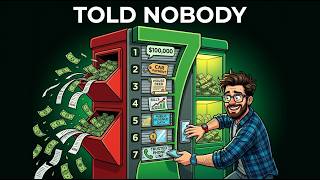
The video version of this analysis walks through each rule with specific research callouts, including the Philadelphia Fed methodology for matching lottery records to individual credit files, the exact NEFE disavowal statement, and the Dutch Postcode Lottery study design. Watch the full breakdown on YouTube: 7 Quiet Rules of People Who Got Rich and Told Nobody.