- Key Takeaways
- Rule 1: Above-Market Pay Is a Moat, Not a Charity
- Rule 2: Hire for Character, Not Credentials
- The Real Price of Getting Hiring Wrong
- Rule 3: Hire Slow, Fire Fast
- Rule 4: The Like, Admire, Trust Filter
- The Stay Filter: A 15-Minute Exercise You Can Run Tonight
- Watch the Full Video Breakdown
The resignation letter lands on your desk from your best employee — the one you trained from scratch, the one who finally understood how everything worked — and you realize the person you have been meaning to let go for months is still on the schedule. That contrast, the best leaving while the worst stays, is not bad luck. It is the predictable outcome of a broken hiring and retention system. The good news: four of the sharpest operators in modern business history left behind a clear framework for fixing it, and the results compound in ways most owners never stop to measure.
Key Takeaways
- Costco's annual employee turnover runs around 7%, compared to roughly 27% across the retail industry, because above-market pay and benefits are treated as a competitive moat, not a cost.
- Investor Mohnish Pabrai manages approximately $1 billion with a three-person team hired straight out of college — filtered on integrity, intelligence, and energy, not experience.
- A single bad hire can cost up to 15 times that person's annual salary in total opportunity cost, according to research cited in Who by Geoff Smart and Randy Street.
- Losing a good employee costs up to two times their annual salary in direct replacement and productivity losses.
- Benjamin Franklin's principle — hire slow, fire fast — is a kindness to your entire team and to the person who deserves a role where they can actually succeed.
- Charlie Munger's like-admire-trust filter, applied consistently for 45 years, is the standard no successful operator should lower for any reason.
Rule 1: Above-Market Pay Is a Moat, Not a Charity
Jim Sinegal started his retail career at 18 bagging groceries and running a forklift on a warehouse floor. He retired as the founder and CEO of Costco, and the path from entry-level worker to corner office was not a company legend — it was the standard route. For nearly three decades, Wall Street analysts demanded that Sinegal cut wages, trim benefits, and squeeze margins. He refused every single time.
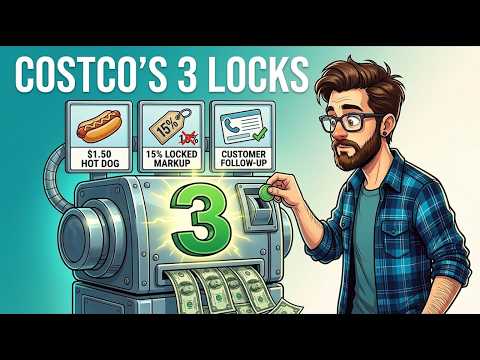
The numbers explain why. Costco's annual employee turnover runs around 7%. The retail industry average sits near 27%. Legacy big-box competitors once bled 60 to 70 percent of their workforce every year. Costco workers earn roughly $31 an hour, compared to $14 to $16 at Walmart. Twice a year, Costco pays its people a bonus ranging from $2,500 to $10,000. Seventy cents of every dollar the company spends goes directly to wages. The payoff is a workforce that compounds: workers with six years of tenure know where everything is, members renew at over 90%, and the training cycle almost never resets from zero.
MIT Sloan researchers concluded that Costco's obsession with culture is precisely what drove its growth. Harvard Business School labeled this the "good-jobs strategy" — higher pay and better conditions delivering more revenue and more retention at the same time, not the trade-off most operators assume. The Costco food court still sells a hot dog and soda for $1.50, unchanged since 1985. The company loses money on that deal intentionally, because the message — we do not squeeze you — runs all the way through the paycheck.
For a small business owner, the implication is not to match Costco's benefit budget. It is to be the best employer on your own block. A fair schedule posted two weeks out instead of two days. A tip jar divided transparently. A promotion offered from inside when a supervisor spot opens, rather than hiring a stranger over the person who earned it. None of those moves cost a dollar. Every one of them is a retention decision.
Cheap labor, Sinegal would tell you, is the most expensive thing a company can ever buy. If you are building a boring business that makes real money, the same logic applies: the operators who compound fastest are the ones who never let their best people wonder whether to stay.
Rule 2: Hire for Character, Not Credentials
Mohnish Pabrai manages approximately $1 billion through his Austin-based investment firm. His entire full-time team is three people. All three were hired directly out of college with zero prior industry experience, and he did not select them based on their resumes.
At a talk in early 2026, Pabrai described his only hiring filter: high integrity, high intelligence, very high energy. All three must be present. A weakness in any single dimension is disqualifying. The reasoning is straightforward — intelligence and energy are containers you can fill with skills over time. Integrity cannot be installed after the fact. Either a person walks in the door with it, or they never will.
Years after hiring those three graduates, Pabrai said he could no longer function without them. They know too much and they are genuinely excellent. That outcome is not coincidence. It is what happens when you hire for raw capability and then treat people as irreplaceable from day one.
For a small owner, the practical test is not a polished 30-minute interview. Ask candidates to describe a time they did the right thing when nobody was watching, and listen carefully for whether the story rings true. Then run a paid trial shift — one morning on the floor reveals more than ten structured interviews. Laszlo Bock, who built Google's hiring operation and wrote Work Rules, found in the data that a structured interview combined with a real work sample predicts actual performance roughly twice as well as gut-feel conversations.
Who, by Geoff Smart and Randy Street, formalizes this approach: define the specific outcomes a role must deliver before writing the job listing, then screen candidates against those outcomes rather than their prior job titles.
The Real Price of Getting Hiring Wrong
Most owners who make a bad hire never see the full bill. The costs scatter across recruiting fees, onboarding time, customer damage, and the productivity drag on everyone working alongside the wrong person.
The U.S. Department of Labor estimates that a bad hire costs up to 30% of that person's first-year salary. For a manager-level role, the figure climbs to 50%. Put a real number on it: a baker earning $60,000 a year who does not work out represents $18,000 to $30,000 in direct losses at the conservative estimate. SHRM's research puts the all-in cost of a single bad hire — once customer damage and lost productivity are factored in — as high as $240,000.
Smart and Street's research in Who goes further. Once you account for the opportunity cost of what the role could have produced under the right person, the true cost of a mis-hire can reach 15 times that person's annual salary. Spending an extra week on the hiring process, measured against that number, is not excessive caution. It is the cheapest insurance available to any small operator.
Research from 2024 puts the true replacement cost of a departing employee at up to two times their annual salary — a figure that never appears on any profit-and-loss statement most owners actually review.
In a five-person shop where one $50,000 employee turns over every year, that is up to $100,000 leaking out the back door annually. The relevant scope for most small operators is narrow: roughly two or three people on every ten quietly carry the operation. Keeping those two or three, and moving the wrong fits along respectfully, is the entire game.
Rule 3: Hire Slow, Fire Fast
Benjamin Franklin wrote in the 18th century: fish and guests stink after three days. Franklin was a printer whose apprentices' work determined his professional reputation on every page that came off the press. Early in his career he parted with a business partner who was simply not the right fit, rather than let the relationship deteriorate, and his printing operation went on to become the most respected in the colonies.
Modern operators have distilled that instinct into one of the cleanest rules in business: hire slow, fire fast. The framing matters enormously. Most owners hear "fire fast" and imagine cruelty. The reality is the opposite. Keeping the wrong person in a seat too long is the cruel choice — cruel to the colleagues absorbing the slack, cruel to the customers absorbing the mistakes, and cruel to the person stuck in a role where they cannot possibly win. A clean, respectful exit at the right time creates space for them to find the role where they can.
Ben Horowitz addresses this directly in The Hard Thing About Hard Things: firing someone the right way is not the cruel act. Pretending for another year that the problem will resolve itself is the cruel act.
In practice, the small-owner version is not a sudden termination. It is the honest conversation — delivered early, while there is still time to correct course or to part ways with dignity. People rise to a clear standard and drown in a fuzzy one. The kindest thing a manager can give a struggling employee is the truth while they can still do something with it.
Rule 4: The Like, Admire, Trust Filter
Charlie Munger maintained a partnership with Warren Buffett for 45 years — one of the longest and most productive business partnerships in history. When asked what guided his decisions about who to work with, his answer was three words: like, admire, trust. All three. Not two out of three.
In his final published column, Munger warned that working directly under someone you do not admire is, in his exact words, dangerous. The filter runs in both directions. A great operator applies it when building a team and earns it from their best people by being worth staying under.
Looking back across his career, Munger observed that nearly every difficult stretch traced back to ignoring this filter for the sake of money or a title. Nearly every successful stretch traced back to honoring it. For a small operator, being worth a yes on the like-admire-trust test looks like this: keep the small promises, the raise you mentioned and the Saturday off you agreed to. Take the blame publicly and give the credit openly. Let your best people watch you make the hard, honest call — people will follow an operator they genuinely trust into almost anything.
The Stay Filter: A 15-Minute Exercise You Can Run Tonight
The four rules above converge into one operating discipline: treat the right people generously enough that leaving never crosses their mind, and recognize the wrong fit early enough to act before the damage spreads. That is the Stay Filter, and running it takes about 15 minutes and costs nothing.
Take one blank sheet of paper and write down every name on your team. For each person, answer a single yes-or-no question — the Re-Hire Score: if this person resigned tomorrow and reapplied next week, knowing everything you know about them right now, would you hire them again?
For every yes, ask the harder follow-up: are you treating this person well enough that they would answer the same question about working for you? That is where retention is actually won or lost.
For every no, nothing changes tonight except honesty. Stop telling yourself the situation might improve on its own. That name earns one respectful, direct conversation within the next couple of weeks. Pay is a Stay Filter. Schedule is a Stay Filter. The willingness to have one honest conversation is a Stay Filter. Whether your best people stay or leave comes down to whether you built that filter deliberately, or left it to chance.
Clarity is the cheapest and most valuable outcome a small operator can produce. Most owners spend years working hard to avoid it. The Re-Hire Score ends that — for free, in 15 minutes, tonight. For more on building businesses that compound on their own momentum, see these cash-flow businesses that pay you every month.
Disclaimer: Hiring and firing rules vary by jurisdiction. Review your local employment regulations before acting on any of the strategies described here. Nothing in this article constitutes legal or HR advice.
Watch the Full Video Breakdown
The video goes deeper into each operator's story, the exact math behind every cost estimate, and how the Stay Filter plays out inside a real five-person business. Watch the full walkthrough on Harry's YouTube channel for a visual guide through all four rules and the Re-Hire Score exercise step by step.