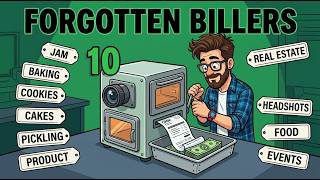
Most people assume a real business requires a physical location, a four-year degree, or a stack of startup capital. These ten businesses disprove all three. Two categories — home kitchen food businesses operating under cottage food law, and camera-based service businesses built around the Recurring-Client Lens model — quietly generate between $1,500 and $3,000 a month per operator, billed week after week from the same roster of clients. No commute. No storefront lease. No credential requirement beyond a single weekend of training or a one-time permit filing. If you have been exploring boring businesses that make money with low startup costs, both categories here fit that profile exactly.
Key Takeaways
- Five cottage food businesses are legal to operate from a licensed home kitchen in most U.S. states, turning a single first order into a standing weekly account.
- Five camera-based businesses use the Recurring-Client Lens model — each client books on a repeat schedule, so the calendar refills automatically instead of requiring constant lead generation.
- Camera operators targeting recurring clients report $3,000 a month without paid advertising, using a single weekend course rather than a formal photography degree.
- The correct cottage food permit costs under $100 in most jurisdictions and is the single gate between a hobby kitchen and a legal, revenue-generating food business.
- The lowest-gear business on this list requires the least equipment of anything here and is the one most likely to run self-sufficiently once the client base is established.
- Both categories suit people who want predictable recurring income over high-variance gig work.
Part One: Five Cottage Food Businesses You Can Run From a Home Kitchen
Cottage food law exists in all 50 U.S. states in some form. The specifics vary — some states cap annual revenue, others restrict sales to direct-to-consumer channels only — but the core principle is consistent: a home kitchen, once properly licensed, is a legal commercial kitchen for a defined list of low-risk food products. The permit itself typically costs between $25 and $100 and requires a one-time registration filing or inspection. What follows covers the actual product category, the license path, and the realistic monthly income for each business.
1. Artisan Cookie Subscriptions
Cookies are the most universally permitted cottage food item across U.S. states because they fall cleanly into the non-potentially-hazardous category required by most cottage food statutes. The subscription model — a set box of cookies delivered or picked up weekly — converts one customer acquisition into months of recurring revenue. Operators running six to ten active subscriptions at $60 to $80 per box per month generate between $360 and $800 monthly from that single product line alone. Add corporate gifting orders and the ceiling climbs further. Startup costs consist of mixing equipment you likely already own, ingredient stock, and a cottage food registration averaging $40.
2. Custom Celebration Cakes
Custom cakes occupy a premium tier in the cottage food market. A home baker charging $150 to $300 per custom cake — birthday, anniversary, baby shower — needs only eight to twelve orders a month to reach $1,200 to $3,000 in revenue. The recurring angle here is referral velocity: one satisfied client at a school typically produces three to five referrals within the same parent network. Many cottage bakers report that after the first six months, inbound inquiries outpace their calendar capacity. The permit required is the standard cottage food registration, though cakes with cream cheese or fresh cream fillings may require an additional dairy handling endorsement depending on the state.
3. Specialty Jams, Preserves, and Pickled Goods
High-acid preserved foods — jams, jellies, pickles, and chutneys — are among the safest cottage food products from a regulatory standpoint because the acidity level eliminates spoilage risk. They are also among the easiest to sell at scale through farmers' markets, where a single Saturday stand can move $400 to $800 in product. The recurring element builds when local restaurants and specialty grocers place standing wholesale orders. A home kitchen producing twelve to fifteen cases of jam per week, wholesale-priced at $5 to $7 per jar, generates $720 to $1,260 from a single wholesale account — without a single new customer acquisition after the initial pitch.
4. Dry Mixes and Spice Blends
Dry goods — baking mixes, soup mixes, seasoning blends, and spice kits — represent the lowest-barrier entry point in cottage food because they require no refrigeration, carry an extended shelf life, and ship legally through the mail in most states. The margin on dry mixes is exceptionally high: a $3 to $4 cost-of-goods blend packaged in a branded $18 retail bag delivers a 78% gross margin. Etsy storefronts and local gift shop wholesale accounts are the two most common revenue channels. An operator who establishes even one regional gift shop wholesale relationship gains a predictable monthly purchase order — the definition of recurring revenue from a home kitchen with no overhead beyond ingredients and packaging.
5. Granola and Energy Bars
Granola targets the fastest-growing cottage food buyer: local cafés and fitness studios placing weekly wholesale orders. A home kitchen producing 20 to 30 pounds of granola per week — bagged and branded — sells wholesale at $8 to $12 per pound, generating $160 to $360 per café account per week. Two or three café accounts yields $1,500 to $3,000 monthly. The business scales by adding accounts, not by increasing production complexity. Granola qualifies for cottage food status in virtually every state's approved product list. The only capital requirement beyond the permit is a commercial-grade stand mixer if batch sizes exceed home equipment capacity — typically a $200 to $400 one-time investment.
Part Two: Five Camera Businesses Built Around the Recurring-Client Lens
The conventional camera business model chases new clients constantly — shoot a wedding, find the next wedding. The Recurring-Client Lens inverts this entirely. Each of the five businesses below is designed so that the client relationship, once established, generates repeat bookings on a predictable schedule. One weekend course in the relevant specialty — not a four-year photography degree — is all the training required to start. Operators using this model consistently report $3,000 a month from a client roster small enough to fit on a single page.
6. Real Estate Photography
Real estate agents list multiple properties per month, and each listing requires fresh photography. A single productive agent — one closing six to ten deals per year — books photography for every listing. Lock in three to five agents as recurring clients and the calendar fills itself. Typical pricing runs $150 to $300 per residential shoot, with twilight and aerial add-ons pushing the ticket to $400 to $500. At four shoots per week across a recurring client roster, monthly revenue reaches $2,400 to $6,000. The equipment baseline is a DSLR or mirrorless camera, a wide-angle lens, and a tripod — under $1,000 used. A real estate photography workshop, available online for $99 to $299, is the only formal training required.
7. Restaurant and Menu Photography
Restaurants refresh their menus seasonally and their social media content monthly. A restaurant photography retainer — covering one shoot per month for menu updates, seasonal specials, and social content — typically prices at $400 to $800 per month per client. Five restaurant retainer clients generates $2,000 to $4,000 in recurring monthly income. The pitch is straightforward: show the owner their current photography beside a well-shot competitor, then quote a monthly retainer priced below the cost of one week of part-time help. Once the retainer is established, clients rarely cancel because their marketing calendar depends on the deliverables. The critical skill here is low-light technique — specifically, bounce card setups that perform in the tight, warm environments of most dining rooms.
8. E-Commerce Product Photography
Online sellers on Amazon, Etsy, and Shopify need product images continuously — every new SKU, every product variation, every seasonal campaign. An e-commerce client who launches four to six new products per month becomes a standing monthly account at $500 to $1,500 depending on volume and styling complexity. The recurring nature is structural: as long as the client sells online, they need photographs. Three to five e-commerce clients at a $600 average monthly retainer generates $1,800 to $3,000 without a single new client acquisition after onboarding. A lightbox, two continuous LED lights, and a roll of sweep paper — under $200 total — constitute the complete studio setup for this specialty.
9. School and Youth Sports Photography
School portrait contracts and youth sports league photography operate on annual recurring cycles. A photographer who lands one elementary school portrait contract — typically valued at $2,000 to $8,000 for the school year — gains a relationship that auto-renews annually when service quality is maintained. Youth sports leagues follow the same pattern: one season leads directly to the next season's rebooking. The startup path is direct: contact the school district's activities coordinator or the local parks and recreation department, offer a competitive per-student rate, and show a portfolio of clean, consistent portrait work. One weekend portrait lighting workshop and a portable backdrop system, under $400, are the only prerequisites to a viable pitch.
10. Corporate Headshot Days
The tenth business — and the one that requires the least gear on this entire list — is the corporate headshot day. Companies with growing teams need updated headshots for new hires, LinkedIn profiles, press releases, and internal directories on a rolling basis. A single two-hour headshot session priced at $800 to $1,500 covers eight to twelve employees. Companies with regular hiring cycles — technology firms, financial services companies, staffing agencies — book quarterly. Four quarterly clients at $1,000 per session generates $4,000 in recurring annual revenue from four half-days of work per client per year. The equipment requirement is minimal: one portable strobe or speedlight, a collapsible backdrop, and a standard portrait lens, totaling $300 to $600. The business refills its own calendar because HR departments initiate the rebooking — not the photographer.
Why Boring Businesses Outperform Flashy Ones Over Time
Both categories share a structural advantage that higher-profile business models do not: they generate predictable, recurring revenue instead of one-time transactions. A cottage food baker with four standing café accounts does not wonder where next week's revenue comes from. A photographer with five restaurant retainer clients does not run paid ads to fill the calendar. The work is unglamorous by design — and that is precisely why the economics hold up year after year. There is no viral moment required, no content flywheel to maintain, no algorithm to chase.
For anyone building toward financial independence through business income, the boring-business model compounds the same way consistent investing does: slowly, reliably, and without requiring constant attention. A recurring business generating $2,000 to $3,000 a month — when profits are invested systematically — can meaningfully accelerate a long-term wealth-building plan. If you are evaluating other low-complexity income streams alongside these, these six freelance skills that pay $5,000 a month offer a comparable no-degree pathway with similarly low startup requirements.
Watch the Full Video Breakdown
The YouTube video for this topic goes deeper on the exact license filing steps for each cottage food category and the specific client outreach approach photographers use to land their first recurring retainer. Watch 10 BORING Businesses That Bill Every Week Without a Degree or a Storefront on the Harry's Stash YouTube channel for the complete visual walkthrough, including the income breakdowns for each of the ten businesses presented in sequence.