- Key Takeaways
- The Rule That Sets the Buying Order
- Machine 1: Portable Spot Carpet and Upholstery Cleaner
- Machine 2: Heat Press for Custom Shirts
- Machine 3: Vinyl Cutter for Decals and Truck Lettering
- Machine 4: Airless Sprayer for Fence and Deck Staining
- Machine 5: Home Embroidery Machine for Crew Hats
- Machine 6: Lawn Core Aerator (Rent First, Buy Later)
- Machine 7: Parking Lot Line Striper
- The Honest Part: Machines Do Not Find Customers
- Watch the Full Video Walkthrough
- Sources
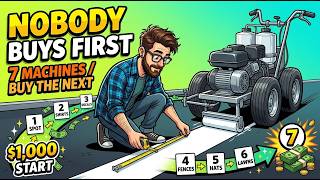
If a thousand dollars were all you had left and you had to start over tomorrow, the smartest move would not be the flashy machine that looks impressive online. It would be a short list of small, boring machines bought in a specific order, where each one pays for the next. This guide walks through seven boring business ideas built on small machines that make money, the prices customers already pay for each machine's work, and the beginner mistake that quietly eats your first profit with each one.
Nothing here is guaranteed. Every price comes from a retailer listing or a published price guide, and your local market will differ. The point is the sequence: start with the cheapest machine and the fastest payback, then let the earnings fund the next purchase.
Key Takeaways
- The rule: the cheapest machine with the fastest payback goes first, and whatever it earns buys the next one.
- The first three machines (spot cleaner, heat press, vinyl cutter) total about $640, leaving roughly $360 for supplies on day one.
- Every machine has two ways to earn: sell your own product, or become the boring supplier behind a business that already has the customers.
- The most profitable machine, a parking lot line striper, is bought last because it costs more than the entire starting budget.
- A machine does not find customers. Before buying anything, check who already buys the service near you, what they pay now, and what would make it fail.
The Rule That Sets the Buying Order
The order is not random. The first three machines fit inside the $1,000 on day one, with money left over for supplies. Everything after that is bought with what the earlier machines brought in, not savings and not a credit card.
The sequence also moves in one direction. It starts with selling to people in their living rooms and ends with selling to the businesses that already have the customers. If you want more ideas at the very low end of the startup range, our guide to 6 boring businesses that make money for under $500 covers that territory.
Machine 1: Portable Spot Carpet and Upholstery Cleaner
The first machine is a portable spot cleaner, the carpet and upholstery machine about the size of a toolbox. It sounds like something you would borrow from a neighbor, yet people already pay for this work constantly: every couch with a coffee stain, every chair the dog sleeps on, every rug after a party.
HomeAdvisor's cost guide puts the average upholstery cleaning at about $174. Fixr puts the national average around $180. Angi says one regular couch runs $100 to $300.
Two ways to earn
The first is simple: clean couches and chairs for homeowners in their living rooms. The second is the supplier play. Short-term rental hosts and property managers turn over furniture every single week, and a stained couch in the listing photos costs them bookings. You become the person they call on turnover day.
The beginner mistake and the fix
The mistake is too much water. Cleaning trade guides such as Cleanfax call overwetting the most common cause of upholstery problems. The fabric browns, the cushion takes days to dry, and it can start to smell. The fix is to use less water than feels right, do extra passes with suction only, and leave a fan running on the way out.
The price
A Bissell SpotClean Pro runs about $165 new, and used ones show up for around $80. One or two couches and it is paid for, and the money from those couches buys machine number two.
Machine 2: Heat Press for Custom Shirts
The second machine is a flat clamshell heat press, the same kind of thing you have walked past at a mall kiosk. That is the point. Every school team, church group, family reunion and small work crew wants matching shirts, usually fast and in small numbers, which is exactly the kind of order big print shops do not love.
Two ways to earn
Way one is making your own designs, such as hometown shirts or the high school colors on rivalry week. Way two is being the boring supplier behind the team, such as the youth coach who needs two dozen shirts by Saturday. Shirt pricing guides from Merchize and RushOrderTees put vinyl printed shirts at around $8 to $15 each at that size, so one team order is roughly $200 to $360. A plain blank shirt costs about $2.50 to $3.70 wholesale.
The beginner mistake and the fix
The first shirt looks perfect and then peels in the wash, almost always from too little pressure or too little heat. Fix it before the first order: press one test shirt at around 305 to 320 degrees for 10 to 15 seconds, wash it, and only then take the job.
The price
A 15 by 15 inch press from a brand like Fancierstudio runs about $170 to $190. One team order covers it, and it sets up machine number three.
Machine 3: Vinyl Cutter for Decals and Truck Lettering
A desktop vinyl cutter such as a Silhouette Cameo or a Cricut Maker can sound like a craft room toy. In the right hands, it is a sign shop tool, and it is the first machine that gets you paid by a business with a truck.
It comes third because it feeds machine number two: the cutter cuts the heat transfer vinyl that the press applies to shirts, so every shirt order gets cheaper and faster. It also opens a second door. Every contractor, landscaper and plumber with a pickup wants the company name on the door. Sign trade guides put basic company door decals at $10 to $50 a door, and full door lettering with a logo at $300 to $500 a truck.
Way one is decals and shirts you sell yourself. Way two is the supplier behind the contractor: you letter his trucks, then his crew's shirts.
The beginner mistake and the fix
Forgetting to mirror the design. Heat transfer vinyl is cut face down, so if you do not flip the image first, the whole shirt reads backwards. Make the mirror button the first click on every shirt job and it never happens again. The cutter runs about $280 to $400 new.
The day-one running total
Spot cleaner, heat press and cutter come to about $640. That leaves roughly $360 for blanks, vinyl and cleaning solution. That is day one, and everything from here is paid for by what these three earn.
Machine 4: Airless Sprayer for Fence and Deck Staining
Machine four is an airless paint sprayer, used not for painting houses but for staining fences and decks. It sounds like a weekend chore, which is exactly why people pay someone else to do it. Drive through any subdivision and you will see wood fences gone gray after a few summers.
There are about 373,000 community associations in the country, according to the Foundation for Community Association Research, and many have rules about how fences should look. Angi's guide puts fence staining at $1 to $3 per square foot. HomeGuide looked at more than a hundred real jobs, and the median came in around $1,300.
Way one is homeowners. Way two is the supplier behind the property manager who has forty fences that all need to match.
The beginner mistake and the fix
Overspray. A sprayer throws a fine mist farther than you would think, and one breezy afternoon can put cedar stain on the neighbor's car. The fix is boring and it works: check the wind, cover what you do not want stained, and brush the first coat into the wood right behind the spray.
The price
A Graco Magnum sprayer runs about $310 to $400 new, and used ones go for around $150 to $250. A standard fence of 150 feet at $3 or $4 a foot is $450 to $600, and stain for one side runs about $150 to $230. The first fence pays for the sprayer, and the next few fences buy machine number five.
Machine 5: Home Embroidery Machine for Crew Hats
Machine five is a home embroidery machine, and it makes something people wear to work every day. It stitches one needle and one color at a time, so it is slow, but remember the contractor whose trucks you lettered. His crew wears hats, and every roofing, electrical and landscaping crew wants the company logo on a cap.
Custom hat shops, per the CustomPatchHats price list, price two dozen embroidered logo hats at roughly $21 to $28 each. That is about $500 for one crew order of 24 hats. Way one is hats and patches you design and sell yourself. Way two is the supplier behind the crew: same customer, third product.
The beginner mistake and the fix
Trying to stitch a stiff, structured cap on a flat home machine. It fights you, the logo puckers, and the cap is ruined. The fix is to stitch the logo as a flat patch and then press that patch onto the cap with the heat press from machine number two. Now the machines are working together.
The price
A popular single needle Brother model runs about $755 to $900 new, and used ones start around $450. Notice where the money comes from: not the starting cash, but shirts, couches and fences. Two or three crew orders of hats pay it back.
Machine 6: Lawn Core Aerator (Rent First, Buy Later)
Machine six is a lawn core aerator, the walk-behind machine that pulls small plugs of dirt out of a yard. It might be the most boring item on the list, which is why it belongs here. You do not buy it first. You rent it.
Lawn care guides from LawnStarter and Lawn Love put core aeration at about $75 to $205 per lawn, and most people pay around $140. LawnStarter's numbers for a quarter acre land around $116 to $191. For grass across most of the northern half of the country, the season is early fall, September and October.
Way one is homeowners on your own street: one block, six yards, the same Saturday. Way two is the supplier behind the lawn care company that is booked solid in October and would rather hand you the overflow.
The rental math
Home Depot's rental counter starts around $79 for four hours and about $113 for a full day. One lawn covers the rental, and every lawn after that on the same Saturday is yours.
The beginner mistake and the fix
Hitting sprinkler heads. The tines punch right into the ground, and an unmarked sprinkler head turns your first job into a repair bill. Walk the yard first, ask the owner, and put a small flag on every head.
When to buy
When the Saturdays keep filling up, a used commercial aerator runs about $1,600 to $3,200, according to TractorHouse listings. That is roughly 15 to 25 lawns. One good fall of lawns is how you buy the last machine.
Machine 7: Parking Lot Line Striper
The last machine makes the most money of all seven, and on day one it is the one you cannot afford. It paints the white lines in a parking lot. You have driven over a million of those lines and never wondered who paints them, yet every church lot, small strip center, dentist's office and apartment complex has lines that fade.
Paving price guides from Pro-Paving, PaveGauge and National Asphalt Maintenance put restriping at about $4 to $8 per parking stall, and a handicap stall with its symbol at roughly $25 to $100. A small lot of 30 to 50 stalls usually runs about $425 to $1,200 a job. Business guides such as OneCrew say striping crews keep about 30 to 60 percent of that.
Here the boring supplier is the business itself. The customer is the property manager, the same one whose fences you stained, and he already knows you show up when you say you will.
The beginner mistake and the fix
Rushing the layout. If you do not measure and chalk the whole lot first, the stalls drift: one spot is huge and the next barely fits a compact car. The line itself is four inches wide, so it has to be counted in. The fix is a tape measure, a chalk line, and checking the diagonal before you spray a single stripe.
Why it comes last
You could start small with an aerosol striping machine for about $150 to $200 on a little church lot. But the machine that does real lots, an airless line striper, runs about $6,800 to more than $9,000 new, and used ones are listed around $3,700 to $4,000. On a typical job of about $850, keeping around half, that is about nine jobs. You would never buy it with $1,000. You would buy it with couches, shirts, trucks, fences, hats and lawns.
The Honest Part: Machines Do Not Find Customers
A machine does not find customers, fix bad pricing, or knock on a single door. Before buying any machine on this list, check three things: who already buys this service near you, what they are paying for it right now, and what would make it fail. If all three answers look good, the machine is just a tool for a customer who already exists.
The first step costs nothing. Call one property manager, one youth coach or one contractor and ask what they pay today. Even a disappointing answer is a win, because it kept a machine out of your garage that nobody around you wants. For a related low-cost model, see how a $500 mobile auto detailing kit is structured. Also check your city's business license and insurance requirements before taking paid jobs.
Watch the Full Video Walkthrough
Want to see the buying order laid out visually, with the price comparisons for each machine? Watch the full video, 7 BORING Machines I'd Buy First If I Had to Start Over With $1,000, and tell us in the comments which machine you would buy first.
For educational purposes only. This is not financial advice. Prices change and vary by market, and local rules differ.
Sources
- HomeAdvisor, Fixr and Angi upholstery cleaning cost guides
- Bissell, Fancierstudio, Silhouette America, Cricut, Graco, Brother and Rust-Oleum retail listings (Home Depot, Walmart, Michaels, Menards)
- Merchize and RushOrderTees custom shirt pricing guides; Jiffy wholesale blank shirt prices
- Gilroy Blackout and TheTruckLettering truck lettering price guides
- Angi and HomeGuide fence staining cost data; Home Depot stain prices
- Foundation for Community Association Research (community association count)
- CustomPatchHats embroidered hat price list
- LawnStarter and Lawn Love aeration cost guides; Home Depot tool rental aerator rates; TractorHouse used aerator listings
- Pro-Paving, PaveGauge and National Asphalt Maintenance striping cost guides; OneCrew striping business guide
- Cleanfax (upholstery overwetting), Printable Press (heat press settings), Heartland Turf (aeration prep), Traffic Safety Store (striping layout)