- Key Takeaways
- Why Crew-Free Businesses Are Worth a Closer Look
- Part One: Seven Certificates That Let You Invoice From a Desk
- Part Two: Six Spaces People Book Without Ever Meeting You
- Comparing the Two Models
- How to Choose Between a Certificate and a Space
- Watch the Full Video Breakdown
- Final Thoughts
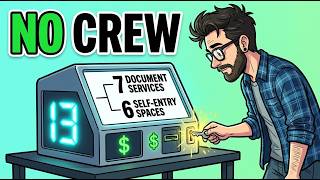
Most boring businesses come with a van, a ladder and a crew. The thirteen in this guide do not. Seven of them run on one exam and one signed document, produced from a spare desk. The other six let out a space by the night, the day or the season, and the guest lets themselves in with a code that expires at checkout. This article walks through both groups and explains why the lack of a crew is the main attraction.
The guide is based on two deep-dive videos from the Harry's Stash channel, HS-285 and HS-286, combined into one. It covers seven certificates that let you invoice for a report, an inspection or a filing with no truck and no crew. It also covers six spaces people book overnight, where you never meet a single guest.
Key Takeaways
- Seven of the businesses run on one exam and one signed document, produced from a spare desk.
- Six more rent out a space by the night, the day or the season, with guests using a code that dies at checkout.
- No van, no ladder and no crew is the common thread across all thirteen.
- One of the certificates sells a document the client is legally barred from producing themselves, and that is where the pricing power sits.
- Both models sell something other people cannot easily do or provide for themselves: a signed document or a ready-to-use space.
Why Crew-Free Businesses Are Worth a Closer Look
A crew means payroll, scheduling, insurance, equipment and a lot of daily management. A truck means fuel, repairs and a vehicle that earns nothing while parked. A business that removes all of that has fewer moving parts and fewer things that can break on a Monday morning. That is the appeal of the boring business: the work is unglamorous, but the structure is simple.
The thirteen businesses here fall into two families. The first sells paperwork that carries legal weight. The second sells access to a space. In neither case does the owner need to show up with a team. If you want a broader starting point on low-cost ventures, our guide to 6 boring businesses that make money for under $500 to start covers a different set of options.
Part One: Seven Certificates That Let You Invoice From a Desk
The first group of seven businesses share one pattern. You pass a single exam, you receive a certificate, and from then on you can invoice for a report, an inspection or a filing. The product is a signed document. There is no truck to load and no crew to dispatch, and the whole operation can be run from a spare desk.
How the one-exam model works
The structure is straightforward. A certificate acts as the license to sign. Once you hold it, a client who needs a report, an inspection or a filing has to come to someone who is qualified to put a signature on it. You do the work at your desk, sign the document, and send an invoice. The exam is the barrier to entry, and for many people that single hurdle is far more manageable than building a company with employees and vehicles.
Why a signed document is a different kind of product
When you sell labor, your income is capped by the hours you and your crew can work. When you sell a signed document, you are selling a qualification and a result. The client is not paying for how long it took. They are paying for the fact that the paperwork is valid. That shift is what makes these seven certificates attractive to anyone who does not want to manage people or equipment.
Where the pricing power sits
One of these certificates sells a document the client is legally barred from producing themselves, and that is where the pricing power sits.
This is the most important idea in the first half of the guide. If a client could produce the document on their own, they would compare your price against doing it themselves. If the law bars them from producing it, they have no alternative except to hire a certificate holder. The less choice the client has, the more control you have over your pricing. When you evaluate any of the seven, ask a simple question: could the client legally do this themselves? If the answer is no, the pricing power is on your side.
Part Two: Six Spaces People Book Without Ever Meeting You
The second group of six businesses is built around renting out a space. The booking unit varies: by the night, by the day or by the season. The key feature is the access method. The guest lets themselves in with a code that dies at checkout, so you never have to hand over a key, wait around for an arrival, or meet anyone in person.
Self-check-in changes the workload
Traditional rentals depend on someone being present at the start and end of every stay. A code that works only for the length of the booking removes that requirement. Access begins when the booking begins and ends automatically at checkout. The owner is not a front-desk clerk, and no one has to be on site at a specific hour.
Nightly, daily and seasonal bookings
Because these spaces are let by the night, the day or the season, owners can choose how they want to sell the same asset. Short bookings suit people who need a space for a brief window. Longer seasonal bookings suit people who need it for an extended stretch. Each approach turns a space into recurring income without needing a crew to clean up after every job or a truck to carry equipment between sites. For more ideas in this style, see our article on 6 rental business ideas that make money without doing the work.
Comparing the Two Models
The two families of business solve the same problem in different ways. Both avoid the van, the ladder and the crew, but they rely on different assets.
- Certificate businesses rely on a qualification. The asset is the credential you earned with one exam, and the output is a signed document delivered from a desk.
- Space rental businesses rely on a physical place. The asset is the space itself, and the output is access, delivered through a code that expires at checkout.
In both cases, the owner never needs to be on a job site with a team. That means fewer employees to manage, fewer vehicles to maintain and less day-to-day pressure. For readers who like the idea of a hands-off structure, this is the core advantage of the boring business approach.
How to Choose Between a Certificate and a Space
Start with what you already have. If you have a spare desk and the discipline to study for an exam, the certificate route lets you begin earning by invoicing for reports, inspections or filings. If you have access to a space, or the ability to secure one, the rental route lets guests book and enter on their own schedule.
Whichever path you consider, test the same three points before committing:
- Can you operate without hiring a crew or buying a truck?
- Does the customer need what you provide, such as a document they are barred from producing themselves or a space they cannot easily get elsewhere?
- Is the process repeatable, so each new client or booking follows the same simple steps?
If you want to compare these ideas with hands-on options, our article on 5 high-paying trades most grads ignore covers a different route to certification.
Watch the Full Video Breakdown
This article summarizes the key ideas, but the full video goes deeper into all thirteen businesses, including the seven certificates and the six bookable spaces. Watch 13 BORING Businesses That Never Need a Crew on the Harry's Stash YouTube channel for the complete walkthrough:
Final Thoughts
A van, a ladder and a crew are not requirements for a profitable business. Seven certificates let you invoice for a report, an inspection or a filing from a spare desk, and six spaces let guests book overnight and enter with a code that dies at checkout. The shared advantage is simplicity: you sell a signed document or a ready space, and you do it without a crew. Look closely at where the client has no alternative, because that is where pricing power sits.