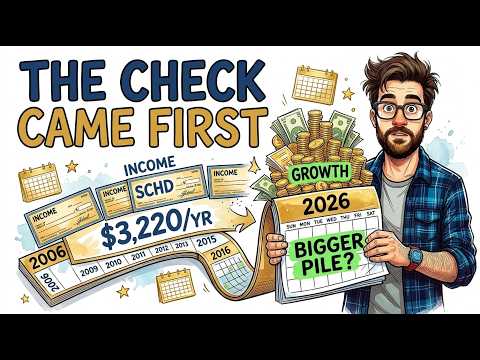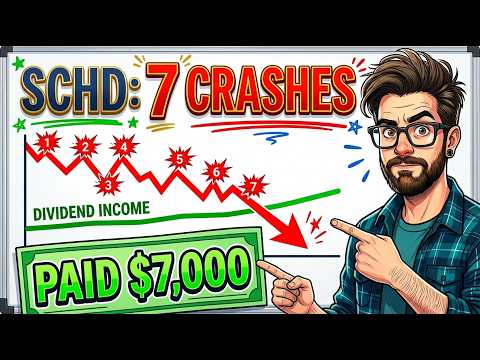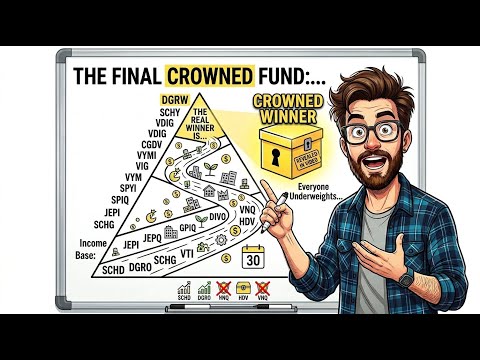
One decision — selling at the bottom of the last bear market — cost the average investor more than $75,000 for every $100,000 they had invested. Not because the market failed them. The market recovered and kept running. They surrendered that money by sitting on the sidelines while it did. That is one of fourteen costly dividend investing mistakes examined here, and each one carries a concrete dollar figure — because a lesson without a price tag is just an opinion.
Key Takeaways
- The highest headline yield is almost always a warning label, not a bargain — the market prices in doubt about its sustainability.
- Panic-selling at market lows can permanently cost more than $75,000 per $100,000 invested, even when dividend income never declined during the downturn.
- A dividend growing at 9% annually can deliver a 12%+ yield-on-cost within a decade; a static high yield loses real purchasing power every year to inflation.
- Holding ordinary income funds in a taxable account instead of a retirement account can waste more than $4,400 per year on a $500,000 income portfolio.
- Over-diversifying into fifteen or twenty overlapping funds creates the illusion of safety without the reality — real diversification means genuinely different roles, not more funds.
- Never revisiting a fund's original investment thesis is the quietest and most avoidable form of portfolio rot.
Disclaimer: Every dollar figure in this article is illustrative and drawn from historical market data. This content is educational and does not constitute financial or tax advice. Consult a qualified professional before making investment decisions.
The Three Yield Mistakes That Quietly Bleed a Portfolio
Mistake 1: Chasing the Highest Headline Yield
The most costly habit in dividend investing is sorting a screener by yield — highest to lowest — and buying whatever tops the list. The numbers look compelling in year one, but the pattern is reliably destructive over time.
Consider two investors, each starting with $100,000. The first buys a fund advertising a 10% headline yield — $10,000 in year one. But that payout is unsustainable: distributions get trimmed by roughly 5% annually while the share price erodes by about 4% per year, which is historically consistent with how extreme yields tend to behave. By year ten, annual income has fallen from $10,000 to roughly $4,000, and the original principal has quietly declined to approximately $66,000. The check shrank and the pile shrank.
The second investor buys a "boring" 3.5% grower. Year-one income is just $3,500. But as the dividend grows and the price appreciates, year-ten income climbs to around $6,400 while the portfolio principal has grown to nearly $200,000. Same starting capital, opposite outcomes — the only variable was the headline yield.
There is a reason an extreme yield exists: the market is pricing in serious doubt about whether that payout can be maintained. A dangerously high yield is a warning label, not a bargain. Sorting a screener from highest to lowest and buying the top results means systematically purchasing the funds the market trusts the least, in the exact order it distrusts them.
Mistake 2: Mistaking a High Distribution for Safe Income
A growing category of funds — many using covered call or other options-based strategies — pays large monthly distributions. Investors see those numbers and assume they represent income the way a traditional dividend does. They often do not. A distribution can include return of capital: the fund quietly liquidating a portion of its own assets and returning the investor's own money dressed as yield. The principal slowly erodes while the monthly check feels generous.
The tax problem compounds the issue. Qualified dividends receive the most favorable federal tax treatment available. Many high-distribution funds generate ordinary income instead, taxed at the investor's full marginal rate. The result is higher taxes on income that may partly consist of a return of principal — a worse outcome on both dimensions simultaneously. Always determine what a distribution actually is, where it comes from, and how it is taxed before relying on how large it looks.
Mistake 3: Ignoring the Dividend Growth Rate
A high yield that never grows is a slowly sinking ship; inflation erodes its real value every single year without announcing itself. A static 6% yield running against 3% annual inflation loses roughly a quarter of its real purchasing power over a decade. Meanwhile, a fund starting at a 3% yield and compounding its payout at 9–10% annually becomes something entirely different over time.
As a concrete illustration: investors who purchased a well-regarded dividend growth fund at launch and held consistently now collect a yield-on-cost well above 12% on their original purchase price — because the dividend kept climbing while their cost basis stayed frozen. The investor who chased a static 12% yield at the same time almost certainly watched it get cut and eroded. Growth beats a large starting number over any meaningful time horizon, and ignoring that dynamic is one of the least visible and most costly mistakes on this list. For a deeper comparison of how dividend growth stalls play out between two popular funds, see DGRO vs SCHD: The Dividend Growth Stall Investors Need to See.
The Five Behavior Mistakes That Do the Most Damage
Mistake 4: Selling at the Bottom and Locking In the Loss
In the last major bear market, broad indexes fell roughly 25% from peak to trough. A $100,000 portfolio bottomed near $75,000 — a number painful enough that many investors sold to stop the bleeding. What they actually did was lock in a permanent loss. The market recovered and subsequently gained approximately 26%, then around 25%, then nearly 18% in successive years. The investor who held through the full cycle grew $100,000 to roughly $150,000. The investor who sold at the bottom stayed at $75,000 while watching the recovery from the sidelines — a gap of approximately $75,000 per $100,000 invested, from a single fear-driven decision.
The particular cruelty for dividend investors: during that same downturn, dividend income from quality dividend growth funds did not decline. Many of the strongest dividend payers actually raised their payouts through the bear market. Investors who sold were escaping a paper loss that their actual income stream never felt. For a quantified look at what stepping away from a dividend strategy actually costs, see Pausing Dividend ETFs for 6 Months: The $13,900 Mistake.
Mistake 5: Trying to Time the Re-Entry
Selling at the bottom leads directly to a second mistake: waiting for an "all clear" before reinvesting. That signal never comes. The market bottom is the most frightening moment by design — headlines are darkest exactly when opportunity is greatest, and the recovery has usually captured most of its gains by the time the news feels reassuring again. The statistical reality is severe: the largest single-day gains in market history cluster directly alongside the worst single-day losses, in the same volatile stretches. Missing just a handful of the market's best days over two decades — because capital was parked in cash waiting for certainty — can cut long-term returns roughly in half. Time in the market has consistently beaten timing the market, and the cost of the attempt tends to be paid twice: once on the way out and once on the way back in.
Mistake 6: Over-Diversifying Into Overlapping Funds
A portfolio holding fifteen or twenty dividend funds appears diversified. Under the hood, many of those funds own the same companies. Two popular dividend growth funds — VIG and DGRO — overlap heavily in their underlying holdings. Owning both provides exposure to the same stocks twice while doubling the fee drag and administrative complexity. Real diversification means owning genuinely different things: a domestic equity anchor, an international sleeve, a defensive income component, a growth engine — each serving a role the others cannot. That structure typically requires four or five funds, not twenty. Owning twenty funds that quietly perform the same function is diversification by quantity rather than by design, and it creates a false sense of security while making every other mistake on this list harder to detect.
Mistake 7: Chasing Last Year's Best-Performing Fund
A fund that posts an exceptional year attracts new money near its peak, then reverts. Research consistently finds that the average investor earns meaningfully less than the funds they hold — a gap of one percentage point or more per year driven almost entirely by buying after run-ups and selling after drops. Over two decades, one percentage point per year compounds into a substantial sum surrendered purely to impatience. The remedy is deliberately selecting funds for their long-term structural role — income, growth, defense, international exposure — and not reshuffling the portfolio every time a different fund becomes the most-discussed option online. The hot fund this year is very often the cold one next year.
Mistake 8: Confusing Dividend Income With Total Return
Treating dividends as separate free money while treating share price as the "real" portfolio leads to poor decisions in both directions: chasing a larger dividend even as total wealth declines, and panicking over a falling price even as income holds steady. True portfolio wealth is the current value of all shares plus every dividend received, measured together. Investors who hold both numbers in view simultaneously are calmer during downturns and more skeptical of extreme yields — because they can see total value quietly deteriorating behind large distribution figures.
The Six Structure Mistakes That Leak Money for Years
Mistake 9: Holding Funds in the Wrong Account Type
The account where a fund lives — taxable brokerage, traditional IRA, Roth IRA — determines how its income is taxed each year. Qualified dividends from domestic equity funds can face a 0% federal rate for investors below the relevant income threshold. Funds generating ordinary income face the investor's marginal rate unless they are held inside a retirement account where annual taxation cannot reach them. Placing ordinary income funds inside a retirement account and keeping qualified dividend funds in a taxable account where they benefit from preferential rates is one of the genuinely free improvements available to any portfolio. Most investors never make this placement deliberately, and the accidental default costs them a slice of income every single year.
Mistake 10: Ignoring the Qualified vs. Ordinary Dividend Distinction
The tax difference carries a concrete dollar figure. On $3,500 in dividends, a couple filing jointly with taxable income below approximately $98,900 in 2026 pays $0 in federal tax on qualified dividends. The same $3,500 from an ordinary income fund at a 22% marginal rate costs roughly $770. On a $500,000 income portfolio yielding 4% — $20,000 in annual distributions — the qualified-versus-ordinary difference at a 22% rate amounts to approximately $4,400 per year, every year, for decades. Checking the tax character of each holding's distributions takes an afternoon. Most investors never spend it.
Mistake 11: Running Without a Cash Floor
When a market drawdown coincides with an unexpected expense — a major home repair, a medical bill — an investor with no liquid reserve is forced to sell dividend funds at the worst possible moment, converting a temporary paper loss into a permanent realized one. The solution is maintaining a cash floor of roughly one year of expenses in a safe, liquid instrument: short-duration Treasury bills or a competitive high-yield savings account. The purpose is not income generation — it is ensuring that emergency spending never forces a sale at a market low. As a secondary point, parking this specific reserve in a vehicle earning a competitive rate (currently near 4%, versus under 1% at most large bank savings accounts) makes the floor both safer and meaningfully more productive. No cash floor at all is the dangerous mistake; a lazy floor earning almost nothing is the costly one.
Mistake 12: Delaying Dividend Reinvestment During the Accumulation Phase
Before an investor needs dividend income in retirement, every distribution should automatically purchase additional shares. Those shares generate their own dividends, which purchase more shares. The compounding effect is most powerful in the earliest years — a dollar reinvested at the start of an investment career does far more work than a dollar added later because it has more time to multiply. Two investors in the same fund, one with automatic reinvestment enabled from day one and one who lets dividends accumulate as idle cash for several years, can end up tens of thousands of dollars apart over a long horizon — even if the second investor eventually invests every idle dollar. The reinvestment toggle is the highest-paid setting in any investment account and costs absolutely nothing to enable.
Mistake 13: Letting the Portfolio Drift Without a Rebalancing Rule
A carefully constructed portfolio will drift over time without periodic correction. One fund runs hot for two years and swells to 40% of holdings. The defensive sleeve shrinks just as volatility rises. Without a single deliberate action, the investor ends up overexposed to the most expensive part of the market and underexposed to the defensive component they intentionally built in. This is performance chasing that happens automatically — by inaction rather than by decision, which makes it particularly insidious. A simple annual rule — trim what grew, add to what lagged, return to target allocations — reverses this drift mechanically and forces the counterintuitive but historically rewarding behavior of trimming winners and feeding laggards. The trade feels wrong every time it is executed, and that discomfort is exactly why it works.
Mistake 14: Never Revisiting the Original Investment Thesis
Every holding was purchased for a reason — a thesis. This fund grows its dividend reliably. This one provides defensive income in downturns. This one offers international diversification. Those reasons can expire. A company that raised its dividend for decades can quietly freeze or cut the payout. A fund can shift its strategy. Tax rules can change. Investors who never review these assumptions continue holding the memory of a good investment rather than the current reality of one.
A practical annual practice: for each holding, ask one question — would this be repurchased today, at today's price, for the same reason it was originally bought? If yes, hold it gladly. If no, the thesis has expired and a real decision is overdue. A portfolio held on autopilot without this annual review can quietly carry positions whose original rationale has been dead for years — a fact that usually only surfaces when a dividend cut forces the audit that should have happened annually.
The Pattern Across All Fourteen Lessons
The yield mistakes share a common root: falling in love with a percentage instead of a plan. The behavior mistakes share another: letting emotion displace process. The structure mistakes share a third: neglecting the mechanics that quietly determine how much of a return an investor actually keeps.
Notably absent from this list: picking the wrong individual stock, missing a hot new fund, or the market itself acting as the villain. In nearly every costly scenario, the market was not the problem. The mistakes were in investor behavior, assumptions, and neglect — which means the fixes are entirely within reach. It is not possible to control what the market does. It is entirely possible to control whether yield is chased, whether panic-selling occurs, and whether each holding receives an honest annual review.
The market rewards the patient and quietly taxes the restless — year after year, whether investors are paying attention or not.
Watch the Full Video Walkthrough
For a complete visual walkthrough of all fourteen dividend investing mistakes — including the full illustrative examples and the dollar figures behind each scenario — watch the original video on Harry's Financial Fitness: 14 Costly Dividend Lessons I Learned the Hard Way. The video covers each lesson with on-screen examples and walks through the compounding math in real time.