- Key Takeaways
- Why Cleaning Routes Are Beating Trades Income Right Now
- Route 1: Gutter Cleaning — The Most Underestimated Start
- Route 2: Carpet Cleaning — The B2B Recurring Drumbeat
- Route 3: Roof Cleaning (Soft-Wash) — Where Dollars Per Hour Gets Serious
- Route 4: Graffiti Removal — The Overlooked Route With Outsized Margins
- Route 5: Soft Washing (Roof and Siding Combined) — The Full Income Punch
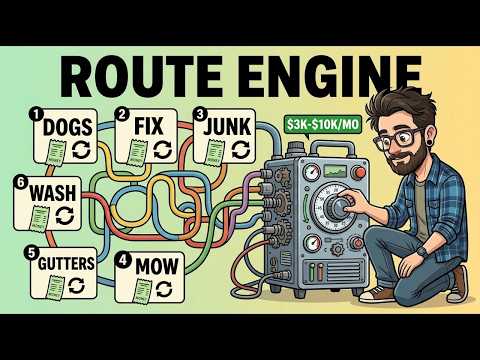
- The Recurring Route Engine: How Four Jobs Become a Subscription Line
- Watch the Full Video Breakdown
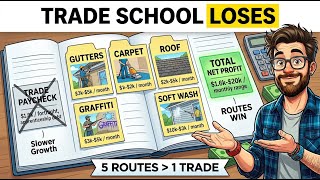
A solo operator with a $500 ladder is out-earning a first-year electrician by $40,000 a year — no license, no apprenticeship, and no trade school debt. Five boring cleaning routes are among the most overlooked income opportunities in 2026, with startup costs as low as $500 and reported net income ranging from $6,000 to $30,000 a month depending on the route. If you have a truck, a free Saturday, and one suburban zip code, the gap between your current income and a six-figure cleaning business is smaller than most people realize.
Disclaimer: This article is for educational purposes only and is not personal financial advice. Income figures referenced are reported by named operators on Reddit, industry breakdowns from zeorouteplanner, Durable, and financialmodelslab, and 2025–2026 market data. Some figures are unverified estimates. Consult a licensed professional before starting a regulated business in your state.
Key Takeaways
- A gutter cleaning route can gross $20,000 a month in peak season with startup costs under $2,000.
- Roof soft-washing bills $750–$1,200 per job and takes one person under 2.5 hours on a standard home.
- Graffiti removal delivers 50–70% gross margins and supports recurring monthly subscription contracts with commercial clients.
- A soft-wash operator documented grossing over $100,000 in a single six-month season, with knowledge sourced entirely from YouTube tutorials.
- The Recurring Route Engine — stacking annual contracts in a tight geographic area — is what separates a side hustle from a real route business.
- All five routes require no professional license and can be started with free online education and under $7,600 in equipment.
Why Cleaning Routes Are Beating Trades Income Right Now
Consider Harry, a 29-year-old apartment maintenance assistant in Cincinnati, Ohio, taking home $2,860 a month. He already swings a ladder for work and owns work boots and a leaf blower. When a first-year apprentice electrician at a vendor party bragged about a $50,000 starting salary, Harry did the quiet math: that salary came packaged with four years of trade school debt. One magnetic sign, one zip code, and five cleaning routes pointed toward a different answer.
The comparison isn't just anecdotal. According to a 2025 industry breakdown from zeorouteplanner, solo gutter cleaning operators can earn $40,000–$150,000 per year with 20–50% profit margins per job. Those numbers require no license and no apprenticeship — just the right gear, the right neighborhood, and a reliable schedule. For more low-capital income models in this category, the breakdown of 6 boring businesses that make money under $500 to start covers a broader set of plays worth comparing.
Route 1: Gutter Cleaning — The Most Underestimated Start
Every house has gutters. Every gutter clogs. Every fall and spring, every homeowner with a single tree on the property faces the same recurring problem — and almost none of them want to climb a ladder to fix it. That gap is the entire business model.
An experienced solo operator runs three to five residential jobs per day, spending 45 to 90 minutes per property at tickets between $150 and $300. In peak fall and spring seasons, a solo operator can gross more than $1,300 in a single day. At 20 working days a month, that's a $20,000 gross month — roughly $14,000–$15,000 net — from a ladder and a leaf blower.
Startup costs are the lowest on this list: $500 to $2,000 for a ladder, leaf blower, extension pole, basic liability insurance, and a magnetic sign for the truck. For operators who want to scale faster, a gutter vacuum system runs $3,400 to $5,300 and enables ground-level cleaning, reducing ladder hours while maintaining the same per-job ticket price.
According to a 2025 industry breakdown from zeorouteplanner, solo gutter cleaning operators can earn $40,000–$150,000 per year with profit margins of 20–50% per job.
First customer strategy: Post on Nextdoor in tree-heavy neighborhoods with a simple fall special ($149 for a standard home). Door-to-door canvassing in older HOA subdivisions during October, November, March, and April aligns with peak demand windows. Nextdoor converts at a higher rate than paid ads because neighbors trust neighbors — and it costs nothing. A Reddit operator documented starting gutter cleaning and power washing on the side, running Google Ads to land the first clients, then scaling into house washing, window cleaning, and gutter guards, hiring staff within months of going full-time.
Critical pro tip: Carry $1 million in general liability before climbing anything. OSHA fall-arrest rules apply above six feet. A policy runs roughly $500 a year — the single most important step between keeping a business and losing it on one bad fall.
Harry's first weekend netted $756 from four homes at $189 each — more than a quarter of his monthly take-home from the apartment complex, earned in a single Saturday. Year one part-time: $2,500–$4,500/month net. Year two on a repeat route: $6,000–$12,000/month, because spring and fall clients require zero new sales work. The phone call shifts from a cold pitch to a casual check-in. That shift is when a side hustle becomes a real route business.
Seasonality matters on this route. Fall is the cash spike. Spring is the second spike. Summer is the steady B2B base — commercial gutter contracts on apartment complexes and small office buildings. Winter is the quiet build month: sit at the kitchen table and book next year's contracts in advance.
Route 2: Carpet Cleaning — The B2B Recurring Drumbeat
Harry passed on this route in favor of outdoor work, but the margins make it worth covering. A solo carpet cleaner runs two to five residential jobs per day at tickets of $120–$200, or $300–$600 for commercial jobs. Startup costs run $4,650 to $7,300 for a portable extractor, vacuum, chemicals, insurance, and basic marketing.
Year one produces $32,000–$40,000 annually ($2,700–$3,300/month net). Year two, as recurring accounts stack, that range climbs to $50,000–$75,000 annually. The underrated opportunity: property managers and Airbnb hosts pay premium rates for same-day turnover cleans. One operator servicing eight Airbnb hosts can fill an entire week before a single residential call comes in — the kind of recurring B2B drumbeat that most starting operators never discover.
Route 3: Roof Cleaning (Soft-Wash) — Where Dollars Per Hour Gets Serious
One to three jobs per day. A single-story, 2,000-square-foot home takes roughly 2.5 hours solo. Ticket: $750 to $1,200 per roof, plus an optional house-wash add-on at $200–$300. Two roofs in one day can mean $2,000 gross — by yourself, parked in a driveway at 9 a.m.
Startup runs $2,730 to $5,500 for a low-pressure soft-wash pump, sodium hypochlorite drum, surfactant, spray tank, proper insurance, and a safety harness. The harness is non-negotiable on any roof work.
A roof-cleaning operator on Reddit's Entrepreneur forum documented averaging $750–$1,200 per roof on 2,000 sq ft single-story homes, each job completed solo in under 2.5 hours. A January 2026 breakdown from Durable confirms $0.35–$0.60 per square foot as the current industry benchmark.
Critical pro tip: Pressure washing damages asphalt shingles. Manufacturers including GAF and Owens Corning void warranties above 100 PSI. Soft-wash pumps operate at 40–80 PSI only. Operators who borrow a standard pressure washer destroy roofs and inherit a $15,000 replacement liability. Buy the right pump from day one.
First customer strategy: HOA common-area roofs as an entry point, then "five-around" door hangers dropped at the five homes closest to each completed job. The visual proof is right there on the cul-de-sac. Before-and-after Nextdoor posts in mossy neighborhoods convert reliably. Annual maintenance contracts with property management firms can turn one signature into ten roofs.
Harry solved the gear cost problem by rerouting his $340 monthly tool stipend entirely into the soft-wash pump kit — no new money out of pocket, same paycheck, different gear arriving every Friday. Within four months, the pump was paid off and every dollar earned after that was pure margin. Year one part-time: $3,000–$6,000/month net. Year two: $8,000–$15,000/month as annual repeat clients build a real book of business.
Route 4: Graffiti Removal — The Overlooked Route With Outsized Margins
Pricing runs $2.50 to $7.00 per square foot, or $75 to $150 per hour. A standard 50-square-foot wall at $5/sq ft generates $250 per job in 45 to 90 minutes. The real leverage is in recurring subscription contracts with commercial clients at $150 per month per client — municipalities, retail property managers, restaurant chains, and transit authorities who need reliable recurring service.
According to a December 2025 breakdown from financialmodelslab, one-off graffiti removal jobs average $300 per incident. Recurring subscription accounts run $150/month per commercial client. The industry benchmark gross margin is 50–70% per job after chemicals and fuel.
Startup runs $1,650 to $3,600 for a 2,000–3,500 PSI pressure washer, anti-graffiti coating and solvent, masonry restorer, PPE, insurance, and basic marketing — the second-lowest entry cost on this list.
Cold walk-in acquisition: Approach restaurant managers on commercial strips with a direct offer — "I noticed the tagging on your rear wall. I can remove it today for $150 and apply an anti-graffiti coating for $75 more." Acceptance is the most common response. Google Ads at $15–$25/day targeting "graffiti removal near me" fills remaining calendar slots. City and county property services departments distribute subscription contracts to operators who show up reliably. Strip mall property managers prefer a single reliable vendor over calling around.
Critical pro tip: Chemical match matters. The wrong solvent on painted brick or stucco permanently etches the surface, making the operator liable for restoration costs. Always test on a hidden patch first — behind a dumpster or under an awning, anywhere the client won't see it. This step separates operators who keep their accounts from those who lose them in week three.
Year one net: $2,000–$5,000/month on mixed one-off and recurring work. Year two: $5,000–$10,000/month once municipal or restaurant chain contracts lock in. A single transit authority contract or a restaurant chain with 12 locations on a monthly removal schedule can carry the entire month before any residential work is needed.
Route 5: Soft Washing (Roof and Siding Combined) — The Full Income Punch
This is the route some operators are netting $30,000 a month on, running six months of the year. A full house wash — siding plus roof — on a 2,000 sq ft home bills $400 to $800 and up, with a solo operator completing the job in three to five hours. In warm months, two to four jobs per day is achievable. The chemistry: sodium hypochlorite at 1–3% for siding and 4–6% with surfactant for roofs — the same skill set as Route 3, scaled to more square footage and a larger combined ticket per stop.
Startup runs $3,430 to $7,600. The soft-wash pump from Route 3 covers roughly half the investment; the remainder goes to additional hose, a ladder upgrade, and chemical inventory stocked on a pallet in the garage.
A soft-wash operator on Reddit's Entrepreneur forum reported earning approximately $65,000 working weekends only in one year, then transitioning to full-time and tracking toward six figures — with knowledge sourced entirely from YouTube tutorials and Facebook groups. A separate post on r/sidehustle documented a house washing operator grossing over $100,000 running only six months annually, with May, June, and July alone generating $25,000 in gross revenue.
First customer channels: "Five-around" door hangers after every completed job, before-and-after Nextdoor posts showing algae-streaked siding transformations, HOA multi-building contracts locking in 20 homes at once, and real estate agents needing pre-listing exterior cleans at $300–$600 paid out of escrow. That last channel is a consistent source of high-ticket, low-friction work most new operators never discover.
Pro tip Harry learned the hard way: Sodium hypochlorite runoff kills ornamental plants. Early on a roof job in a nice cul-de-sac, chemical runoff reached a homeowner's hydrangea bed — the leaves browned by Tuesday, and Harry paid $480 out of pocket to replace the plants. The fix became a sticky note on his dashboard: "Pre-wet first. Tarp the beds. Rinse last." A $5 tarp prevents a $500 mistake and a damaging Google review that can wreck a new operator's profile before it has traction.
Year one part-time: $3,000–$7,000/month net. Year two full-time: $8,000–$15,000/month and up. The operators at the highest income levels are not working harder — they are routing tighter. Twelve houses on one cul-de-sac in a single Saturday means one drive in, one drive out, and $8,000 billed before sunset.
The Recurring Route Engine: How Four Jobs Become a Subscription Line
The mechanism that separates a cleaning side hustle from a real business is geographic stacking. Four jobs in a three-mile radius beats one job at a 45-minute drive, every single time. Annual contracts — gutters in spring and fall, roof every 18 months, soft-wash yearly — turn the truck into a subscription line. The business stops selling cleanings and starts selling calendar slots. You are not a cleaner. You are a scheduled service on a recurring invoice.
Harry's 12-month stacking plan puts gutters in October, roof and soft-wash in summer, and graffiti subscription accounts as the winter base — same zip code, same Saturday, different invoice on each stop. The math suggests one stacked route plus weekend hours could net more than a first-year electrician earns full-time, without four years of trade school debt. This same geographic stacking logic shows up across every successful service business at scale — it's the same principle that drives mobile auto detailing operations to $88K in year one: more stops per mile, not more miles.
Watch the Full Video Breakdown
For the complete walkthrough — including Harry's first-weekend numbers, the exact Nextdoor post template that outperforms paid ads, the HOA contract play for roof cleaning, and the step-by-step stacking playbook for running two routes off the same truck on the same Saturday — watch the full breakdown on the Harry's Stash YouTube channel: 5 BORING Cleaning Routes That Pay More Than Most Trades. The visual breakdown covers every startup cost side by side and shows exactly how geographic stacking turns a part-time Saturday route into a full-time income replacement.