- Key Takeaways
- The Model: The Built In Expiration Date
- 1. CPR and First Aid Training Business
- 2. Food Safety Manager Training
- 3. Forklift Operator Training
- 4. Respirator Fit Testing
- The Card-Fee Pricing Mistake
- 5. Alcohol Server Training
- 6. Backflow Testing: The Best of the Six
- What Harry's Stack Earned
- How to Pick Your First Business
- Watch the Full Video
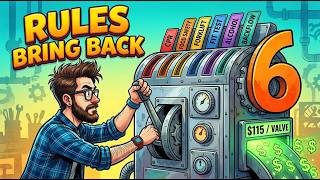
Most businesses have to win the same customer over and over. The boring service business ideas below don't, because a written rule does the selling. A CPR training business, food safety manager classes, a forklift training business, respirator fit testing, alcohol server training and a backflow testing business each sell a class or a test that a card, an evaluation or a utility notice makes the same customer buy again. Each one opens with a single certificate, and together they show how boring businesses that make money can run on a calendar instead of on advertising.
This breakdown covers what each class or test pays (income first, before costs), the exact rule that sends the customer back, what the certificate costs and where to get it, and the gear involved. It is built on published prices from real operators.
Key Takeaways
- All six businesses run on what Harry calls The Built In Expiration Date: the card expires, the evaluation comes due, the notice arrives, and the customer returns without being sold again.
- Renewal clocks: CPR cards every two years, forklift evaluations every three years, respirator fit tests every year, food safety manager certificates every five years, alcohol server certificates every two to three years, and backflow tests every year.
- Backflow testing is the best of the six: a small San Antonio tester charges a flat $115 per valve, and a route of 400 devices comes to $46,000 a year.
- Startup costs range from a roughly $436 fit test kit to about $3,000 for a backflow certificate and test kit.
- Harry's four-business stack (CPR, forklift, fit tests, backflow) reached about $3,917 a month after card fees, insurance and gas by month eighteen.
- Run three filters before you pick: who near you must buy it, can you certify within about a month for a few thousand dollars or less, and will the same customer need you again on a date you can write down.
The Model: The Built In Expiration Date
Harry dispatches trucks overnight for a regional freight company, and every renewal notice in the building crosses his desk. That is where the idea came from. None of these six businesses depend on advertising to bring the customer back. The CPR card expires in two years, the forklift evaluation comes due in three, the fit test comes due every year and the manager certificate every five. The customer isn't buying because you talked them into it. They're buying because a date came up on their calendar and your name is already on file.
Atul Gawande, a surgeon, wrote The Checklist Manifesto about why the most skilled people in the world still run through a boring list every single time: pilots before takeoff, surgical teams before the first cut. His point is that the boring step is where mistakes get caught. Every business on this list sells one of those boring steps, on a schedule somebody else already wrote.
This article is for educational purposes only and is not financial advice. Training rules vary by state, county, employer and water utility, so check yours before you book a class.
1. CPR and First Aid Training Business
What it pays
CPR With Dale, a small training business in Greenville, North Carolina, lists a healthcare provider BLS class at $50 and a Heartsaver first aid, CPR and AED class at $60. Med-Cert in Cleveland puts independent instructors at $50 to $100 per student. One cost breakdown from Eat Healthy 365 runs a class of eight at $75 a seat, about $600 from one afternoon in a break room.
Picture a modest month: two classes a week, eight people each, at $60. That is $960 a week, a little over $4,000 a month before card fees. The American Heart Association says it trains about 22 million people in CPR every year worldwide, so you only need a few hundred of them in your county.
Why it repeats
American Heart Association cards are renewed every two years. Nurses, daycare workers, coaches and lifeguards often have to keep a current card for work they already do, so the class you teach this spring is the class those same people need again two springs from now.
The certificate and the gear
You start with your own BLS provider card, then take the Heart Association's Instructor Essentials course online (about $35) and an in-person instructor course at a training center ($250 to $500). Med-Cert runs theirs in one full day. CPR Professionals adds the whole path up at about $440 to $450 to become an instructor. You renew every two years by teaching a class while someone watches.
You also line up with a training center that issues the cards, usually $50 to $250 a year, and supplies run about $2 to $5 a student. The gear is the bigger check: a professional four-pack of Prestan adult manikins lists at about $1,300, and a Laerdal AED trainer runs about $420. CPR Marketplace puts a realistic full startup at $1,000 to $3,000, and ZenBusiness says liability insurance runs about $400 to $1,200 a year.
Who to sell to
Your customers are places that already live with the rule: daycares, dental offices, gyms, churches and youth sports leagues. Call and ask one question: when do your people's cards expire? Then put every expiration date in a calendar the day the class ends, because that calendar is the business. Teach on site, bringing the manikins to the daycare at nap time or the dental office on a slow Friday, so the owner doesn't lose staff hours and you get the whole team in one booking.
Harry started here. The dock crew at his company needed first aid cards and the outside trainer was booked six weeks out. He took the instructor course and taught his first class in the break room in month three.
2. Food Safety Manager Training
Many health departments follow a food code that calls for a certified food protection manager on staff. The ServSafe Manager certification is the one most people know, and it is valid for five years.
HRFoodSafe, a small New England training company, charges $140 for the class, a study portal and the exam, $169 with the book mailed to you, and $99 for the exam alone. Independent proctors typically charge $25 to $75 a candidate to supervise the exam, according to Food Safety Made Easy, and one proctor on Reddit says they charge $100. The exam is 90 questions over two hours. One Monday class of ten cooks and managers at $140 is $1,400 in the room, before exam costs.
Getting started is cheaper than anything else on this list. Registering as a ServSafe proctor is free once you hold a current Manager certification yourself, and the course and exam bundle for that runs about $179. Seven in ten restaurants are single-location businesses, according to the National Restaurant Association, and those owners don't have a training department, so you become it. Food trucks, school cafeterias, nursing home kitchens and church kitchens are on the same list. Ask owners which day is their slowest and teach then. With a five-year clock, every manager you certify this year is a customer again in five years.
3. Forklift Operator Training
What it pays
New River Community and Technical College in West Virginia charges $350 for a one-day forklift class that earns a three-year certification. Easy Forklift Certification, an online course provider, says in-person classes typically run $150 to $300 per person. Their own online classroom course is $59 an operator, but the online part only covers the classroom, and somebody still has to stand on the floor and watch each operator drive. That somebody is you.
Eight operators on a Saturday at $200 each is $1,600 for one day, on their forklifts and their floor.
The rule that brings you back
OSHA's forklift standard (29 CFR 1910.178): an evaluation of each operator's performance shall be conducted at least once every three years.
On top of that, refresher training is required after an accident or a near miss, a poor evaluation, or a move to a different kind of truck. The Bureau of Labor Statistics counts about 779,000 industrial truck and tractor operators in America, and you need a few dozen warehouses within an hour's drive.
The certificate and customers
The certificate is a train-the-trainer course. ForkliftTraining.com sells a self-paced version starting at $199, with a higher tier at $499. That is most of your startup, because you train on the customer's own trucks. Customers include lumber yards, beverage distributors, manufacturers, distribution centers and staffing agencies that place temporary operators. Call the safety manager and ask when operators were last evaluated.
This became Harry's second certificate. His own dock had a dozen operators due, and he took the trainer course in month seven. A month later the warehouse next door asked for the same thing. His tip: walk the site before you book the day, since you need a real lane, a real pallet and room to turn.
4. Respirator Fit Testing
OTS Safety lists a qualitative fit test at $45 and a quantitative test at $75. RespiratorTest.com puts the market at $25 to $75 for qualitative, $50 to $150 for quantitative, and $35 to $100 for mobile testing. VestMed says on-site vendors typically charge $50 to $150 per employee, and BlueHive, a booking network with more than 3,000 providers, lists fit testing at $50 to $150 per mask model tested. Two mask models on one painter is two tests.
OSHA's respiratory protection standard requires a fit test before someone first uses a tight-fitting respirator and at least once a year after that. A switch to a different respirator means a new test. OSHA says millions of workers are required to wear them, including auto body painters, healthcare workers, construction crews and cabinet shops.
A qualitative test takes about 15 to 20 minutes. At three an hour for six hours, that is 18 tests, and at $45 each it comes to $810 from one day in one shop. Two such days a month is over $1,600, from a kit that fits in a duffel bag.
There is no single license for the person running the test. The procedure is written out step by step in an appendix to the OSHA standard, and you follow it exactly every time. A 3M bitter taste qualitative fit test kit was listed at Global Industrial for about $436, making this the cheapest startup on the list. Quantitative machines run $5,000 to $15,000 or more, and you don't need one to start. Auto body shops are the classic first client, followed by dental and medical offices, cabinet shops and contractors.
The pro move is to bundle: the same employer that needs fit tests often needs first aid cards and forklift evaluations. One visit, three renewal dates, one invoice. Harry covered the shop painters by month nine because he was already in the building.
The Card-Fee Pricing Mistake
Harry learned an expensive lesson here. He priced his first public first aid class at $50 a seat, the same as the healthcare class. Then the card fees came due: a Heartsaver eCard runs about $19.55 a student, while a BLS card is about $4. Twelve students later, he had taught a whole Saturday for much less than he expected. His fix, that same week: card fee, plus $2 to $5 of supplies a student, plus his hour, and only then the number he quotes. He taped the formula inside the manikin case.
5. Alcohol Server Training
California started requiring Responsible Beverage Service certification for alcohol servers in 2022, and the state's alcohol board says the certificate is good for three years. In Texas, seller-server certificates are valid for two years.
Central Coast RBS charges $34 per person for a three-hour California class, in person or on Zoom. One morning with a restaurant group's 20 servers is $680, and every one of them needs it again in three years. California also adds its own $3 state registration fee, and renewing means paying the fee, taking approved training again and passing the state exam.
Online courses are cheaper, about $9 to $13 in Texas, so your edge is the whole staff in one room on the owner's schedule. Setting up in Texas means the state's own fees: the Texas Alcoholic Beverage Commission charges $1,000 for a new school application, $200 for a classroom branch and $100 per trainer, plus a $34 training fee for each trainer who hasn't finished the state's train-the-trainer course. Every state runs this its own way, so check yours. Your customers are bar owners, restaurant groups, hotel managers and stadium concession companies with a new crop of servers every season.
6. Backflow Testing: The Best of the Six
Commercial buildings, lawn sprinkler systems and many fire lines have a backflow preventer, a valve that keeps dirty water from flowing backward into the clean water supply. Water utilities require those valves to be tested. WSSC Water in Maryland says testable backflow assemblies must be tested annually, and San Antonio's water system requires it every year too. The utility does the reminding for you.
What it pays
HomeGuide puts backflow testing at $30 to $300 per device, with a national average around $165. H2O Backflow Tests in San Antonio charges a flat $115 for the annual test, with the paperwork filing included. That matters because WSSC wants test reports back within 30 business days, so the tester who handles the paperwork is the one owners remember. FindBackflowTesters, a site that matches property owners with testers, lists residential tests around $85 plus a $15 filing fee, and commercial tests at $95 to $300. When someone builds a whole website to sell leads to testers, the demand is real.
Say you built a route of 400 devices at $115. That is $46,000 a year from the same 400 valves, coming due again every year. Six tests in a day at that price is $690.
The certificate and the kit
The certificate takes one week. Morrison Backflow Testing runs the ABPA new tester course, 40 hours over five days, for $950 with the textbook and exam facility fee included. The ABPA exam is $300 for members and $330 for everyone else. The certification is good for three years, and renewing means passing the written and hands-on exams again; the renewal course is 20 hours for $500. A used Watts test kit was listed on eBay at $1,790, so a certificate and kit come to roughly $3,000 all in.
Check one thing before signing up: some utilities only accept testers who are also licensed plumbers, and WSSC is one of them. Look up your utility's rules and approved tester list first. That list tells you who is allowed to test and exactly who your competition is. When the annual notice arrives, property owners pick a tester from it, so get on the list, then go to the people with the most valves: irrigation contractors, property managers, restaurant owners and anyone running a commercial building.
Harry added backflow in month 14. The notice for his company's truck wash landed on his desk, the outside tester couldn't come for a month, and he realized he'd watched that same letter arrive every spring for six years. His tip is to keep your own calendar: the tester who calls a month before the deadline with a time already penciled in keeps the account for years.
What Harry's Stack Earned
Harry added CPR in month three, forklift evaluations in month seven, fit tests in month nine and backflow in month fourteen. By month eighteen the four together were bringing in about $3,917 a month after card fees, insurance and gas, and most of next year was already on the calendar. He still runs the night desk. He just reads the renewal notices differently now.
How to Pick Your First Business
Run three filters. Who near you is already required to buy it? Can you get the certificate in about a month for a few thousand dollars or less? Will the same customer need you again on a date you can write down? Three yeses, and the rule becomes your sales team.
If you like teaching a room, choose CPR or food safety. If you like warehouses and machines, choose forklifts and fit tests. If you like working alone with a gauge and a route, choose backflow. For a free first step in the next 24 hours, look up your water utility's approved backflow tester list, or call one daycare and ask when their CPR cards expire, and write the answer down. If the list is long and the cards are all current, you've still learned where your market stands.
For more low-cost ideas, see our guide to 6 boring businesses that make money under $500 to start and our look at high-paying trades you can certify for under $2K.
Watch the Full Video
Want the visual walkthrough? Watch the full video, 6 Boring Service Business Ideas That Pay You for Years, to see every price, rule and example laid out step by step. Then tell us which of the six you would start, one through six, in the comments.
Educational purposes only; not financial advice. Certification requirements, approved tester lists and state fees vary by state, county and water utility.