- Key Takeaways
- The Buy Once Utilization Engine
- Business 1: Kayak and Paddleboard Rental
- Business 2: Pressure Washer Rental
- Business 3: Portable Generator Rental
- Business 4: Fitness Equipment Rental
- Business 5: Gaming and Virtual Reality Rental
- Three Filters Before You Spend a Dollar
- Watch the Full Video Walkthrough
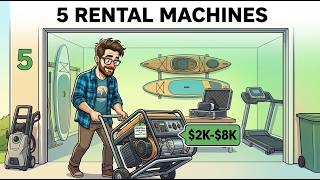
Most side hustle advice pushes in one direction: trade more time for more money. The rental business model flips that logic entirely. Buy an asset once, and let it earn income every time someone pays to use it. Five straightforward businesses — kayak rentals, pressure washers, portable generators, fitness equipment, and gaming or VR setups — can all run from a single garage bay with no special skills, no degree, and no storefront. Once a small fleet is running, realistic monthly revenue lands between $2,000 and $8,000. Here is what each one costs, how fast it pays back, and where the first customer comes from.
Key Takeaways
- All five rental businesses can be launched from one garage bay using used equipment, typically costing $1,500 to $6,000 to start.
- A single kayak can pay for itself in as few as 10 to 20 rental days at $40 to $60 net per day.
- Pressure washer and generator rentals produce income year-round, filling the seasonal gap left by kayaks and paddleboards.
- Fitness equipment rents by the month, creating recurring revenue instead of one-off day rates.
- A gaming and VR party kit can out-earn the other four businesses in a single event, booking year-round regardless of weather.
- Three pre-purchase filters — cost below spare cash, local demand confirmed, one seasonal paired with one year-round asset — reduce risk before spending a dollar.
The Buy Once Utilization Engine
The concept behind all five businesses is what can be called the Buy Once Utilization Engine. Profit in a rental business is never determined by what an asset costs — it is determined by how many weekends it is actually rented. A modestly priced kayak booked every Saturday outperforms an expensive one sitting idle in storage. The owner is not buying gear; they are buying the right to convert idle time into paid time. That same logic is what makes a laundromat owner's income predictable: the machines run without the owner being present, and every cycle is revenue.
Each business below has a moat — a cost or complexity barrier that quietly keeps most people from starting — and a utilization path that returns the initial investment within months. If you are exploring boring businesses that make money, the rental model is one of the clearest examples of buying an asset once and letting it work repeatedly.
Business 1: Kayak and Paddleboard Rental
Kayak and paddleboard rental is the most accessible entry point on this list. A single kayak on a busy lake rents for $40 to $80 per day, or $80 to $140 for a full summer weekend. One operator documented nearly $50,000 in revenue across two peak summer months, with roughly $9,000 of that as profit — a figure that reflects an ideal lake in an ideal season and should be treated as a ceiling, not a baseline.
The moat is the startup cost itself. A used kayak runs $500 to $1,200. A starter fleet of two to four boards, a roof rack or small trailer, a cleaning kit, and a simple booking app comes to roughly $1,500 to $6,000 bought used. That price point is exactly why most people never start — and exactly why those who do face limited local competition.
The utilization math is direct. Each rental day nets approximately $40 to $60 after cleaning and fees, meaning a $500 kayak pays for itself in 10 to 20 rental days. The peak window — late spring through early fall — is short and predictable, and the boards cost nothing to store over winter. First customers almost always come from Facebook Marketplace and local lake or cottage community groups. List one or two used boards with quality photos, set a refundable deposit, use a brief liability waiver, and the business is open. Growing beyond the first board is a reinvestment cycle: each paid weekend funds the next used kayak, and a fleet of five lets an operator rent to an entire family in one booking instead of one person.
The rule that separates experienced operators from beginners: never hand over a boat without a deposit, a timestamped photo at pickup, and a written return time. Damage is not the enemy — negotiating over undocumented damage is. Document everything upfront and a scratched hull becomes a quiet deposit line, not a parking lot argument.
Business 2: Pressure Washer Rental
While kayaks go dormant for winter, a pressure washer keeps generating income all year. This is the year-round floor that stabilizes the entire garage operation. A homeowner-grade unit rents for $35 to $75 per day, or $75 to $125 for a weekend. Pricing guides put many pressure washing service operators between $500 and $2,000 per week — but in the rental model, the owner collects income without ever touching a wand.
Startup cost is the lowest on the list. One or two units with hoses and nozzles run $600 to $2,500 new, or less used. The machine lives on a garage shelf with no warehouse, no storefront, and no recurring overhead beyond occasional maintenance. The customer base — landlords, short-term rental hosts, and homeowners with a dirty driveway — is already active on Facebook Marketplace and Nextdoor. Handing the renter a one-page quick-start sheet, taking a deposit, and setting a clear return rule creates a transaction that repeats with the same machine dozens of times. A single unit renting three to eight times a month generates a steady $300 to $1,000 on the side, every month of the year.
Business 3: Portable Generator Rental
The generator rental business operates on spike demand that no other business on this list can match. A consumer generator rents for $75 to $200 per day, or $150 to $350 for a weekend. Demand does not climb gradually — it erupts during storms, heat waves, job site outages, and outdoor events. The mobile power rental market was valued at over $7.5 billion in 2024 and is projected to exceed $10 billion by 2034.
A generator can sit idle for weeks, then book four consecutive days from a single storm. At that pace, a unit needs only 8 to 15 rental days per year at strong pricing to reach pure profit. A portable unit runs $400 to $2,000, and a one- or two-unit garage launch sits under $4,000 bought used and carefully selected. A quiet inverter unit commands a rental premium for weddings and outdoor events; an open-frame contractor unit wins the job site crowd. Both fit beside the pressure washer in the same bay.
The critical competitive advantage is availability. Searches for generator rentals spike the hour a storm knocks out power. The operator whose listing is already live when the grid goes down wins the booking before anyone else has thought to post. Pre-listing in neighborhood groups and local contractor forums before storm season means potential customers already know who to call. One practical trap to avoid: late returns during emergencies. A per-day late fee and a deposit large enough to make extending a rental genuinely costly keeps the calendar controlled.
Business 4: Fitness Equipment Rental
Fitness equipment rental shifts the income model from day rates to monthly recurring revenue. A single treadmill, rowing machine, stationary bike, or strength setup rents for $60 to $150 per week, or $150 to $300 per month. The home fitness market was valued at nearly $13 billion in 2025, and working out at home is now a widely normalized behavior. The rental operator captures that demand without requiring the customer to commit to ownership.
The economics work because the gear stays out for weeks or months at a time. A $1,000 used treadmill netting $50 to $100 per week recovers its cost in a single quarter and then generates mostly margin for as long as it runs. Startup costs of $700 to $4,500 cover a one- or two-item rental kit using solid used machines. Sturdier-looking equipment builds more trust with residential renters and supports higher monthly pricing.
The core appeal is straightforward: most households do not want to spend $1,000 on a treadmill that might become a coat rack by March. Renting removes that risk for the customer and delivers recurring revenue to the operator. Target renters include people pursuing a New Year fitness goal, a six-week training block, or a temporary home gym during a relocation. Facebook Marketplace, apartment community boards, and local parent groups are the primary channels. Bundling delivery and setup lets used equipment arrive feeling premium, with a small delivery fee on top of the monthly rate. A photo intake at placement, a simple weight cap, a cleaning deposit, and a monthly check-in keep machines serviced before they fail.
Business 5: Gaming and Virtual Reality Rental
Gaming and VR rental is the ceiling play on this list — the business that breaks out of day rates and into event packages. A single headset or console setup rents for $100 to $300 per day for a party or weekend activation, and multi-headset party packages run significantly higher. Two to six event bookings per month can out-earn the other four businesses combined, because the customer is not paying for hardware — they are paying for a memorable experience.
The market context is substantial. The game industry is approaching $200 billion globally, and immersive technology alone is projected to grow from roughly $24 billion in 2026 to over $66 billion by 2030. A single garage kit attaches itself to a rising wave. More practically, a kayak rents only in summer. A VR headset rents at a birthday party in January, a school event in March, and a corporate team-building afternoon in October — indoors, year-round, regardless of weather.
The starter kit runs $1,200 to $5,000: two to three quality headsets, controllers, a charging dock, sanitizing supplies, and a travel case. That bundle is the moat. Anyone can buy a headset; almost no one packages it into a bookable party experience with a flat price, themed content options, and a professional setup. Listing it as a birthday and events experience — not a tech rental — is the framing that converts browsers into bookings. Party planner referrals, Facebook Marketplace, and local event groups are the primary acquisition channels. Upsells are natural: a second headset, a themed content package, or additional hours can quietly double a $200 booking without acquiring a single new customer. The operators who earn consistently pre-test all gear the day before, pack a backup device, and run a brief walkthrough at setup.
Three Filters Before You Spend a Dollar
Before purchasing any of these assets, apply three filters to validate local demand and reduce risk.
Filter one: the cost must sit below your spare cash buffer. The best rental asset is one that could be replaced without financial pressure. Starting with gear that stretches the budget creates stress that distorts decisions.
Filter two: renters must already live near you. A lake in town beats a theoretical market an hour away. Local demand is not something to build from scratch — it is something to find and serve. If the demand is not already present, the category is wrong for that market.
Filter three: pair one seasonal asset with one year-round asset. Kayaks in summer, generators and fitness equipment all year. That combination keeps income flowing regardless of season and prevents a four-month revenue gap. For a broader look at how this pairing logic applies across different asset types, the guide on rental business ideas that make money without doing the work covers additional categories worth comparing.
Watch the Full Video Walkthrough
The video version of this breakdown covers each of the five businesses with real operator examples, cost tables, and a specific Facebook Marketplace search to run tonight. Watch 5 Boring Businesses That Rent for $2K to $8K From a Garage on YouTube for the visual walkthrough. Drop a number from one to five in the comments — whichever business gets the most replies gets its own start-to-finish deep-dive breakdown next.
For educational purposes only. Not financial, legal, or business advice. Rental income, startup costs, and local demand vary by market and location. Always check local rental regulations and obtain a simple liability policy before launching any rental operation.