- Key Takeaways
- What the 24/7 Loop Actually Means
- Machine 1: The Coin-Op Laundry Closet Route ($10,000–$50,000 Startup)
- Machine 2: Bitcoin and Crypto Kiosks ($5,000–$15,000 Startup)
- Machine 3: Automated Pizza Vending Machines ($25,000–$110,000 Startup)
- Machine 4: Self-Service Car Washes ($50,000–$300,000 Startup)
- Machine 5: The Full-Service Laundromat ($50,000–$500,000 Startup)
- The Three Filters Every Unmanned Business Must Pass
- Watch the Full Video Breakdown
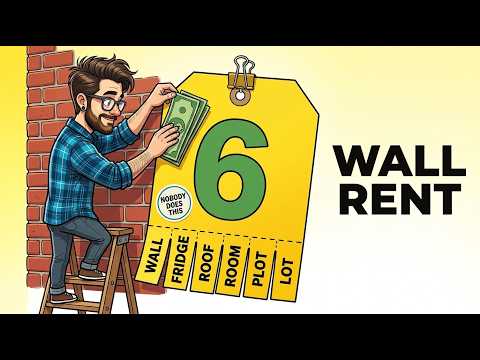
A USPS letter carrier in Cleveland generates $12,000 a month from four washing machines bolted to the wall of a strip-mall barber shop — no storefront, no employees, and no payroll. The property owner receives a weekly check for renting wall space, and the machines run eighteen hours a day without supervision. This arrangement reflects a pattern documented in The Millionaire Next Door by Thomas Stanley and William Danko, which tracked thousands of self-made millionaires and found a recurring theme: most owned coin-operated or low-staff businesses that generated income around the clock. The five businesses ranked below follow that same structural logic — ordered from the lowest startup cost to the highest — and each one operates on what experienced operators call the 24/7 Loop.
Key Takeaways
- Five unmanned business models range from $10,000 to $500,000 in startup capital
- The coin-op laundry closet route can net $500–$4,000 per month per location by year two
- Automated pizza vending kiosks carry a documented 30% net operating margin at 20 pizzas sold per day
- The global car wash services market was valued at $34 billion in 2024, with a 6.2% CAGR projected through 2032
- Three filters — location quality, utility cost, and regulatory direction — separate successful operators from those who fail in year one
- A full-service laundromat can generate $15,000 to $300,000 in annual cash flow per Coin Laundry Association data
What the 24/7 Loop Actually Means
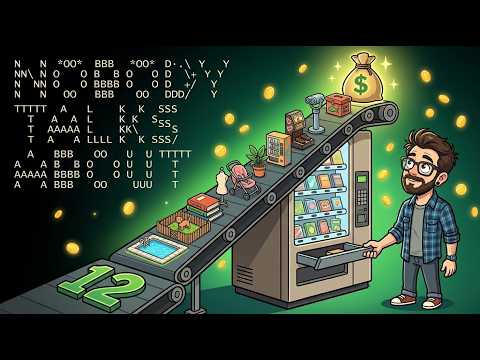
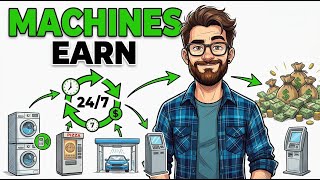
Every business on this list shares a single engine: a machine collects payment automatically, the owner visits on a maintenance schedule rather than a customer schedule, and idle hours generate zero revenue but also zero labor cost. That structure — payment without presence — is what operators call the 24/7 Loop. A well-run loop earns while the owner is at a day job, asleep, or managing a second location.
The compounding effect becomes significant when one location's cash flow funds equipment at a second, then a third. The businesses below are ranked by difficulty and capital requirement, not by income ceiling. A single closet laundry route starts at $10,000 and a full laundromat can absorb $500,000, but both run on the same underlying model.
Machine 1: The Coin-Op Laundry Closet Route ($10,000–$50,000 Startup)
The entry-level version of this model requires no storefront. An operator installs one or two commercial washers inside leased wall space — a closet in a barbershop, a corner of a nail salon, a back room in a mailbox store — and splits gross revenue with the property owner, typically 70% to the host and 30% to the machine operator. The host gets foot traffic and a passive check. The operator takes equipment risk in exchange for a low-overhead location.
Dave Menz, who operates under the brand The Laundromat Millionaire and hosts the Laundromat Resource podcast, built a multi-store operation starting from a single struggling location. The Coin Laundry Association reports that individual laundromat cash flow ranges from $15,000 to $300,000 per year depending on size and location. A single-tier card-operated closet route in a strip center processes 50 to 100 customers per day at an average spend of $7 to $12 per visit.
Year one nets $500 to $2,500 per month per location. By year two, with card-reader data optimizing pricing, that range climbs to $1,500 to $4,000 per month per location. Adding a second and third location compounds the route significantly.
The primary risk is utility cost. The Coin Laundry Association noted in its 2024 industry report that utility expenses averaged 21% of gross revenues. In older buildings with gas water heaters and no time-of-use metering, that figure can reach 30% and eliminate margin. Before signing any space agreement, obtain the last 12 months of water and gas bills from the property owner.
The Coin Laundry Association reports utility expenses average 21% of gross laundromat revenues — in older buildings, that figure can rise to 30% and destroy operating margins silently.
Machine 2: Bitcoin and Crypto Kiosks ($5,000–$15,000 Startup)
Bitcoin ATM operators purchase refurbished units — Bitaccess or Lamassu models run $3,000 to $8,000 — and place them in gas stations, convenience stores, or check-cashing locations in exchange for 15% to 20% of transaction fees. A well-trafficked urban kiosk can process 5 to 20 transactions per day at an average ticket around $250, with approximately 75% of transactions under $100.
The financial data carries a significant warning. Bitcoin Depot, the largest crypto kiosk operator in North America with approximately 9,700 machines, reported Q4 2025 revenue of $116 million — down 15% year over year — and projects a further 30% to 40% decline in the kiosk segment through 2026. The FBI reported Americans lost $333 million to crypto-ATM scams in 2025 alone. Indiana and Tennessee enacted outright bans, Canada announced a nationwide ban effective April 28, 2026, and roughly half of U.S. states have proposed daily spending caps or operator fraud-reimbursement requirements.
This slot is included because it illustrates the most critical filter for evaluating any unmanned business: regulatory direction. A machine in a declining regulatory environment can be rendered worthless overnight. Operators considering the kiosk space in 2026 must treat legal compliance as the primary business cost, not machine count. This is a slot most new operators should skip.
Machine 3: Automated Pizza Vending Machines ($25,000–$110,000 Startup)
PizzaForno kiosks hold up to 70 fresh pizzas in a refrigerated chamber. A robotic arm pulls each order and drops it into a patented pulsed-air convection oven, serving a hot pizza in approximately three minutes. The machines run unattended, require restocking every two to four days, and draw roughly $100 per month in electricity.
PizzaForno licensee Mark Hurson documented his startup experience in October 2024, as did the operator pair Chris and Jenn in a separate case study the same year. Both confirmed the unit economics PizzaForno publishes in its official guidance: 20 pizzas per day at a $12 average ticket generates approximately $7,200 per month gross. The company reports a 30% net operating margin at that volume, producing roughly $2,160 per month net at a low-traffic site. High-traffic airport placements can reach $8,000 to $10,000 per month gross.
PizzaForno offers turnkey location scouting as part of its licensing program, including an airport and hotel concession pipeline. For independent operators pitching hotel food and beverage managers, the value proposition is straightforward: zero kitchen liability, zero staffing cost, and 24-hour food service for guests. Placement leases typically run $500 to $2,000 per month depending on foot traffic.
The primary risk is supply-chain lock-in. Operating a PizzaForno unit requires dependence on the company's ingredient stream and licensing terms. If the platform changes pricing or the franchisor stalls, the operator holds a $75,000 machine with limited transferability. PizzaForno reports a 99% machine uptime rate in its 2025 guidance — verify that figure with active operators before signing. Treat this as a franchise commitment, not a simple asset purchase.
One operator in suburban Phoenix discovered this model's core advantage when his initial hotel placement was removed by a new property owner. After 38 days without a location, he moved the unit to a hospital. Monthly pizza sales exceeded the airport location because hospital staff work overnight shifts with no alternative food options nearby. The asset is mobile; the location is not the moat.
Machine 4: Self-Service Car Washes ($50,000–$300,000 Startup)
A self-service bay handles 20 to 80 cars per day at $5 to $15 per wash. Revenue capacity is lower than tunnel washes, but return on investment is strong in low-competition markets. Operators typically visit two or three times per week for coin collection, soap and wax refill, and vacuum bag maintenance. Water recycling system maintenance runs monthly.
The International Carwash Association's Q1 2026 Pulse report provides the most current industry benchmarks. The car wash services market was valued at $34 billion globally in 2024, with a 6.2% compound annual growth rate projected through 2032. Year one for a single bay nets $2,000 to $6,000 per month. A well-located two-bay wash with vacuum stations can reach $4,000 to $10,000 per month per bay in year two.
The most cost-effective entry strategy is acquisition rather than new construction. New builds can absorb $300,000 before opening day. Searching BizBuySell and LoopNet for self-service car washes under $150,000 surfaces older two- and three-bay operations where the owner is retiring with no succession plan. Upgrading payment technology from coin to card and app, then repricing from $4 to $8 per cycle, can lift revenue 20% to 30% in year one without capital improvements to the physical plant.
The primary regulatory risk is water reclaim compliance. Many municipalities require water recycling systems — costing $15,000 to $30,000 — as a permit condition for renovation. Pull the city's environmental compliance file on any target property before purchase and negotiate the price down by the estimated cost of any open compliance items. The ICA Q1 2026 Pulse also notes greater price sensitivity and intensifying competition in metropolitan markets; small and mid-size markets offer stronger margins for new entrants.
Machine 5: The Full-Service Laundromat ($50,000–$500,000 Startup)
A 2,000 to 3,000 square foot laundromat serves 50 to 150 customers per day at $7 to $20 per visit. Self-service machines run unattended from 6 a.m. to 10 p.m. Most operators add one part-time attendant during peak hours and offer wash-dry-fold as a secondary revenue stream. The Coin Laundry Association reported an average net profit margin of 26% in May 2025 and noted that revenue for independently owned laundromats rose an average of 8% in 2024, driven by technology adoption including card payments and app-based pricing.
Dave Menz's documented playbook, available through the CLA and the Laundromat Resource podcast, centers on acquiring distressed stores from retiring owners rather than building new locations. Many independent laundromat owners have no succession plan, which creates consistent acquisition opportunities at fair equipment value. An operator who assumes the existing lease, upgrades to card payment, and extends hours from 9 p.m. to 11 p.m. can lift revenue 20% to 30% in year one without major capital investment.
Year one cash flow averages $5,000 to $7,000 per month per CLA data. By year two and beyond, that range expands to $15,000 to $300,000 annually depending on location size and market conditions.
Utility cost is again the critical variable. The CLA's 21% utility benchmark is a survival threshold, not a target. Older buildings with gas water heaters and poor insulation can push utility expense to 30% of gross revenue and eliminate operating profit. Obtain 24 months of utility bills — covering one full summer and one full winter — before signing any acquisition agreement. For a complete acquisition checklist and equipment audit framework, see the full breakdown in how to buy a laundromat.
The Three Filters Every Unmanned Business Must Pass
Every operator profiled across these five models identified the same failure pattern: missing one of three filters before committing capital. Passing all three is the prerequisite for a 24/7 Loop that compounds over time.
Filter 1: Location quality. Every operator in this analysis reached the same conclusion — a poor-traffic site cannot be fixed after the fact. Equipment upgrades, repricing, and service additions all require customers who are already present. Before investing in any machine-based business, count vehicles, measure foot traffic, and review census tract median income for the surrounding area. The location is the structural advantage that cannot be retrofitted.
Filter 2: Utility math. Coin laundry routes, full laundromats, car washes, and pizza kiosks all run on water, gas, and electricity. The CLA's 21% utility-to-revenue benchmark is the threshold at which these businesses generate viable returns. Above 30%, the business produces less net income than most salaried positions. Verify utility cost with 12 to 24 months of historical bills before committing to any location.
Filter 3: Regulatory direction. The Bitcoin kiosk slot illustrates what happens when a business category moves into regulatory decline. A machine in a legally stable or improving category retains its asset value; a machine in a declining regulatory environment can be legislated into illiquidity. Evaluate the regulatory environment in the specific operating state — not just national trends — before acquiring any unmanned machine asset.
Any business that passes all three filters operates within a compounding structure: cash flow from one location funds equipment at the next, and the route grows without requiring proportional increases in the owner's time. For a broader look at the machine-based business landscape at lower capital levels, see the overview of boring cash-flow machines available for under $30,000.
Watch the Full Video Breakdown
The video accompanying this article walks through each of the five machines with real operator timelines, a month-by-month income projection for the closet laundry route, and the compounding path from a single closet location to a full laundromat acquisition. Watch the complete walkthrough on the Harry's Stash YouTube channel for the operator case studies and income projections referenced throughout this article.