- Key Takeaways
- The One Rule Behind Every Route
- 1. Printer Cartridges and E-Waste Buyback
- 2. Lost Golf Ball Recovery
- 3. Wine Cork Collection as a Paid Service
- 4. Worm Castings
- 5. Scrap Metal and Catalytic Converter Recycling
- 6. Storage Unit Auction Flipping
- The Pattern Behind All Six
- Watch the Full Walkthrough on YouTube
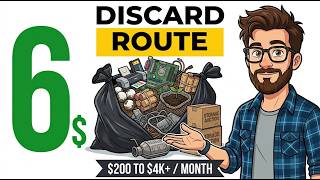
Some of the most reliable small-business income in 2026 does not come from a polished startup playbook — it comes from noticing what other people routinely discard. Dead printer cartridges, golf balls sunk in water hazards, wine corks piling up behind a bar, and the contents of an abandoned storage unit all share one trait: there is already a buyer quietly paying cash for them. The gap between what people throw away and what someone else will pay is the entire business model. Below are six of these discard-to-dollar routes, ranked from easiest to hardest to start.
Key Takeaways
- Always confirm the buyer and their exact rate before collecting a single item — every route on this list runs on this rule.
- Five of the six routes start with under $500 in upfront costs; the scrap metal and storage unit routes ask for more but carry the highest income potential.
- Income ranges from roughly $200 per month for casual operators to over $100,000 per year for full-time specialists.
- The most common beginner mistake is collecting inventory before securing a confirmed price from a buyer.
- Storage unit flipping stands out because a single winning bid can route items to five or six different buyer channels simultaneously.
- Small-volume e-waste pickup requires no special licensing in most areas — a 15-minute local search confirms the rules for your city.
The One Rule Behind Every Route
Before examining the specifics, one framework principle applies equally to all six businesses: find the buyer before you find the inventory. Every route here has a buyer who already exists and already pays — a toner broker, a golf ball reseller, a scrap refinery, an eBay marketplace. The most common beginner mistake is collecting first and selling second.
Consider the operator who filled an entire garage with cartridges, golf balls, and bags of scrap before confirming a single buyer at a firm price. When the actual rates came back, the pile was worth far less than assumed. The fix is straightforward: lock the price on a small test batch first, then scale the volume. Price the buyer, then fill the bin — that sequence is the whole list in a single sentence.
1. Printer Cartridges and E-Waste Buyback
Offices generate a steady stream of used toner cartridges and outdated electronics. To them it is clutter. To a buyback broker, an unopened brand-name cartridge is inventory, and the metals inside a dead laptop are worth real money by the pound. A route operator sits in the middle: collect the clutter for free, then route it to the buyer who already pays.
A casual operator running a handful of buyback bins pulls somewhere between $200 and $1,500 per month. Add a dozen steady commercial accounts feeding real volume, and that figure can climb toward $2,000 to $4,000 per month. Startup costs are minimal — some collection bins, a cheap scale, boxes, and gas for a pickup loop. Services like Toner Connect carry an A+ Better Business Bureau rating, cover shipping once a haul hits $100 in value, and charge no signup fee.
The acquisition strategy is direct. After registering with a broker and confirming their rate sheet, approach small offices — dentists, insurance agencies, law firms — and offer to remove their e-waste for free. Most say yes immediately. A realistic first-year outcome with 10 to 15 steady accounts is $500 to $900 per month as a side income. Licensing is simpler than most people expect; in most areas, small-volume pickup is straightforward, but a quick local search will confirm which rules apply in your city or state.
If you want to explore other overlooked businesses in this category, the breakdown of 6 boring businesses that make money under $500 to start covers additional routes worth considering.
2. Lost Golf Ball Recovery
Thousands of golf balls sit at the bottom of water hazards on courses across the country, and every one represents potential inventory. Full-time divers working this route earn $50,000 to $100,000 per year. A weekend collector working the shoreline with a net is not at that level, but a single good outing can still produce several hundred dollars.
Income comes from two sources. A golf course may pay a fee or a cut just to have its hazards cleared. Then a wholesale reseller buys recovered balls in large lots — typically around 15,000 at a time — at roughly 6 to 12 cents per ball. Sell premium brands retail instead, and the per-ball rate climbs to 25 cents to $2.00. A strong day yields 3,000 to 9,000 balls; at wholesale, that single day is worth $600 to $900.
Glenn Berger, who runs an operation called Bustin Balls, spent 14 years diving Florida golf course hazards and recovered approximately 15 million golf balls, reselling them to buyers around the world. Startup costs run under $200 — a net, waders, and a few mesh bags. The most effective approach to landing a first course is a direct phone call to the course manager or golf pro, framing the offer as free cleanup that speeds up play. Confirm the reseller's exact price per ball before spending a weekend wading.
3. Wine Cork Collection as a Paid Service
Bars and restaurants bin wine corks every single night, and managing that recycling is a low-priority chore for most venue operators. ReCORK — the largest cork recycling program in North America, running since 2008 — has recycled more than 130 million corks into shoe soles and yoga blocks through over 3,000 collection partners, and it accepts corks from registered partners for free.
The income on this route is not in the cork itself; it is in the service layer. The model mirrors how a linen service handles a restaurant's towels. You charge a modest monthly fee to collect and route corks to the free recycler, becoming the paid pickup layer for venues that would rather not manage it themselves. Getting started requires only a bin, a free registration as a collection partner, and a direct conversation with a few local bars. A strip of five or six restaurants on one block can quietly become a recurring monthly route built on streets you already drive.
4. Worm Castings
Worm castings — the rich soil amendment that worms produce — command a premium from home gardeners, market growers, and bait shops. The raw material, food scraps and organic waste, is often free. That gap between a zero-cost input and a premium-priced output is the entire business.
The Urban Worm Company sells castings in bulk — down to 2,000-pound totes — plus breeding stock directly to customers, which demonstrates real commercial demand at scale. A basic setup costs as little as $300 for bins, bedding, and a starter worm batch. The honest caveat is a two-to-three-month breeding cycle before there are meaningful quantities of castings and stock to sell in volume. A Saturday farmers market with a few regular customers buying bags is enough to turn a spare corner of a garage into a steady monthly income stream.
5. Scrap Metal and Catalytic Converter Recycling
This is where the income numbers step up meaningfully. Catalytic converters contain platinum, palladium, and rhodium — precious metals that give each unit far more value than anything on the earlier routes. One catalytic converter can represent the same dollar value as an entire bin of printer cartridges.
The model works as follows: scrap yards, mechanics, and exhaust shops treat old converters as waste. A specialized recycler pays based on the metal content inside each unit. A route operator collects from the shops, then resells to the refiner who already has the buyer relationship for those metals. The spread comes from knowing which converter models carry the richest metal loads. Startup costs run from roughly $1,000 to $5,000, covering a vehicle, basic sorting tools, and float money to buy converters before reselling them. That cost is the barrier that keeps this route less crowded than the others.
Acquiring suppliers means visiting shops that already have this material piling up and offering cash on the spot. This route carries more regulation than the others — scrap and converter buying has seller-record requirements in many states — so checking local rules before starting is not optional. Confirm the refiner's price sheet by converter model before buying anything, and start with the mechanics within a short drive of home rather than trying to cover an entire city from day one.
6. Storage Unit Auction Flipping
Storage unit auction flipping is the discard-to-dollar move scaled up to entire lots. A storage facility only wants its unpaid rent recovered — it has no interest in maximizing resale value. So it auctions unit contents for a fraction of what they are worth, and the income lives in that gap.
One documented case: a $10 winning bid on a storage unit turned into a $900 profit. Dale Cline, who runs the Hustle Flips channel, walked through this specific flip publicly — sorting the contents and selling the pieces on eBay, with real numbers documented on camera.
A $10 bid. A $900 return. The facility wanted the unit cleared. The flipper wanted the spread. Both got exactly what they came for.
What makes this the standout route on the list is that there is no single buyer — and that is precisely the point. Every item routes to its own market. Collectibles and electronics go to eBay. Vintage clothing goes to resellers. Golf clubs go to golf shops. Anything unsellable routes straight back to the e-waste broker and the scrap yard from routes one and five. The skill is mapping five or six buyer channels before ever placing a bid on a lot.
A small opening bid can run under $50. A working budget to bid across a few facilities per month is more like $500 to $2,000. Win a unit, sort it, list the best pieces, and money can start returning within one to three weeks. The failure pattern is bidding before having buyer channels confirmed for what might be inside. Secure your buyers and rough prices first, then bid. A realistic beginner running two or three units per month can net $600 to $1,500, with each winning bid paying for the next several attempts. And anything hauled out of a losing unit routes directly into the scrap and e-waste channels — the same infrastructure you are already building.
For a detailed look at how hauling and clearing operations generate income, the guide on how to start a junk removal business walks through real costs and margins that overlap with this route.
The Pattern Behind All Six
Six different routes. One underlying move. In The Wealthy Barber, David Chilton makes a point that fits this entire list: real wealth is built through small, unglamorous, repeatable habits — not big dramatic swings. Nobody gets rich overnight on any of these routes. What happens instead is that people build steady, supplemental income by noticing what others discard and knowing exactly who pays for it.
The money is not in the object. It is in the buyer. Cartridges, golf balls, corks, castings, converters, and the contents of an abandoned storage unit are all worth nothing until there is a confirmed buyer and a confirmed price. Find that buyer first — one phone call, one rate sheet confirmed — and the discard becomes inventory. That is the Discard to Dollar Route.
Watch the Full Walkthrough on YouTube
For a visual breakdown of all six routes — including how to approach a first buyer conversation, what realistic income looks like at each stage, and how to avoid the collection-before-confirmation mistake that trips up most beginners — watch the full video. Each business is covered with startup costs, income ranges, and the key objection most people raise before starting. Watch the Discard Route video on YouTube and drop a number in the comments — one through six — for which business you would start first. The one that gets the most replies gets a full deep-dive next.
Educational purposes only. This is not financial advice. Rules for hauling, scrap sales, and auctions vary by location — check your city and state rules before starting any of these routes.