- Key Takeaways
- What Is the Permit Stack Method?
- Business 1: Whole-Home Water Filtration Installs
- Business 2: Fire Extinguisher Inspection
- Businesses 3 and 4: The Pivot That Built the Biggest Income Stream
- Business 5: Private Mailbox Service (CMRA)
- Business 6: EV Charging Station Owner-Operator
- The Full Income Picture at Buildout
- Watch the Full Video Walkthrough
Most side-hustle advice overlooks one critical variable: barriers to entry. Anyone can launch a dropshipping store by Tuesday. Very few people will sit through a weekend certification course, pay a government fee, and pass a proctored exam. That gap — the one most people refuse to cross — is where recurring revenue lives. Each of these six boring businesses requires a state license, government certification, or federal permit to operate legally. That credential becomes the moat. Once you hold it, most would-be competitors have already moved on to whatever trend is circulating this week.
Key Takeaways
- Each business on this list uses a license, permit, or certification as its primary competitive barrier — once prospective competitors see the requirements, most stop pursuing it.
- The Permit Stack Method chains licenses together so each new credential is funded by the previous business’s recurring revenue — no additional outside capital required after the initial entry cost.
- Startup costs range from approximately $600 (water filtration endorsement) to $40,000+ (EV charging), with monthly income potential from $800 to $14,000+.
- Fire extinguisher inspection is the engine of the stack: a $42.09 billion market backed by legally mandated annual contracts in every commercial building in America.
- Mobile fuel delivery carries the heaviest license stack — and that complexity is precisely why operators who complete it earn $0.30 to $0.70 per gallon above retail on every delivery.
- The real freedom metric is not the income total — it is the choices the income unlocks: the overtime shifts declined, the toxic clients dropped, the holiday weekends kept.
What Is the Permit Stack Method?
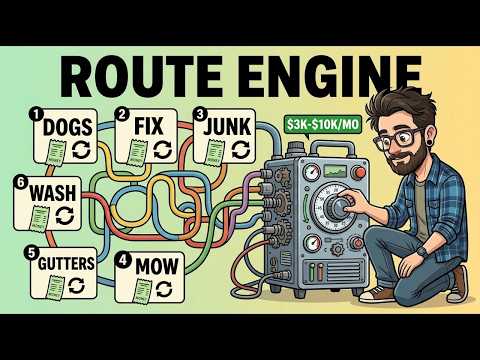
The Permit Stack Method treats government licenses like compound interest on competitive position. Each certification blocks most competitors before they even start. Once a fee is paid and a test is passed, the issuing agency puts your name on a list no competitor can join without completing the same process. Most won’t bother.
The stack is self-funding from the first recurring payment. Revenue from Business 1 pays for Business 2’s licensing fees. Every rung is funded by the rung below it. David Bach’s The Automatic Millionaire frames the underlying principle well: automation and paid-in-advance commitments build wealth without requiring ongoing motivation. The license is the commitment device. Both Bureau of Labor Statistics Consumer Expenditure Survey data and Consumer Financial Protection Bureau reports document consistent, persistent consumer spending on each of these service categories — demand is documented, not assumed.
If you are building from a lower capital base, 6 Boring Businesses That Make Money (Under $500 to Start) covers the entry-level end of the recurring-revenue spectrum.
Business 1: Whole-Home Water Filtration Installs
Hard water affects the majority of U.S. suburbs. Iron staining, chlorine taste, and calcium deposits that damage dishwashers and water heaters are persistent household problems. National chains charge $5,000 or more for a whole-home filtration system. A licensed independent installer can complete the same job for $800 to $3,000 per system and still deliver a price the customer considers a bargain.
The credential is a state plumbing endorsement combined with the Water Quality Association (WQA) dealer credential. Many states offer a limited plumbing endorsement after a 40-hour course — no full journeyman license required. Typical costs: $300 for the course, $110 for the exam, plus the WQA application fee. Total entry cost: approximately $600.
The recurring revenue is the annual filter swap. Filters require replacement every 12 months. Customers pay $60 to $140 per service visit, and the technician is already saved in their phone contacts — the friction of finding a new provider simply is not worth it. That income compounds quietly in the background while installation work continues. Side-hustle pace income: $800 to $2,200 per month on weekends only. The first 30 days of filter-swap retainers can fund the next certification entirely, leaving the day job paycheck untouched.
Important caveat: Some states require a full journeyman plumber license for whole-home installations. Check your state plumbing board website before paying for any course — search “water treatment installer endorsement” or “limited plumbing” to confirm eligibility before spending a dollar.
Business 2: Fire Extinguisher Inspection
Every commercial building in the United States is required by law to inspect its fire extinguishers annually. Every restaurant, office, warehouse, gym, dental practice, and retail space falls under NFPA 10 — the National Fire Protection Association’s portable fire extinguisher inspection standard. Skipping the annual inspection means fines, insurance complications, and potential loss of the business’s operating license. This is non-discretionary spending that recurs every 12 months without exception.
The credential is NICET certification (National Institute for Certification in Engineering Technologies). Level One costs $230. Level Two costs $315. Both are online proctored exams with no prerequisite degree or trade background required. The fire protection market is projected to reach $42.095 billion by 2030, the majority flowing through recurring annual service contracts rather than one-time project work.
The operating model is simple. Drive to a strip mall, inspect every extinguisher across six tenants, tag each unit with a dated service sticker, drop any units needing recharge with a recharge partner, return them two days later, and send one invoice to the property manager. Total active work time: approximately four hours for the full monthly route. Per extinguisher inspection: $12 to $25. Per recharge: $25 to $45. The average commercial building holds 8 to 15 extinguishers. An operator running 50 buildings part-time — weekends and one weeknight — nets approximately $10,000 per month gross, or around $6,500 net after recharge partner fees and vehicle costs. All-in startup cost: $1,500 to $3,000.
Customer acquisition requires no cold calling. Walk into any commercial business with a clipboard, ask the manager when their last inspection was, and offer to beat the current vendor by 10%. Half the time the manager cannot name their current vendor and will sign immediately.
Caveat: Texas, California, Florida, and several other states require an additional state-level fire equipment dealer license beyond NICET. Check your state fire marshal’s website before registering for any exam.
Businesses 3 and 4: The Pivot That Built the Biggest Income Stream
Business 3: Propane Refill Stations
Propane refill stations require a Department of Transportation hazmat endorsement on a CDL plus a state propane dealer permit — approximately $1,200 in combined fees and one week of coursework. The model involves partnering with a hardware store, feed store, or gas station for parking lot space, installing a refill cage, and charging customers $6 to $8 per tank fill across 200 to 400 monthly fills. The revenue math is straightforward.
The failure point is setback code. A location 300 feet from a residential zone when code requires 500 feet kills the entire plan with no variance available — no workaround, no appeal path in most jurisdictions. The lesson this teaches matters more than the business itself. An operator who already holds a plumbing endorsement, a NICET cert, and a DOT hazmat endorsement looks at a dead propane plan and asks: what else do these credentials unlock? An operator with no credential stack walks away with nothing.
Business 4: Mobile Fuel Delivery
Mobile fuel delivery is the natural pivot when a propane permit fails. A small tanker truck drives to a construction site, landscaping company lot, or trucking yard and refills all equipment on-site. The client eliminates the labor cost of sending workers to gas stations — roughly 90 minutes per worker per week saved — and pays a premium of $0.30 to $0.70 per gallon above retail for the convenience.
The mobile fuel delivery market is valued at $6.2 billion in 2026 and is expanding rapidly, driven by rising contractor labor costs and fuel management inefficiencies at mid-size operations. Korey McDavid, founder of Juiced Fuel, built a $1 million revenue route starting with under $100,000 in capital — a documented, publicly available case study.
The license stack for mobile fuel delivery is the most demanding in this list: DOT 406 or 407 tanker specification, a hazmat endorsement on a CDL, a state motor fuel tax license, a local fire department permit for above-ground storage, and an EPA Spill Prevention Control and Countermeasure (SPCC) plan. That complexity is the moat. Most prospective operators read the requirements and stop. Operators who complete the full stack run routes with minimal meaningful competition.
For operators who cannot yet afford a used tanker ($40,000 to $70,000), subcontracting as a relief driver for an existing operator pays $400 to $700 per day while capital accumulates toward ownership. Owner-operator monthly net at part-time scale: $6,000 to $14,000. Subcontracting part-time: $2,000 to $4,500. First-year tanker insurance typically runs $12,000 to $18,000 annually — this cost must be budgeted before signing any lease or purchase agreement.
Business 5: Private Mailbox Service (CMRA)
A Commercial Mail Receiving Agency rents locked mailboxes to small business owners, freelancers, real estate investors, attorneys, and anyone who does not want a residential address appearing on public business filings. The business operates from a small storefront with 100 to 200 individual lockboxes installed.
The license is USPS Form 1583-A plus quarterly certification. Renewal deadlines fall on January 15, April 15, July 15, and October 15. A single missed deadline results in suspended CMRA status. Most operators eventually let a renewal lapse — consistent compliance is the competitive advantage, not the storefront location or box count.
Pricing: $25 to $40 per mailbox per month. At 150 active boxes, that is $4,500 per month in pure recurring revenue before a single notary service or shipping label is processed. Lisa Song Sutton, a former corporate attorney, scaled a mailbox business to over $500,000 per year. She left the legal profession for this business specifically because the recurring math was honest and reliable — no client acquisition, no billing disputes, no churn beyond the occasional non-renewal.
Startup cost: $15,000 to $25,000 covering a storefront lease deposit, mailbox installation, a POS system, and a notary commission. This is the highest upfront cost in the stack, which is why it should not be launched until earlier rungs are generating stable recurring income. Compliance note: USPS requires identity verification with two valid government-issued IDs for every single box renter. One skipped verification can result in full license revocation with no appeal.
For other recurring-revenue businesses at a similar capital level, 6 Boring Cash-Flow Machines to Buy With $30,000 (No Skills Needed) covers several complementary options worth comparing.
Business 6: EV Charging Station Owner-Operator
The U.S. EV charging station market is valued at $5.92 billion in 2025. Property owners at gas stations, grocery chains, apartment complexes, and hotels are actively seeking operators who can manage charger installations and revenue-share arrangements. Most have no operator to call.
The model: partner with a Level 2 charger network such as EV Connect or ChargePoint, install chargers on a property owner’s site under a revenue-share agreement. The property owner receives foot traffic and a competitive amenity. The operator collects the kilowatt-hour revenue. Drivers pay per session. License requirements include an electrical contractor license (or a subcontracted licensed electrician), EVITP certification, a network operator agreement, and state utility interconnect approval.
Revenue per charger: $300 to $1,200 per month net. A small four-charger site generates $1,200 to $4,800 per month. Startup cost for charger ownership: approximately $40,000. Network split arrangements can reduce upfront capital requirements, though at the cost of ongoing revenue share.
This is the top rung of the stack deliberately. The capital requirement makes it realistic only after earlier businesses are generating stable recurring income — which is the core logic of building the chain in sequence rather than attempting to start here.
The Full Income Picture at Buildout
At full buildout across all six businesses at a part-time owner-operator pace, the monthly income picture breaks down as follows:
- Water filtration installs and filter swaps: ~$1,800/month
- Fire extinguisher inspection route (50 buildings): ~$6,500/month
- Mobile fuel delivery (own tanker, part-time route): ~$8,000/month
- Private mailbox storefront (150 active boxes): ~$4,500/month
- EV charging (4 chargers): ~$2,600/month
The realistic timeline to reach full buildout is 18 to 24 months at side-hustle pace, with each certification funded by the recurring revenue from the previous business. The chain is self-funding after the initial $600 water filtration entry cost. The freedom metric is not the income total — it is the decisions the stack enables: overtime shifts declined, toxic clients dropped, holiday weekends kept. Boring businesses with license moats do not require ongoing motivation because the license forces the system into existence. The recurring contract runs whether or not the operator feels inspired on a given morning. That is the entire point.
Watch the Full Video Walkthrough
For a complete visual breakdown of how each license builds on the previous one — including the propane station plan failure, the mobile fuel delivery pivot, and the step-by-step income progression across 24 months — watch the full video on YouTube. The next deep-dive in this series covers mobile fuel delivery in complete detail: DOT tanker specifications, real first-year insurance numbers, and verbatim first-customer scripts from an operator who built a $1 million revenue route starting with under $100,000.