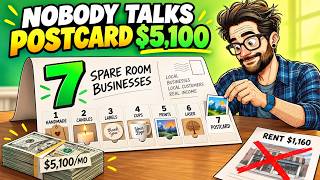
Retail space in the United States rents for an average of roughly $25 per square foot per year, which means a small 300-square-foot shop bay in an ordinary town costs somewhere between $450 and $1,160 a month before electricity, insurance, or a single hour of staff. Meanwhile, most homes already have a room that sits empty: a former kid's bedroom, a spare office, a corner of the basement. It is already heated, already insured, and already paid for. That gap between what a storefront costs and what a spare room costs is the entire foundation of the seven boring businesses below, all of which can be started, run, and scaled from a single room you are not currently using.
Key Takeaways
- A small retail bay costs $450 to $1,160 a month in rent alone; a spare room costs nothing extra, which is why modest sales from home can out-earn much larger sales from a storefront.
- Handmade and vintage resale can be started for under $200 and commonly clears $2,000 to $5,000 a month, with strong shops pushing past $10,000.
- The sticker and label business has the smallest footprint (50 to 70 square feet) but the deepest local reorder potential, since breweries, bakeries, and boutiques need a new label batch every production run.
- The shared postcard business needs no machine and no inventory, yet it produced the highest ceiling on the list, with franchisees averaging around $138,000 a year and top performers reporting over $400,000.
- The real driver of income in every one of these businesses is the local buyer who reorders, not the one-time online sale.
- Three filters decide which business fits a given room: does the equipment physically fit, is there a repeat buyer nearby, and does the rent you save cover the cost of the equipment.
The No-Rent Margin: Why a Spare Room Beats a Storefront
Harry, a school bus scheduler, walked past his kids' old playroom every morning for years without giving it a second thought. It was empty, heated, insured, and earning nothing. Then he noticed something obvious in hindsight: the shop he drove past downtown paid rent on roughly the same amount of floor space he was using to store a broken lamp. That observation is the mechanism behind every business on this list. A shop bay in a typical town runs $450 to $1,160 a month before a single sale is made. A spare room costs nothing beyond what you are already paying. That missing rent is not a discount on the business model, it is the business model, and it is why a bedroom doing a modest number of monthly orders can take home more profit than a storefront doing several times the sales volume while carrying a lease.
7 Boring Businesses That Fit in One Spare Room
1. Handmade and Vintage Resale
This is the broadest business on the list, and the entry cost is genuinely small: under $200 for listings and packaging. A working shop with a real niche and repeat buyers commonly clears $2,000 to $5,000 a month, and the strongest sellers push past $10,000. The physical footprint is just 60 to 80 square feet: a photo corner, a packing table, and a shelf. Etsy alone carries roughly 96 million active buyers, and the strategy is to be the best answer to one narrow search rather than competing for a broad category. Most sellers see a first sale within two to six weeks. Milla Rose started a dried flower business out of a Melbourne bedroom with about $300 and now runs close to $10,000 a month, with sales roughly doubling year over year, according to Starter Story. Nick Fortosis built a cork map shop out of a garage up to around $2,000 a month. The mistake most sellers make is chasing listing count instead of repeat buyers; walking a proven product into two or three local gift shops is what turns a hobby into a monthly number.
2. Candles and Soap
This one has the cleanest math on the list. Two hundred candles sold at an average of $35, with a 60 to 70 percent gross margin, produces roughly $4,200 to $4,900 in gross profit from a folding table. Sellers with a couple of years in business, a recognizable label, and a few wholesale accounts commonly run $1,000 to $4,000 a month. The room needs only 80 to 100 square feet: a pour station, a curing shelf, and a labeling corner. Startup costs run about $500 for wax, wicks, jars, and fragrance, plus $25 to $100 for a local market booth, with most sellers seeing money in two to four weeks. Market shoppers buy once, but the three to eight gift shops and boutiques a normal town supports will reorder monthly once your scent line is on their shelf. Wax and Wick went from about $1,000 a month in 2015 to roughly $20,000 a month by late 2017 on the same production setup, according to Starter Story.
3. Stickers and Labels
An early sticker shop pulls $500 to $2,000 a month, and a disciplined one reaches $7,000 to $10,000 in sales. A full in-house setup with a printer, vinyl cutter, and material runs $3,000 to $12,000, which is exactly high enough that most people skip it, leaving the local label work unclaimed. You can also outsource the printing for under $100 to prove demand first. The footprint is the smallest maker setup on the list at just 50 to 70 square feet. Every brewery, candle maker, sauce maker, bakery, and boutique in town puts a label on a product and reorders that label every production run, which is why this is described as the deepest earner in the list. David Rubie-Todd started Sticker It in 2018 out of frustration with his local sticker shops; the business now runs around $125,000 a month, past $2 million a year, growing about 50 percent year over year, per Starter Story. The pro tip is to quote labels as a recurring monthly line item rather than a one-time job.
4. Tumbler and Mug Press
This is the fastest business on the list to reach first money. A part-timer pressing 25 to 100 cups a month at about $15 of net profit each takes home $375 to $1,500 a month; pushed full time to 100 to 1,000 units, that runs from $1,500 to $15,000. The room needs a press on a 3-by-3-foot stand, a curing rack, and blank storage, around 60 to 90 square feet. A basic press and starter blanks run $300 to $800, and because the press cycles in minutes, a first sale can land the same week the equipment arrives. Birthdays and weddings buy once, but youth sports leagues, school parent groups, small offices, and fundraisers reorder 20 to 50 units at a time, season after season. One documented operator generated $190,000 in revenue and roughly $110,000 in profit across two and a half years doing largely custom cups, according to sublimation unit-economics data from MakerFlo.
5. 3D Printing Service
A part-time operator running this from home nets $500 to $2,000 a month, and someone running a shelf of four or five machines can reach $5,000 to $10,000. The room requirement is minimal: 70 to 100 square feet for a rack, since each machine takes about a foot and a half of shelf space, plus a bin of filament and a finishing table. A single consumer machine and a spool of filament cost $300 to $800 to start. Hobbyists buy once, but the repeat money comes from machine shops, small manufacturers, contractors, and engineers who need a jig, bracket, or discontinued part replaced. Craftybase data on prototyping shops shows revenue ranging from $60,000 to $400,000 a year at roughly 48 percent margins for that kind of custom work, with a home-scale version running smaller but still profitable while the machines print overnight.
6. Custom Engraving and Laser Cutting
This is the highest-ticket maker business on the list. A side operator clears $300 to $2,000 a month in year one, and an established shop carrying corporate accounts runs past $10,000. Entry lasers start around $400, and a genuinely capable starter setup lands under $1,000, a price point low enough that most competitors assume it is a hobbyist toy, leaving local award and signage work going to shops charging full shop prices. One operator documented building a $3,000-a-month business off a single $400 diode laser in a garage, working 15 to 20 hours a week, according to a home laser engraving business breakdown from MachinePicker. The room needs 70 to 100 square feet with ventilation, the one real physical requirement on this list, since the laser bed needs a vented window or exhaust hose. Weddings are the easiest entry point, with two or three weddings a month in favors alone running $2,000 to $6,000, but the repeat money is corporate: awards, signage, and employee gifts for real estate offices, gyms, schools, and HR departments that order the same plaques every quarter.
7. The Local Shared Postcard
The highest earner on this list uses no machine at all. The model sells 14 to 18 advertising slots on one large postcard at $350 to $500 per slot, collecting $6,300 to $8,000 before printing and postage to 5,000 homes, which runs about $2,400. That leaves roughly $3,900 to $5,100 per card, with advertisers paying before the print run is even ordered. One card a month is about $5,100; two cards is $10,200; three cards is $15,300. Startup cost is under $200, with no inventory and no press. The room needs just 20 to 30 square feet: a desk, a laptop, and a phone. The economics work because mailing a postcard alone costs a small business roughly 50 to 75 cents per household, but split across 14 to 18 non-competing businesses, that drops to about 6 cents per household. Rachel Smith and Dalton Joyner run a shared postcard business and have documented clearing $1,000 and up per mailing, according to Side Hustle Nation. Franchisees running the same model average around $138,000 a year, the top quarter clear over $300,000, and the top producer reported $446,000, per data cited in The 9x12 Method.
How to Choose the Right One for Your Room
Three filters determine which of these seven fits your situation. First, does it actually fit: the bench, material shelf, and packing corner all need to live in the room at once with the door still closing, or it becomes a workshop business rather than a spare room business. Second, is there a repeat buyer within driving distance, since one-off sales are a sample but a local business that reorders is real income; name that buyer before you buy any equipment. Third, does the rent you are saving cover the machine's cost: if a small bay in your town runs $600 a month and the equipment costs $800 once, the room pays for the equipment in about six weeks, and every month after that is profit.
Harry chose the postcard business, since it required no machine, no materials, and he already knew half the businesses in town from his bus routes. In month one he booked six advertisers for about $2,100 on a half-full card. By month three he filled the card for the first time, and a landscaper and dental office asked to rebook before the mail even went out. By month six he was running one card a month with a third of every card filled by repeat advertisers, and by month fifteen he had expanded to three cards across two towns, roughly $6,240 a month, worked in the evenings from the same desk in the same room.
For a visual walkthrough of the room layouts, startup costs, and the exact math behind each of these seven businesses, watch the full video breakdown on the Harry's Stash YouTube channel. It also covers what happened when Harry underpriced his biggest tumbler order and the pricing rule he wrote down to fix it. If you are still building a starter list of low-cost ideas, the earlier roundup of boring businesses that make money for under $500 to start pairs well with this one, and anyone looking at higher-ticket service businesses may also want to see the real costs and margins behind a junk removal business.