- Key Takeaways
- The Broken Thing Toll: One Model Behind Six Businesses
- 1. Appliance Repair: $80,000–$100,000 Net Per Year
- 2. Garage Door Repair and Installation: $12,000–$50,000 Per Month
- 3. Glass and Mirror Installation: $60,000–$80,000 Per Year and Up
- 4. Flooring Installation: $50,000–$120,000 Per Year
- 5. Mobile Welding and Fabrication: $100,000–$250,000 Per Year
- 6. Locksmithing: The Boss Level of Boring Trades
- The One Mistake That Stalls New Operators
- How to Choose Your Trade: Three Filters
- Watch the Full Video Walkthrough
Somewhere in your city right now, a locksmith is answering a 2 a.m. call. A homeowner is standing in a parking lot, locked out of their own car. That call — before the truck even leaves the driveway — is worth between $150 and $400 in cash. The interesting part is not the locksmith specifically. It is that a garage door technician, a mobile welder, and an appliance repair tech are collecting that exact same kind of toll this week. They each found a different broken thing to own.
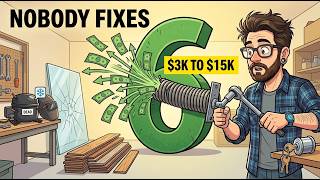
This is the case for six fix-it trades that generate serious income with a single certification, not a four-year degree. Something in every home, car, and business is destined to break — on its own schedule, not yours. You do not create the demand. You learn a narrow skill and become the person who shows up. This article is for educational purposes only and is not financial advice. Every trade rule and licensing requirement changes by state — verify your local requirements before starting any business.
Key Takeaways
- Six fix-it trades — appliance repair, garage doors, glass installation, flooring, mobile welding, and locksmithing — each generate $75,000 to $150,000+ per year for solo operators.
- The gatekeeping credential for each trade costs as little as $35 (EPA 608 exam) to a few hundred dollars for a state locksmith license.
- Demand is permanent and self-generating — broken things break on their own schedule, not yours.
- The fastest route to steady work in every trade is a property management account, not paid advertising.
- The single biggest stall for new operators is not the skill — it is slow call response and the absence of reviews in the early months.
- Locksmithing stacks the most advantages: emergency premiums, a government license moat, and recurring commercial rekey contracts.
The Broken Thing Toll: One Model Behind Six Businesses
Every trade on this list runs on the same underlying model. A broken thing exists that the customer cannot fix themselves. You own the skill to fix it. So you charge the toll. You are not selling your labor by the hour — you are selling access to a solution the customer needs right now. That is why these trades quietly outperform more glamorous businesses: the demand is permanent, and it is not your job to generate it.
If you want the philosophical case for why skilled fix-it work demands real thinking and judgment, Shop Class as Soulcraft by Matthew Crawford makes the argument better than anyone. Crawford was a PhD who left a think tank job to open a motorcycle repair shop. His thesis is that fixing real, broken, physical things requires more genuine problem-solving than most knowledge work. That quiet dignity is present in every trade on this list.
1. Appliance Repair: $80,000–$100,000 Net Per Year
Every home you have ever walked into has a refrigerator, a washer, and a dryer. Every one of those will eventually fail. A solo mobile appliance technician runs four to six calls per day at $150 to $250 per call — that is $3,000 to $6,000 per week in gross revenue, or $12,000 to $24,000 per month for a busy operator. After parts, fuel, and insurance, an efficient independent technician nets $80,000 to $100,000 per year.
The certification that functions as the business moat is the EPA Section 608 certification, required by federal law to open sealed refrigerators and freezers. The exam is administered through the ESCO Institute and costs $35 to $300 to sit. A voluntary credential called NASTEC — which runs $50 to $185 — accelerates manufacturer trust. These are not large costs. They are walls that most people never bother to climb, which is why a certified technician's phone keeps ringing while competitors sit idle.
To start, you need a used van, $2,000 to $3,000 in tools and refrigerant recovery gear, and a Google Business Profile with real photos. The fastest path to steady revenue is calling the property management companies near you — not chasing individual homeowners with ads. One manager with eight buildings can generate four to six steady calls per month indefinitely. Tradesman Tyler Watkins shared his full income breakdown publicly on LinkedIn: net income of $80,000 to $100,000 per year as a solo operator after his 608 certification and a couple of years learning major appliance brands.
2. Garage Door Repair and Installation: $12,000–$50,000 Per Month
A stuck garage door is treated like a lockout — urgent and barely negotiated. A solo repair-focused operator clears $12,000 to $25,000 per month in gross revenue. Add door installations and the range climbs to $25,000 to $50,000 per month, because a new door installation runs $700 to $4,000 while spring and opener repairs bring $150 to $450 per ticket.
The skill barrier is lighter than most people expect. There is no state license in most jurisdictions. Training comes from the IDEA (Institute of Door Dealer Education) or the IDA (International Door Association), with most courses running two to five days. Manufacturers like LiftMaster train technicians on their openers — often for free — as a condition of becoming an authorized installer. An operator named Michael, who runs Bear Door Services, went from zero to six figures in under twelve months after completing his certification and hands-on training. The most common beginner mistake in this trade is chasing only cheap spring repairs and ignoring installations. Smart operators quote the full door replacement on every visit, because one installation job pays the equivalent of ten repairs.
3. Glass and Mirror Installation: $60,000–$80,000 Per Year and Up
Glass and mirror installation is the trade most people overlook entirely. A full-time solo installer clears $60,000 to $80,000 per year, and shower door specialists — those focused on frameless glass enclosures that dominate bathroom remodels — can push $50,000 per month in revenue once established. A single shower door installation runs $900 to $2,500. Two or three installs per week at a $1,500 average brings in $12,000 to $18,000 per month.
The certification barrier here is the lowest of the six trades on this list. There is no national license. Most working glaziers learned on the job or through a short apprenticeship with a glass shop. Some states require a general contractor registration above certain job sizes — running $200 to $1,000 — but mostly, you learn by doing, and hardware suppliers teach their bonding techniques for free. The fastest path in is to apprentice at a local glass shop for a season. Cody Hartman started inside a 110,000 square-foot fabrication plant, went from employee to partner to owner, and now runs First Class Glass doing custom shower doors and railings — built on ten years of word-of-mouth referrals before spending a single dollar on advertising.
4. Flooring Installation: $50,000–$120,000 Per Year
Flooring installation is a business hiding in plain sight. A solo installer earns $50,000 to $120,000 per year — $4,000 to $10,000 per month. One installer's breakdown put daily earnings at $550 to $1,200 and roughly $20,000 per month when selling material alongside labor. A single floor job runs $2,000 to $4,000, and an efficient operator handles two or three per week without difficulty. Walk through any apartment complex on turnover day — every unit needs new floors, and that demand refills every single month.
The certification here is a competitive edge rather than a legal wall. For hardwood, the gold standard is the NWFA (National Wood Flooring Association) certification — about $100 for the member exam plus a few hundred in course fees. For broader surfaces, the CFI (Certified Flooring Installer) program covers the full range. Neither is a state license; both are trust signals that put a certified installer ahead of the uncertified competition that makes up most of the market. The fastest path to a full pipeline is to walk into local flooring retailers and become their subcontracted installer — these stores sell flooring every day and frequently have no one reliable to install it. Paul Lajoie bought his first flooring business, scaled it over twenty-five years, and now works roughly ten hours per week on a business that generates serious income across a multi-property portfolio.
5. Mobile Welding and Fabrication: $100,000–$250,000 Per Year
A skilled mobile welder charges $65 to $150 per hour. A full week of billable hours produces $100,000 to $250,000 per year in gross revenue. Farmers, contractors, and factories all have metal that cracks, and metal does not fix itself. Experienced operators report that rates swing from $100 per hour on a routine repair to $1,000 in a single hour when the job is urgent and structural.
The credential that unlocks the highest-paying work is the AWS Certified Welder designation from the American Welding Society. Welders are certified per process — MIG, TIG, or Stick — and each test costs $300 to $1,000. That certification is required to bid most commercial and government contracts. It does not just prove competence — it unlocks an entire tier of work that uncertified welders cannot legally access. Many welders already have the skill from shop class or hobbyist fabrication and simply need the test. Tim Johnson, founder of Vulcan Mobile Welding, was transparent about his first year: a significant stretch of it was slow while he figured out how to market a skill that sat idle. He built a Google Business Profile, answered calls fast, and established a reputation for fair pricing — then earned $50,000 in a single six-week stretch once word of mouth caught up.
6. Locksmithing: The Boss Level of Boring Trades
Locksmithing stacks every advantage from the previous five trades simultaneously. A locksmith business owner earns $75,000 to $150,000 per year and beyond. An emergency lockout alone is worth $150 to $400, and the customer is not negotiating — they are locked out right now. Three to five emergency calls per week plus five to ten standard jobs brings in $12,000 to $24,000 per month in gross revenue. Then comes the recurring money: a property manager who signs you to rekey every apartment on tenant turnover delivers a check that repeats without a single new sale.
The moat here is the strongest of any trade on this list. Approximately fifteen states legally require a locksmith license — a background check, a surety bond, and in some cases mandatory training hours. In California, that means roughly forty hours of training and a fee near $350. On top of the license, the ALOA (Associated Locksmiths of America) certification satisfies training hour requirements and wins commercial client trust. Three barriers at once — a license, an emergency premium, and recurring contracts — and almost nobody climbs all three, which is precisely why the ones who do stay busy.
A woman known as the Locksmith Girl of New York City spent about two years training toward her license, launched at the end of 2024, and after one video went viral went from a slow start to sixty jobs per week. She now earns more running her own shop than she ever did as an employee — against an average locksmith salary of around $76,000 per year.
The One Mistake That Stalls New Operators
Across every trade on this list, new operators stall at the same point. They have the skill and the equipment. The calls are not coming in. The problem is almost never the trade itself — it is the phone setup and the absence of early reviews. A new operator without a Google Business Profile with real photos, who does not answer on the first ring or call back within the hour, and who has no reviews yet is invisible to the person searching right now.
The fix is boring and it works. Set up the profile before the first job. Answer every call. Ask every satisfied customer for a review. The first few months of consistent responsiveness is what flips word of mouth from a trickle to a flood. The person who answers first collects the toll. The person who does not gives it to a competitor who did.
How to Choose Your Trade: Three Filters
Filter one: Pick the broken thing you have personally paid to fix in the last year. That is a demand you have already verified with your own wallet.
Filter two: Check the certification or license requirement for that trade in your specific state. The credential is the moat. A cheap moat that keeps competitors out is an asset, not a cost.
Filter three: Search how many operators already serve your zip code. Thin competition plus permanent demand is the entire business model. If that search comes back crowded, you have still learned something most people never bother to check.
For more on certifications that open high-income doors without a four-year degree, see the breakdown on 5 High-Paying Trades Most Grads Ignore. And if you are weighing a fix-it trade against a lower-capital startup, 6 Boring Businesses That Make Money Under $500 to Start covers the overlap between low-barrier businesses and reliable cash flow.
Watch the Full Video Walkthrough
The numbers above cover the credentials and income ranges, but the video on Harry's Stash shows the real operator stories in full — including a month-by-month income progression in appliance repair, Tim Johnson's six-week $50,000 stretch in mobile welding, and the Locksmith Girl's jump from zero to sixty jobs per week. Watch 6 Boring Things That Break That Pay Well to Fix on YouTube and drop a number in the comments — one through six — for the trade you would start. The number with the most replies gets a full deep-dive video next.