- Key Takeaways
- The Surcharge Toll — Where Your ATM Fee Actually Goes
- How the Cash Float Works
- Startup Costs, Payback Period, and Paperwork
- Finding Profitable ATM Locations — The Three Filters
- Making the Placement Deal and Building a Route
- The 30-Day Rule — Managing Dead Locations
- Two Entry Points for New ATM Operators
- Watch the Full Video Walkthrough
That corner-store ATM is almost certainly not owned by a bank. The surcharge fee printed on screen before you confirm your withdrawal — $2.50, $3.00, sometimes $4.00 — flows to an independent operator: a private individual who purchased the machine, loaded it with their own cash, and signed a quiet placement agreement with the store owner. Understanding who actually collects that fee reveals one of the most overlooked cash-flow business models available to ordinary people with modest startup capital.
Key Takeaways
- Independent ATM operators — not banks — own the majority of machines in corner stores, bars, and laundromats.
- The surcharge fee ($2.50–$4.00 per withdrawal) is set by the machine owner, not the card-issuing bank.
- A single well-placed machine can generate approximately $1,250 per month in gross fees; a route of 6–12 machines can approach $10,000 per month.
- The cash inside is a recycling float — withdrawn funds settle back to the owner's bank account within 24–48 hours of each transaction.
- Machine cost ranges from roughly $2,200 to $8,000; industry data puts payback at 6 to 18 months on a well-placed unit.
- The biggest operational risk is a dead location — the 30-day evaluation rule is the standard industry fix.
The Surcharge Toll — Where Your ATM Fee Actually Goes
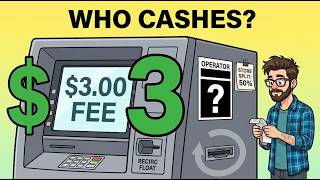
When you withdraw cash from an independent ATM, the fee charged to your account breaks into two separate revenue streams. The visible one is the surcharge: the flat dollar amount displayed on screen before you confirm the transaction. That number is chosen by the machine's owner — not by the bank that issued your card, and not by the card network. At a $2.50 surcharge with 500 withdrawals in a month, a single well-placed ATM generates approximately $1,250 in monthly income from that charge alone.
The second stream is invisible at the point of transaction. Called interchange, it is a fee paid by your bank to the machine owner through the payment network — typically between $0.10 and $0.25 per withdrawal. On a busy machine, that adds another $30 to $75 per month on top of the visible surcharge. Neither fee goes to the bank that issued the debit card. Both flow to the independent ATM operator who owns the machine on the wall.
This is what operators call the Surcharge Toll. Every withdrawal is a car passing through a toll booth, and whoever owns the machine owns the toll. Most people assume a bank is collecting on the other side of that fee. Almost always, they are wrong.
How the Cash Float Works
One of the most persistent misconceptions about the ATM business is that loading a machine with thousands of dollars in bills represents a permanent operating cost. It does not. The cash inside an ATM functions as a float — a recycling pool of funds, not a sunk expense.
The mechanics are straightforward. The owner loads the machine with their own money, typically several thousand dollars in twenty-dollar bills. A customer withdraws $60. That $60 leaves the machine physically. Within 24 to 48 hours, the payment network settles the transaction and deposits that same $60 back into the operator's bank account. The operator then replenishes the machine from what returned. The cash circulates continuously — never truly spent, just recycling over and over.
This means the real startup cost is not the working capital required to fill the machine. It is the machine itself — a very different number than most people expect.
Startup Costs, Payback Period, and Paperwork
A new ATM machine costs approximately $2,200 on the low end and up to $8,000 for a current higher-end unit. Used machines are available for considerably less. Beyond the machine, equipment overhead is minimal: receipt paper, a wireless module for network settlement, and a wall mount or freestanding enclosure. There are no employees, no perishable inventory, and no storefront required.
According to both ATM Marketplace and ATM Depot — two industry sources frequently cited by independent operators — a well-placed machine typically recoups its purchase cost within 6 to 18 months. After that threshold, the toll income continues with no equipment debt against it.
On the compliance side, ATM operators must register as a money services business (MSB) with the federal government and maintain basic transaction records. Some states layer additional licensing requirements on top of the federal baseline. Operators consistently describe this paperwork as standard small-business administration — not a specialized or prohibitive process. In practice, the registration requirement functions as a mild barrier to entry that thins out casual competition for anyone who clears it.
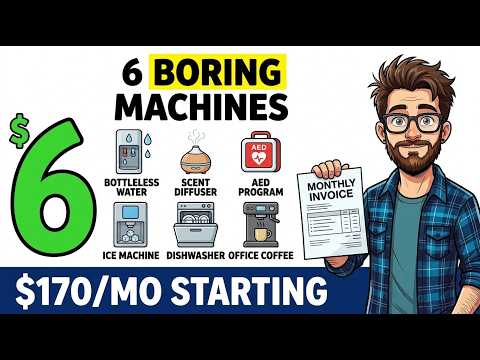
The ATM placement model shares its core logic with other overlooked, low-overhead income streams. For additional context on similarly unglamorous opportunities, see 6 Boring Businesses That Make Money (Under $500 to Start) — many follow the same placement-and-collect structure.
Finding Profitable ATM Locations — The Three Filters
Location is the single largest variable in ATM machine income. The same machine that generates $1,250 per month in a busy bar district might produce fewer than $200 per month in a low-traffic office lobby. Experienced operators apply three consistent filters before committing to any placement agreement.
Filter 1 — Real cash traffic. The location must draw a crowd that regularly needs physical currency. Bars and nightlife venues rank at the top of most operators' lists because card minimums push customers toward cash withdrawals. Laundromats, smoke shops, convenience stores near transit hubs, and festival or event venues carry the same profile. The relevant question is not whether the location is busy — it is whether the foot traffic converts to cash withdrawals.
Filter 2 — A host who benefits. The store owner should receive a meaningful share of the surcharge — commonly around 50 percent — or a negotiated flat monthly payment. When the host earns from the machine's performance, they actively encourage customers to use it and keep the surrounding area accessible. A disengaged host produces a machine in a poor position.
Filter 3 — A refillable loop. If topping up the cash float requires a long round trip, that friction compounds as an operator builds a route. The strongest placements sit on a circuit the operator can cover in one efficient trip. Distance adds time cost that a single machine's income may not justify.
If a candidate location fails any one of the three filters, the standard operator practice is to move on rather than negotiate around the gap. The location is the asset — not the machine itself.
Making the Placement Deal and Building a Route
The pitch to a store owner is designed to require nothing from the host. The operator offers to install a cash machine at no cost to the business, handle all refills and maintenance, and split the monthly fee income. The host receives recurring revenue in exchange for a few square feet of floor space — no upfront investment, no new staff responsibility.
A common placement split gives the location owner roughly half the surcharge or a flat monthly check. One small business owner described his side of the arrangement publicly: the machine is not his, he simply keeps it accessible, and a check arrives each month for roughly half the fees collected. His direct involvement is minimal.
Building a full ATM route does not require a large machine count. Independent operators who have documented their routes publicly — including one who has run a personal route for more than seven years — describe eight to twelve well-chosen locations as the practical target. ATM Depot's route economics data puts gross fee income from a 6- to 12-machine route at up to approximately $10,000 per month before host splits and processor fees.
A realistic entry-level picture: one machine generating $1,250 in gross fees, split 50/50 with the host, yields roughly $625 to the operator. Eight machines at a similar average — some strong performers, some slower ones, blended across a small route — produce several thousand dollars per month with income largely disconnected from the operator's active time. This positions the ATM route alongside other boring cash-flow machines that pay monthly without requiring full-time management.
The 30-Day Rule — Managing Dead Locations
The primary risk in the ATM placement business is committing to a low-traffic location before real usage numbers emerge. An operator who places a machine expecting 500 monthly withdrawals and receives 80 instead will not cover refill trips, let alone machine acquisition costs.
The standard fix cited consistently by experienced operators: never evaluate a placement before 30 full days of data. One complete month captures weekly traffic patterns, cash-heavy weekend cycles, and local event effects that a one-week sample will miss. If the 30-day withdrawal count is genuinely weak, the operator has two clear options — renegotiate the revenue split with the host to lower the effective break-even threshold, or physically move the machine to a higher-traffic location.
Relocating an ATM is a short afternoon task with basic equipment — not a significant logistical undertaking. The operators who build sustainable routes maintain a clear mindset: attachment belongs to high-traffic doorways, not to any specific machine. The box is a tool. The busy doorway is the asset.
Two Entry Points for New ATM Operators
There are two primary paths into the ATM business. Most new operators begin with the lower-barrier option and migrate to the higher-margin one once they trust the numbers.
Full machine ownership means the operator buys the equipment outright, loads the cash float, and retains the majority of the surcharge after the host split and processor fees. Upfront cost is higher, but the long-term economics are stronger because more of each toll stays with the operator.
Processor-supplied placement means the processor provides the hardware and sometimes the cash float. The operator's primary role is sourcing the location and maintaining the host relationship. Per-machine income is lower, but the barrier to starting is minimal. Most operators use this path on their first placement — to understand how the settlement cycle works, how to read withdrawal data, and how to negotiate splits — then shift toward owned equipment as the route becomes profitable enough to fund expansion.
Both paths require partnering with a network processor that handles technical settlement. Comparing at least two processors before committing is advisable; fee structures and contract terms vary and directly affect per-withdrawal net income.
Watch the Full Video Walkthrough
For a visual breakdown of how the surcharge toll works, how the cash float cycles, and the step-by-step approach one independent ATM operator used to build a small route from a single laundromat placement, watch Who Really Collects the Fee on That Corner-Store ATM? on Harry's YouTube channel. The video covers the Three Filters framework, the two-door entry model, and an honest month-by-month income timeline from first placement through a working eight-machine route.
This article is for educational purposes only and is not financial advice. Always check your state and local regulations before starting any money services business.
Sources: ATM Depot (route economics and ATM machine income data); ATM Marketplace (ATM profitability and revenue drivers); Federal Reserve (interchange and payment network basics); ATM Network (turnkey and cash-assist placement programs); documented independent ATM operators (public route and placement discussions).