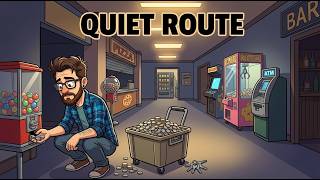
The coin machine sitting outside a grocery store, the capsule toy dispenser at the mall entrance, the ATM wedged into the corner of a busy bar — most people walk past all three without a second thought. For the person who placed them there, each one is a self-running cash asset. The model is straightforward: place a machine once, build a service route, and collect the revenue on a rhythm. What makes these boring business ideas worth examining is the gap between how visible they are and how few people actually treat them as businesses. The good corners stay open precisely because most operators never bother to ask for them.
Key Takeaways
- Six coin machine formats span a startup range from under $200 (gumball machines) to $8,000+ (ATMs), making entry accessible at almost any budget
- The placement — not the machine — is the real asset; a well-placed capsule toy machine will consistently outperform a poorly placed vending machine
- Location revenue splits typically run 15–30%, making the placement conversation far easier than most first-time operators expect
- ATM machines in high-cash venues represent the highest per-unit income ceiling in this category
- Scaling means building a route — multiple machines across multiple locations — not upgrading a single unit
- Most markets still have open, high-traffic spots; the real barrier is making the first placement call, not raising capital
Why Coin Machines Stay Under the Radar
MJ DeMarco's The Millionaire Fastlane makes the case that most cash-flow assets hide in plain sight — passed over because they look small or unglamorous. Coin machines are a textbook example. A single gumball machine earns $30 to $100 a month. A single ATM in a busy bar can clear $400 to $1,200. Neither figure sounds transformative in isolation, but that is not the point. A route of ten to twenty machines, serviced in a few hours per week, starts to look like a real income stream — and the machines keep running while the operator is doing something else entirely.
The operator framing is the mental shift that separates people who own coin machines from people who merely notice them. Harry, an arcade attendant turned coin machine operator, describes his full collection as The Quarter Harvest — a cluster of well-placed machines restocked on a rhythm. From a toy capsule machine in a mall corner to an ATM in a busy bar, every unit quietly banks cash for whoever placed it. The insight his route is built around is simple: the machine is not the business. The spot is.
The Six Coin Machines, Ranked Easiest to Start First
1. Gumball Machines
The gumball machine is the lowest-barrier entry point in the coin machine category. A single-head unit costs $75 to $150 new; used machines can be sourced for less. Monthly revenue at a decent location — a barbershop, a tire shop waiting room, a laundromat — runs $30 to $100. That sounds modest until the route math lands: thirty gumball machines cost under $5,000 to build and can generate $900 to $3,000 per month in gross revenue, with product costs that rarely exceed 30% of sales.
The skill in this format is location selection. A machine placed at a barbershop with a long average wait will outperform one at a quick-service counter by a factor of three or more. Operators who learn to read foot traffic patterns scale this format quickly, and the machines themselves require almost no maintenance beyond periodic restocking.
2. Gachapon Capsule Toy Machines
The gachapon machine — a coin-operated capsule dispenser popularized in Japan and now common in North American malls and family restaurants — sits a step above gumball machines in both cost and revenue potential. According to Leon Amusement's capsule machine profitability breakdown, a well-placed capsule machine in a family-oriented location can generate $150 to $400 per month from a single unit. Purchase cost runs $200 to $600 depending on size and supplier.
What makes gachapon machines particularly effective is the impulse-buy dynamic. The product is hidden until the capsule opens, which drives repeat purchases from the same customers. Machines stocked with licensed characters, trending toy lines, or collectible figures consistently outperform those filled with generic product. Operators who stay current on what is moving in toy aisles have a measurable edge in this format.
If you are evaluating low-capital business formats side by side, the full comparison at 6 Boring Businesses That Make Money (Under $500 to Start) covers several formats that compete with capsule machines on startup cost.
3. Bulk Vending Machines
Bulk vending covers the triple-head candy, nut, and small toy machines common in restaurant lobbies and retail entrances. These units sell for $100 to $500 and are often placed in clusters at a single location, which increases per-location revenue without requiring additional placement negotiations. A three-head unit in a moderate-traffic spot typically nets $75 to $200 per month before product cost.
The operational advantage of bulk vending is density: three product types at one location, collected on a single stop, with one commission check to the location owner. This format rewards operators who identify locations where foot traffic is consistent rather than seasonal — medical waiting rooms, hair salons, and auto service shops are reliable performers across most markets.
4. Snack and Drink Vending Machines
The classic vending machine business steps up sharply in both startup cost and income potential. A new snack or drink machine runs $3,000 to $8,000; a refurbished unit can be sourced for $500 to $3,000. Adam Hill's vending machine business, profiled by UpFlip, demonstrates how operators build meaningful monthly income by targeting high-traffic institutional locations — corporate offices, gyms, apartment complexes, and schools — rather than competing for crowded retail spots.
Monthly gross revenue per machine at a well-chosen location runs $300 to $1,000. Product costs typically represent 30 to 50% of gross revenue, and location splits commonly land at 15 to 25%. Codie Sanchez's thirty-day vending machine challenge documented how quickly a focused operator can build a productive route once the placement conversation is dialed in — the key finding being that pitching a location owner is the primary skill bottleneck, not capital or logistics. Scale in this format is linear: each machine added to the route adds proportional revenue with minimal additional labor, since restocking trips are batched by geography.
5. Claw Machines
The claw machine earns more per play than almost any other coin machine format because the payout is probabilistic. East Coast Amusements' earnings disclosure and the ClawMachines revenue-share and ROI buyer's guide both indicate monthly revenue figures of $300 to $800 per unit at average locations, with machines in high-traffic entertainment venues — bowling alleys, movie theater lobbies, and family restaurants — consistently reaching the higher end of that range.
Commercial claw machines cost $2,000 to $5,000 to purchase. Location revenue splits run higher than bulk vending, typically 20 to 30% to the location owner, but per-play margins support the math. The critical operational variable is prize cost as a percentage of gross revenue; experienced operators target prize costs below 25% of total machine income to protect profitability.
Claw machines also carry a visibility advantage that capsule dispensers and gumball machines do not. A well-lit claw machine in a restaurant lobby draws attention from across the room and generates walk-up plays without any marketing spend. This passive customer acquisition is part of what makes claw machines a strong addition to any scaled coin machine route. For a broader look at how machines like these fit into a larger cash-flow strategy, see 6 Boring Cash-Flow Machines to Buy With $30,000 (No Skills Needed).
6. ATM Machines
The ATM machine business represents the highest per-unit income ceiling of any format on this list. According to Unison Payment's ATM business route guide, a privately owned ATM earns revenue through a surcharge fee — typically $2.50 to $3.50 per transaction — collected entirely by the operator. In a high-cash venue such as a bar, nightclub, or casino floor, transaction volumes of 200 to 400 per month are achievable, generating $500 to $1,400 in monthly surcharge revenue from a single machine.
Startup cost for a compliant ATM unit runs $2,000 to $8,000 depending on model and whether cash loading is handled by the operator or a third-party vault service. Location splits in this category are negotiated per placement; bar and nightclub owners who view the ATM as incremental revenue for their venue often accept 20 to 25% of surcharge income in exchange for a long-term placement agreement.
The ATM format carries more compliance requirements than the machines ranked above it — operators must register with a payment processor and meet applicable state and local regulations — but the income ceiling and the passivity of the revenue once the machine is live make it the natural capstone of any serious coin machine route.
How Operators Win Placements
Every machine on this list shares one constraint: it is worthless without a placement. The placement conversation is the business. A location owner's primary concerns are typically space, revenue share, and liability. Operators who address all three clearly in the first conversation close far more placements than those who lead with machine specifications.
The standard structure is a revenue-share agreement: the operator owns the machine, the location owner receives a percentage of gross revenue or a flat monthly fee for lower-volume formats. A written agreement — even a simple one-page document — protects both parties and reduces the risk of a machine being removed without notice. Operators who approach location owners as business partners rather than as salespeople build longer-lasting placements and generate referrals to adjacent locations organically.
From One Machine to a Route: How This Scales
A single coin machine is an experiment. A route of fifteen to twenty machines, organized by geography, is a cash-flow business. Machines are batched by area so that a single afternoon of service stops covers every unit in a given zone — revenue collected, product restocked, machines reset — typically in two to four hours per route day, once or twice per week depending on volume.
The compounding logic mirrors any income-producing asset portfolio: each unit added increases total revenue while the marginal time cost of servicing it remains low. Operators who started with a single machine and expanded methodically report that the first placement required the most effort — not because of the machine itself, but because the supplier relationships, the service rhythm, and the pitch to location owners all had to be built from scratch. Once those systems exist, adding the next machine is a straightforward repetition.
Watch the Full Video Walkthrough
The video version of this breakdown walks through each of the six coin machine formats with visual income comparisons and covers how Harry structures the placement conversation from first contact to signed agreement. Watch 6 Boring Coin Machines People Walk Past That Quietly Bank Cash on the Harry's Stash YouTube channel for the complete walkthrough — including why he calls the whole system The Quarter Harvest and which of the six formats he recommends starting with first.
The Bottom Line
Coin machines occupy a category where the barrier to entry is genuinely low, the learning curve is manageable, and the income ceiling scales directly with the number of placements secured. The right format depends on available capital and risk tolerance: gumball and capsule machines for operators starting under $500, snack vending and claw machines for those ready to invest $2,000 to $5,000 per unit, and ATMs for operators building a route with the highest per-unit income potential. In every case, the real asset is the spot — which means the business begins not when the machine ships, but when the first location owner says yes.