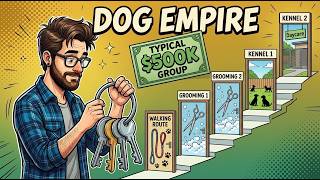
Few boring business ideas are as ordinary as dogs: a walking route, a grooming salon, a boarding kennel. Yet stacked one on top of the other, these three can quietly become a dog business empire that nobody in town knows you own. This article follows one composite owner, level by level, from a neighbor's leash to a group of five locations, using real market ranges rather than promises. The people are composites; the companies and operators named are real.
It is for educational purposes only and is not financial advice. Prices, loan rates and licensing rules change and vary by state, so check your state's kennel licensing, zoning and insurance requirements before buying or starting any pet business.
Key Takeaways
- A dog walking route is recurring revenue: about $25 a walk, five lunches a week, from the same homes all year.
- Typical grooming businesses on BizBuySell bring in about $380,000 a year, with the owner keeping just under 30% (around $110,000).
- The median boarding and daycare business brings in about $493,000 and the owner keeps about $136,000, yet kennels average only half to 60% full across the year.
- Small businesses like these are bought with BizBuySell-style pricing, seller notes and an SBA 7(a) loan with part of the seller note on standby.
- The expensive mistake is buying a kennel or salon on the seller's story. Pull 24 months of booking records, confirm the license and zoning, and have a contractor inspect the building first.
Level Zero: One Leash and a Rule on Your Key Ring
The story starts with a neighbor, called Pam here, whose new job runs long and whose puppy, Biscuit, eats couches. She asks for a lunchtime walk. Within a month two more neighbors ask the same thing. Three dogs, five lunches a week, at about $25 a walk comes to around $375 a week, before anyone has been hired.
Dog walking is not really about dogs. It is about keys. People hand over a key to their house and the thing they love most, and earning that trust is the only hard part. The owner writes a rule on a paper tag and clips it to a key ring: earn the key, hire the hands, stay in the back.
Then come three boring steps:
- Form a plain company. State filing fees run from about $100 in Wyoming to $300 in Texas.
- Buy pet sitter insurance with bonding. Pet Care Insurance starts at about $194 a year.
- Put every dog in scheduling software. Precise Petcare starts at $20 a month for one person.
The insurance has a phrase worth knowing: care, custody and control. It is the part that covers the animals themselves, and most weekend walkers never buy it. That is the first wall, and everything after it is the same idea played bigger.
Level One: The Walking Company
Level one begins when there are more dogs than lunch hours. By year two there are fourteen dogs and one body, so the owner hires a first walker, Rosa, a retired mail carrier who already knows every street.
What a walking route earns
Time To Pet, a scheduling company, puts the average 30-minute walk at about $29.50 in America, with most between $24 and $34. TrustedHousesitters puts it around $25. Those walks repeat every weekday from the same homes all year, which makes it a route rather than a gig.
Beating the apps
The first opponent is an app. A neighbor finds a walker on Rover for a few dollars less. What she does not see is that Rover's help center says it takes a 20% service fee from the sitter and charges the owner a booking fee too. The owner on the app gets a different stranger every other week. The boring answer is the same walker every day, insured and bonded, with a photo text after every walk. The neighbor comes back in March because her dog liked Rosa better.
The first hiccup
One Tuesday Rosa's key does not turn because a client changed her locks and told no one. Rosa waits on the porch for forty minutes with a dog barking inside. The fix is one line added to every client file: a backup code, a backup key, and a neighbor who has one. That line matters later.
Walkers are paid about $17.50 to $19 an hour, which is what Dan's Pet Care on Long Island lists in its job postings. Its founder, Dan Reitman, started walking dogs in 2009, and by 2020 had about 45 employees and around $1 million in revenue before adding daycare, grooming and boarding. Software moves to the $45 plan once there are a few walkers, insurance grows with the team, and the route pays for it all.
Level Two: Buying a Grooming Business
In year four, Rosa reports that every client on the route uses the same groomer. Lorraine is 66, with thirty years of scissors behind her and wrists that are done. She is selling.
The numbers
BizBuySell's data on grooming businesses shows the typical one bringing in about $380,000 a year, with the owner keeping just under 30%, or around $110,000. Typical grooming businesses have sold for about $150,000, so that becomes the offer.
The deal structure is common for small businesses: about a third down from three years of route income, a third as a seller note paid over five years at around 8%, and a small bank loan for the rest. BizBuySell describes that as a normal seller note, and the salon covers the payments itself. Lorraine stays two weeks to introduce her regulars.
Keeping the star groomer
The second opponent is Tasha, Lorraine's best groomer, who has a waiting list and stands by the tubs on day one with her arms crossed. If she walks, many clients go with her. Groomers usually earn 40% to 60% of each groom, most often 45% to 50%, and the owner does not touch her split. Instead the walking company sends its clients to her chair. A full groom runs about $40 to $55 for a small dog and $75 to $110 for a large one, and her book fills within a month.
One front-desk habit helps: asking "Same time in six weeks?" at checkout. Grooming software companies say it rebooks most clients on the spot, something a big box store cannot do for every dog. Equipment is added one station at a time from the salon's own earnings: a second grooming table costs about $1,200, a new tub $1,700 to $2,750, and a good dryer under $1,000.
Level Three: The Kennel and Doggy Daycare
In year seven a broker lists a boarding kennel and doggy daycare with sixty runs and a retiring owner. It is the kennel where half the walking clients board their dogs.
What boarding earns
BizBuySell looked at 99 boarding and daycare businesses for sale. The median brought in about $493,000 a year and the owner kept about $136,000. Rover puts boarding at about $40 to $50 a night and daycare at about $25 to $45 a day.
Kennels average only about half to 60% full across the year, yet one pet business software company says operators run 100% at Thanksgiving and Christmas and fill up six to ten weeks ahead.
That is why kennels look half empty most of the year and are completely full at Thanksgiving.
How it is financed
The median kennel was listed around $437,000, about three times what the owner keeps. The purchase uses an SBA 7(a) loan over ten years, with the bank wanting 10% in. The seller carries half of that on standby, so cash in is about $22,000, mostly from the salon and the walkers. At the SBA's current maximum rate the payment is about $5,200 a month, and the kennel earns more than twice that.
Due diligence and licensing
Before signing, one due diligence guide advises hiring a contractor to inspect the runs, drainage and ventilation. He finds an old rooftop unit over the north dog room. HomeGuide puts commercial heating and cooling at $6,000 to $30,000, so the owner holds $15,000 in reserve for that unit and installs temperature sensors in every dog room that text a phone.
Licensing is boring too. In Pennsylvania, for example, a kennel for 26 dogs or more pays $325 a year, and the state's dog law inspectors show up unannounced.
The July test
In the second July it is 97 degrees. At 2:07 in the afternoon the north dog room reads 84 degrees and climbing, and the old unit is dead, with 41 dogs in that wing. The same week a brand-new franchise daycare opens across the highway. Franchises like Dogtopia list an initial investment of roughly $600,000 to over $1 million per location.
The owner follows the tag. A group text brings four walkers in forty minutes with their own fans and cars. They move the oldest dogs into the cool daycare room and send short-nosed daycare dogs home early. Fragile boarders go to their own living rooms using the backup keys from the client files, with a walker checking in every two hours. The owner then calls every family in that wing personally. Not one is angry, and two thank the owner for calling first. The new unit goes in two days later, paid from the $15,000 reserve.
The franchise does take some daycare regulars with a free first week, and some never come back. But a franchise sells a bright room, while this business sells a walker with your house key, a groomer who knows your dog's bad ear, and a kennel that calls you at two in the afternoon. That is a web, not a building. Thanksgiving fills ten weeks early, and there is room for both. The American Pet Products Association says Americans spend about $14 billion a year on pet services outside the vet, and about 71 million households own a dog.
Level Four: The Consolidator and the Tired Kennel
In year eleven a polite letter arrives from a consolidator, one of the big buyers rolling up pet resorts. Destination Pet is a real example, backed by LetterOne's health arm, which committed up to $450 million. It has bought Pet Palace, a Columbus company with eleven locations in four states, and the four Barkefellers resorts in central Indiana.
The owner notices that these buyers only want kennels that already work: full runs, clean books and strong reviews. So the better question to the broker is which kennels the big buyers passed on. One two towns over, call it Walt's, has tired paint, bad reviews, half the runs empty and an owner who stopped answering the phone. A full kennel like the first keeps its owner about $136,000 a year, and a half-empty one keeps much less, which is why it is cheap. On BizBuySell the cheapest quarter of boarding businesses were listed around $225,000 or less.
This time the bank is the opponent. The underwriter frowns at a half-empty kennel, so the owner hands over the first kennel's story: two years of booking records, the license history, the contractor's report, the heat day and a full Thanksgiving. Approval comes in three weeks. Then the same playbook runs: Rosa trains new walkers, Tasha's assistant opens a grooming room in the front, and the manager asks "same time next trip?" at every checkout. By the second Thanksgiving, Walt's old kennel is full ten weeks early.
What the empire is worth
By year thirteen, one plain company owns a walking company, two grooming salons and two kennels. Adding up what typical businesses like these keep lands around half a million dollars a year before loans. At the multiples these businesses actually trade for, the whole group would likely sell for somewhere between $1.5 and $2 million. The consolidator's letter stays in a folder, not as an offer but as a floor.
The One Expensive Mistake to Avoid
The costly error is buying a kennel or grooming salon on the seller's story. One due diligence guide calls overpaying the most common buyer error in this business. The pro move is simple:
- Pull 24 months of booking records.
- Make sure the license transfers and the zoning allows the dogs.
- Send a contractor onto the roof before you sign.
A free first step: look up your state's kennel license list and count the kennels within twenty minutes of your house.
If this appeals, our guide to boring businesses that make money covers cheaper starting points, and how to buy a laundromat shows the same acquisition logic in another boring industry.
Watch the Full Story on YouTube
The video walks through every level with the numbers on screen, from the first leash to the kennel the big buyers skipped. Watch the full video on YouTube, then tell us in the comments: would you start with the leash, or the kennel?
Sources include Time To Pet, TrustedHousesitters, Rover, Pet Care Insurance, Precise Petcare, BizBuySell, SBA.gov, the Pennsylvania Bureau of Dog Law Enforcement, HomeGuide, Dogtopia, the American Pet Products Association, Destination Pet and Periculum Capital.