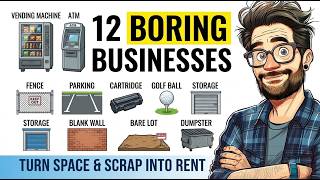
Most people walk past a blank wall, an empty parking slot, or a bin full of dead printer cartridges without a second thought. A former city water-meter reader named Harry didn't. After years of reading meters and studying property lines up close, he started noticing something: some of the most reliable income streams in America come from spaces people already control or items people are actively trying to throw away. None of the twelve business ideas below require a building, a storefront, or a specialized skill. They fall into two groups — six that turn space you already own into rent, and six that turn other people's trash into a paycheck.
Key Takeaways
- Six "Access Toll" businesses turn a wall, parking slot, bare lot, or fence into monthly rental income without construction or a skilled trade.
- Six "Discard-to-Dollar" businesses build on items people throw away — dead printer cartridges, lost golf balls, and abandoned storage units — each with an existing cash buyer.
- The Access Toll Method works because you control access to a space someone else needs, not because you built anything new on it.
- The Discard-to-Dollar businesses are ranked easiest to hardest, based on how much sorting and pickup work each one requires.
- The lowest-cost business on the list runs entirely on materials people pay you to haul away.
- Local zoning, permits, and resale pricing vary by city and state, so every idea below needs a quick local check before you start.
The Access Toll Method: Renting Out Space You Already Control
The first six ideas in this roundup share one mechanic: you are not building anything new, you are charging for access to something that already exists. Harry calls this the Access Toll Method — you control a space someone else needs, whether that's advertisers, drivers, boat owners, or a local business, and you charge a recurring fee for the right to use it. The appeal is that the upfront cost is close to zero, because the asset is already sitting there.
Turning a Blank Wall Into Rent
A bare exterior wall facing a busy street or parking lot has value to local businesses and advertisers who need visibility. Property owners in the right location can lease that wall space for signage, murals with sponsor branding, or seasonal advertising, collecting a flat monthly fee for something that otherwise just sits there unused.
A Spare Parking Slot as Passive Income
An unused driveway spot or extra parking slot near a downtown core, stadium, or transit hub can be rented out to commuters or event-goers. This is one of the purest forms of the Access Toll Method: the space already exists, the demand already exists, and the owner simply becomes the gatekeeper who collects the toll.
Bare Lots and Quiet Corners of Ground
A vacant lot or an unused corner of a larger property can be leased to businesses that need outdoor storage — think boats, RVs, work trailers, or shipping containers. Landowners in this category effectively become landlords without ever putting up a building, collecting a monthly check simply for controlling ground that someone else needs.
The Fence Harry Almost Ignored
Even a plain fence line can generate income once an owner looks at it the way Harry eventually did: as another surface that businesses will pay to use for advertising or as a screening barrier for a paying tenant's stored equipment. It's the same Access Toll logic applied to the most overlooked surface on the list.
Readers who want the fuller breakdown of these space-based ideas, including which ones need the least upfront cash, may also want to read 6 Boring Businesses That Make Money (Under $500 to Start) and 6 Rental Business Ideas That Make Money Without Doing the Work, both of which cover adjacent land rental income and rent-out-space strategies in more depth.
The Discard-to-Dollar Route: Getting Paid for What People Throw Away
The second half of this list flips the model. Instead of renting out a space you control, these businesses are built on materials people actively want gone — and each one has a buyer already waiting with cash. These are ranked from easiest to hardest, based on how much pickup, sorting, and selling work is involved before the money shows up.
Dead Printer Cartridges
Empty ink and toner cartridges get thrown in the trash by the thousands every day, but remanufacturers and recycling programs pay per cartridge for the empty shells. The business model is simple: collect empty cartridges from offices or print shops, sort them by brand and model, and sell them in bulk to a buyer who already has a standing demand for them.
Lost Golf Balls
Golf courses lose thousands of balls a year into ponds and rough. Ball divers and collectors retrieve them, sort them by brand and condition, and resell the usable ones back to golfers and pro shops at a steep discount to retail. The buyer — golfers looking for cheap practice balls — already exists in large numbers around every course.
Walked-Away Storage Units
When a renter stops paying and abandons a storage unit, the facility auctions off the contents. Buyers who win these auctions sort through the unit, separate anything resellable, and move it through online marketplaces or local resale channels. This one takes more legwork than the first two on the list — sorting, valuing, and reselling a unit's worth of mixed items — which is why it sits further down the difficulty ranking.
The Cheapest Business on the List
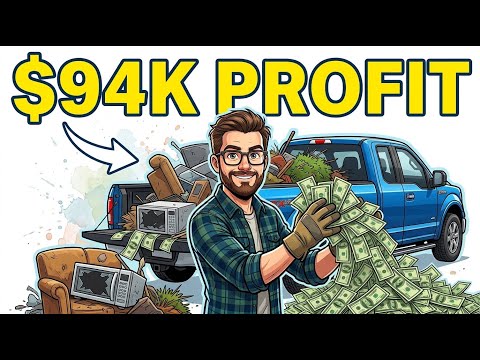
The final idea in the Discard-to-Dollar Route runs on the cheapest raw material available: the stuff people pay someone else to haul away. Once you understand who is quietly paying for that pickup, it becomes hard to look at a curb full of discarded items the same way again. This is the same underlying logic behind larger operations covered in How to Start a Junk Removal Business: Real Costs, Margins & Income, where the fee for taking something away is the business, not an afterthought.
Why These Twelve Ideas Work Together
What ties all twelve businesses together is that none of them require inventing a new product or mastering a trade. The first six succeed because the owner controls access to a space someone else needs. The last six succeed because a buyer for discarded materials already exists and is actively looking for a supplier. In both cases, the business model was sitting in plain sight — a wall, a parking slot, a fence, a bin of empty cartridges — waiting for someone to treat it as an asset instead of background noise.
Watch the Full Breakdown
This article summarizes the framework, but the original video walks through the pickup, sorting, and sale steps for each of the Discard-to-Dollar businesses in more visual detail, along with a closer look at how the Access Toll Method applies to each of the six space-based ideas. Watch the full video breakdown on the Harry's Stash YouTube channel for the complete walkthrough of all twelve businesses, ranked and explained side by side.
Getting Started: What to Check First
Before acting on any of these twelve ideas, confirm local zoning and permit rules, since renting out land, wall space, or parking varies significantly by city and state. Resale prices for items like golf balls, printer cartridges, and storage-unit contents also fluctuate by region and by buyer, so it's worth calling a local buyer before committing time to sorting and collection. None of these businesses require large capital, but each one requires a short round of local research before the first dollar comes in.