- Key Takeaways
- The Twenty-Four-Seven Loop: How Every Machine Gets Evaluated
- Stack #1 — Five Cash-Flow Machines That Out-Earn a $300K Rental Property
- Stack #2 — Seven Coin Machines You've Already Walked Past This Week
- The Three Filters That Separate Real Operators From Hobbyists
- Watch the Full Machine Breakdown
- Which Machine Fits Your Capital Today?
A USPS letter carrier in Cleveland runs four small machines inside a strip mall closet and nets $12,000 a month. He has never met a customer. Just a key, a coin box, and a route he services on his day off. That is the machine business model in its purest form — place it once, come back for the cash.
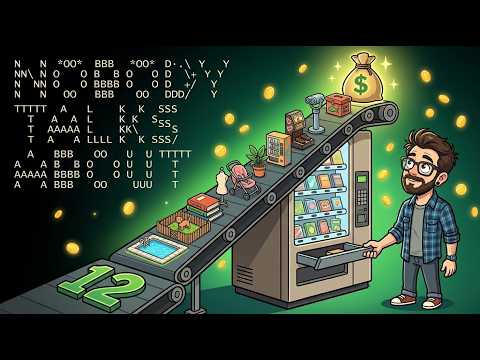
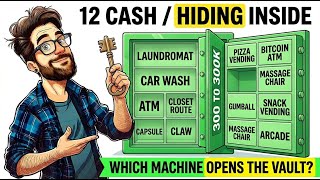
This article breaks down twelve of the most proven unmanned machines into two stacks: five higher-capital machines that quietly out-earn a $300,000 rental property, and seven low-cost coin machines you have already walked past this week. Every machine here runs without staff, without a storefront, and without you being present to make the sale.
Key Takeaways
- A four-machine vending route inside a strip mall closet can clear $12,000 a month with no employees
- The top of the machine ladder — a full laundromat — generates $300,000 a year according to operator data
- Dave Menz's buy-don't-build approach to laundromats cuts years off the ramp-up time
- Bitcoin ATMs were demoted in 2026 after state-level bans and FBI fraud data linking kiosks to elder fraud
- Seven coin machines — including a $300 gumball rack — pass the same cash-flow filters as the larger machines
- The highest return on capital in this list is not the laundromat; it fits in a corner of a room nobody is using
The Twenty-Four-Seven Loop: How Every Machine Gets Evaluated
Before placing any machine, serious operators filter candidates through three non-negotiable conditions — what the video calls the Twenty-Four-Seven Loop. First: does it run without you present, around the clock? Second: does it generate recurring revenue, not one-time sales? Third: does it produce real margins after location fees, restocking, and maintenance?
Any machine that fails even one filter gets cut. This framework separates operators clearing genuine passive income from hobbyists who bought equipment and discovered a part-time job.
Stack #1 — Five Cash-Flow Machines That Out-Earn a $300K Rental Property
These five machines are ranked from lowest to highest capital requirement — a deliberate ladder that lets you start small and reinvest upward.
1. The Multi-Machine Vending Route
The Cleveland letter carrier example anchors this entire list. Four machines, one strip mall closet, $12,000 a month, zero staff. A standard snack-and-drink vending route — four to six machines placed in office buildings, gyms, or strip malls — is the most accessible entry point on this ladder.
A used commercial vending machine runs $1,500 to $3,000. A four-machine route totals roughly $6,000 to $12,000 in equipment. Location fees typically run 10 to 25 percent of gross revenue paid to the property owner. Net margins of 30 to 50 percent are common on mature routes, and the only ongoing time requirement is a weekly or biweekly restocking run.
2. Self-Service Car Wash
A self-service car wash bay generates revenue from coin-operated wash bays, vacuum stations, and vending add-ons. The operator provides the equipment and the space; the customer does the labor. A single bay can generate $1,500 to $4,000 per month depending on traffic volume and location quality. Acquiring or building a bay typically costs $80,000 to $150,000, but the recurring nature of car care and near-zero labor overhead make the return on capital attractive for operators with access to larger capital.
3. PizzaForno — The Pizza Vending Machine
PizzaForno is a pizza vending machine that takes roughly three minutes to bake a fresh pizza, operates 24/7, and requires no on-site staff. The operator stocks dough cartridges and handles maintenance on a schedule. The machine itself costs approximately $25,000 to $35,000. High-traffic placements — transit hubs, universities, and late-night entertainment districts — are the primary targets, and the product commands a higher price point than traditional vending because it delivers a freshly baked meal, not a packaged snack.
4. Bitcoin ATM (Demoted in 2026)
Bitcoin ATMs once represented a high-margin placement business: place a machine, charge transaction fees of 10 to 20 percent, and collect revenue with minimal intervention. However, the Bitcoin ATM slot was demoted in 2026 for two converging reasons: a wave of state-level regulatory bans restricting or requiring licensing of crypto kiosks, and FBI fraud data showing Bitcoin ATMs as a primary vector for scam-related transfers targeting elderly victims. Operators entering this space today face a compliance landscape that meaningfully reduces the hands-off appeal of the original model.
5. The Laundromat
A full laundromat sits at the top of the machine ladder. Dave Menz, a prominent laundromat operator and industry educator, built a portfolio that reportedly generates $300,000 a year — and he did it by buying existing locations rather than building from scratch. The buy-don't-build approach eliminates the ramp-up period: an existing laundromat already has a customer base, utility hookups, and real revenue history to evaluate before committing capital.
Menz's framework focuses on identifying underperforming locations with strong demographics, buying them below replacement cost, and lifting revenue through improved operations. For a detailed look at what the acquisition process actually involves — including red flags, cost ranges, and due diligence checklist items — this guide to buying a laundromat covers the full picture before you make an offer.
Stack #2 — Seven Coin Machines You've Already Walked Past This Week
The second stack covers what operators call the Walk-Past Wallet route: seven machines so familiar they disappear into the background of daily life. Their familiarity is an operational advantage — placement conversations are easier, permits are more straightforward, and foot traffic is already proven. A part-time nurse built a twelve-machine coin route that she services on weekends only, demonstrating that the model does not require a full-time commitment. It requires a repeatable process.
6. Gumball Machine ($300 Startup)
A new bulk candy rack costs roughly $300 and is the most accessible entry point in the entire twelve-machine list. A single machine placed at a barber shop, nail salon, or family restaurant generates $30 to $75 per month. A route of twenty machines — still fundable for under $8,000 — generates $600 to $1,500 per month with one afternoon of service per week.
The machine with the highest return on the money you put in is not the laundromat. It fits in the corner of a room nobody is using.
On a cash-on-cash return basis, a $300 gumball machine netting $600 per year returns 200 percent of its purchase price annually. For operators starting with limited capital who need their first machine to fund their second, this is where the math is most compelling. For more sub-$500 starting points that pair well with a machine route, the boring businesses under $500 breakdown covers adjacent low-capital options.
7. Claw Machine
A well-placed claw machine in a high-traffic location generates six figures annually according to operator reports and trade association data. A commercial claw machine costs $1,500 to $4,000 new, and prize costs run approximately 30 percent of revenue on a well-stocked machine. Arcade sections of bowling alleys, movie theater lobbies, and family entertainment centers are the highest-revenue placements. The machine that looks like a children's game is a quiet recurring income asset for the operator behind it.
8. Mall Massage Chair
Card- or coin-operated massage chairs placed in mall common areas, airports, and hotel lobbies operate on a revenue-split model with the property. The operator supplies and maintains the equipment; the location provides the foot traffic. A single chair generates $300 to $800 per month in a strong placement. A commercial massage chair with card-swipe mechanism runs $2,000 to $5,000, and maintenance requirements are low.
9. Arcade Machine
A single commercial arcade cabinet generates $50 to $300 per month in a good placement. The stronger opportunity is a small route of three to six machines across complementary venues — a pizza restaurant, a bowling alley, a laundromat waiting room. Operators who stack arcade placements alongside vending or ATM machines increase revenue per location visit, making each service run more efficient.
10. ATM Placement
A cash ATM placed in a bar, convenience store, or entertainment venue earns a per-transaction surcharge of $2.50 to $3.50. The operator splits this fee with the location owner. In a high-cash venue such as a busy bar on a weekend night, a single machine processes 200 to 400 transactions per month. Startup cost for a used ATM runs $1,500 to $3,000. This is the only machine in the coin stack that requires active cash loading on a schedule, but it does not require on-site presence during transactions.
11 and 12. Specialty Vending and Route Add-Ons
The final two machines in the playbook are specialty vending units placed in locations where standard candy machines underperform. Ice vending machines at sports complexes, phone charging kiosks at airports, and healthy snack units at medical facilities serve specific demand niches where the operator is often the only option available. These machines typically command higher per-use fees and face less competition from other route operators, making them effective additions to an established route rather than standalone starting points for a first-time operator.
The Three Filters That Separate Real Operators From Hobbyists
The coin machine stack in particular splits into two clear groups: operators who build genuine income and hobbyists who own a machine in a bad location. The three filters that distinguish them align directly with the Twenty-Four-Seven Loop. Location quality determines whether the machine gets enough traffic to produce real recurring revenue. Margin discipline — tracking actual product cost, location fees, and service time — determines whether the numbers hold after all costs are accounted for. Route efficiency determines whether the operator's time per dollar earned makes scaling worthwhile.
Operators who apply these filters consistently build routes. Hobbyists skip one — usually location quality — and wonder why their machine earns $15 a month.
Watch the Full Machine Breakdown
The video walks through all twelve machines with exact operator numbers, real startup cost ranges, and the complete Twenty-Four-Seven Loop evaluation for each. Watch the full breakdown on YouTube — each stack is structured as a self-contained chapter so you can jump directly to the machine that matches your current capital and risk tolerance.
Which Machine Fits Your Capital Today?
Whether you have $300 for a gumball rack this weekend or six figures available to acquire a laundromat, one of these twelve machines fits where you are right now. The common thread across all twelve is the same: unmanned operation, recurring revenue, and margins that survive honest cost accounting. The boring operators who out-earn landlords do not get there by being lucky. They own machines that take coins, cards, and contracts — around the clock, whether they are awake or not.