Most people spend their lives trading time for money. But scattered across your neighborhood — in laundry rooms, parking lots, and even backyards — are assets that quietly collect income around the clock for their owners, without a storefront, without employees, and without a single minute of active work per dollar earned. These are not glamorous investments. They are deliberately boring. And that is exactly what makes them worth studying.
Key Takeaways
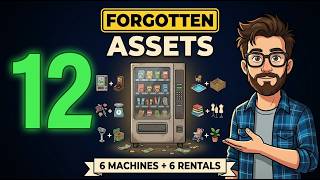
- Twelve specific assets — six coin-operated machines and six rentable spaces — can generate consistent monthly income with minimal ongoing effort.
- One Los Angeles pool host reportedly earns $5,000 to $6,000 per month listing a backyard pool on Swimply, with no employees and no storefront.
- Most of these assets require restocking or servicing on a predictable schedule rather than daily active management.
- The Idle Asset Ladder framework ranks rentable assets by startup cost, effort, and earning potential — from low-barrier pool rentals to unconventional options most owners never consider.
- Several of these assets may already exist at your home or property, generating zero income simply because they have never been activated.
What Is the Idle Asset Ladder?
The Idle Asset Ladder is a framework for ranking underused assets by how easily they can be converted into monthly income. It starts with low-investment, high-visibility rentals and climbs toward assets most owners never think to monetize. What every rung shares is the same core principle: the asset does the work, not you.
The backyard pool example captures this cleanly. One pool host in Los Angeles reportedly clears five to six thousand dollars a month on Swimply — the platform that lets homeowners rent their pool by the hour to private groups. He never stands behind a counter, never hires a single employee, and never opens a storefront. The pool exists. The platform lists it. Guests book it. Income arrives.
That is the template for every asset on this list: an upfront acquisition or activation cost, a recurring but manageable maintenance task, and a predictable income stream that does not require your daily presence to sustain.
The 6 Coin-Operated Machines You Walk Past Every Week
Walk through any apartment complex, laundromat, gas station, or grocery store lobby and you will pass machines that belong to private owners — not corporations in every case, but ordinary individuals who service them on weekends and collect the proceeds. Here are the six categories that appear most frequently in everyday environments.
1. Vending Machines
The most recognized entry point to coin-operated income. A single snack or drink machine placed in a high-traffic location — an office building, gym, school, or warehouse — can generate several hundred dollars per month with weekly or biweekly restocking. Location is the primary variable: it determines revenue per visit, product theft exposure, and how frequently the machine needs attention.
2. Laundry Machines
Coin-operated washers and dryers in apartment buildings, dormitories, and shared living spaces are among the most reliable cash-flow machines available to private investors. Residents have limited alternatives, usage patterns are predictable, and breakdowns can be managed through service contracts rather than personal labor. For a detailed look at the full laundromat ownership model — including real costs, returns, and red flags to watch for — see How to Buy a Laundromat: Real Costs, Returns, and Red Flags.
3. ATMs
Private ATM ownership is more accessible than most people assume. An owner purchases or leases a machine, places it in a business with consistent foot traffic, and earns a surcharge on every transaction. The host business benefits from cash-carrying customers who spend on-site; the ATM owner collects the fee. Monthly earnings depend on transaction volume, but machines placed in bars, convenience stores, or entertainment venues regularly perform well.
4. Air and Vacuum Machines
The standalone air and vacuum stations at gas stations and car washes are frequently owned by private operators rather than the fuel brand on the sign. A single machine requires minimal maintenance, occupies a small footprint, and serves a need drivers have whether or not they are buying fuel that day. Many owners run networks of five to fifteen machines across a metro area, serviced on a weekly rotation with no dedicated employees.
5. Gumball and Bulk Candy Machines
Positioned at the lowest-cost end of the spectrum, bulk candy machines are often the entry point for first-time machine owners. Revenue per unit is modest, but machines placed in high-traffic retail locations pay for themselves quickly. Owners who approach it systematically — building routes of thirty to fifty machines serviced on a monthly schedule — generate meaningful recurring income from an asset most people pass without a second glance.
6. Arcade, Claw, and Photo Booth Machines
Amusement machines placed in family restaurants, bowling alleys, movie theaters, and shopping malls represent the higher-revenue end of the coin-operated category. Claw machines have seen a notable resurgence in consumer popularity. Photo booths have expanded from event rentals into permanent retail placements. Per-machine income is higher than other categories, but so is the initial purchase price and the complexity of ongoing service.
The 6 Rental Ideas That Pay Every Month
The second half of the framework covers assets you may already own — or can acquire at relatively modest cost — that can be listed on established platforms for immediate rental income. These are not businesses in the traditional sense. You are not building a company. You are activating something already sitting idle on your property.
Rung 1: Backyard Pool (Swimply)
The entry rung on the Idle Asset Ladder and the most immediately actionable for homeowners who already have a pool. Swimply handles booking, payment processing, and host insurance. The owner sets availability hours, pricing, and guest limits. In warm climates and densely populated urban markets, income potential is substantial. The Los Angeles case study — five to six thousand dollars per month — represents a real ceiling that top hosts reach during peak season, with no operational involvement beyond managing a calendar.
Rung 2: Parking Space or Driveway
Urban parking is chronically undersupplied. A private driveway, garage space, or surface lot near an office district, stadium, hospital, or transit hub can be listed on platforms like SpotHero or Parkade, or directly through local listings. Income depends almost entirely on proximity to demand. Owners in the right locations earn $200 to $700 per month per space with essentially no ongoing effort beyond managing their availability window.
Rung 3: Storage Space (Neighbor.com)
Unused garage bays, spare rooms, basements, or detached structures can be listed as peer-to-peer storage on Neighbor.com. Renters are typically long-term — storing furniture, seasonal equipment, or vehicles — which keeps churn low and income consistent month to month. Average host earnings range from $100 to $400 per month per space, with vehicle and RV storage commanding the higher end of that range.
Rung 4: Outdoor Land for Camping (Hipcamp)
Rural and semi-rural landowners have discovered that city residents will pay meaningfully to camp on private property, particularly when it offers something public campgrounds cannot — genuine privacy, a fire pit, a creek, or a clear night sky. Hipcamp and similar platforms list private land for overnight stays. Even modest acreage with basic amenities generates consistent bookings from spring through fall in most regions.
Rung 5: Garage or Workshop Space
Mechanics, woodworkers, and tradespeople frequently need workspace they do not own. A residential garage with adequate electrical service, a concrete floor, and reasonable ceiling height has real rental value beyond simple storage. Private garages listed for shared workshop use are a growing market in many metro areas, with monthly rates varying by city and what amenities the space includes.
Rung 6: The Asset Almost Nobody Thinks to Rent
The top rung of the Idle Asset Ladder is the reveal in the full video — because it is the asset most owners have never once considered as an income source. The hint: there is a good chance it is sitting at your property right now, generating nothing. Watch the full breakdown to see which asset qualifies and what the actual income numbers look like in practice.
Why "Boring" Is the Whole Point
A common thread runs through every asset on this list. None require a social media presence. None depend on personal branding, viral content, or algorithmic favor. Each one serves a simple, recurring human need — hunger, clean clothes, parking, a place to swim — that exists independent of market trends or economic cycles.
Vending machines do not have bad quarters because of an interest rate decision. Parking spaces do not lose customers overnight to a competing app. A pool in a hot city rents on sunny weekends whether or not the broader market had a good week. The predictability is the point. For a parallel look at how this thinking applies to slightly larger capital deployments, the same principle drives the assets covered in 6 Rental Business Ideas That Make Money Without Doing the Work.
If you are building toward a cash-flow base that does not require your daily presence to sustain, these assets deserve serious consideration alongside more conventional approaches. The barrier to entry on several of them is lower than most people expect — and the asset may already be on your property.
Watch the Full Video Breakdown
This article covers the framework and all twelve asset categories at a structural level. The full video goes deeper — real income numbers, platform comparisons for each asset type, and the complete reveal of the top rung on the Idle Asset Ladder that most homeowners have never considered. If you want the complete picture, including which assets are most realistic given your specific situation, the full breakdown is on the Harry's Stash YouTube channel.
Watch: 12 Boring Assets That Quietly Pay Their Owners Every Month —
How to Choose Your Starting Point
The right entry point depends on what you already have and what you are willing to activate. A homeowner with a pool in a warm-weather market has a clear first move. Someone in a dense city with a deeded parking space has a different one. An investor with $3,000 to $5,000 available and the patience to build a small route has a vending or ATM path within reach.
The common thread is that activation is the step. These assets generate nothing while sitting idle. The practical question is which rung you are standing closest to right now — and what the first concrete action looks like from there.