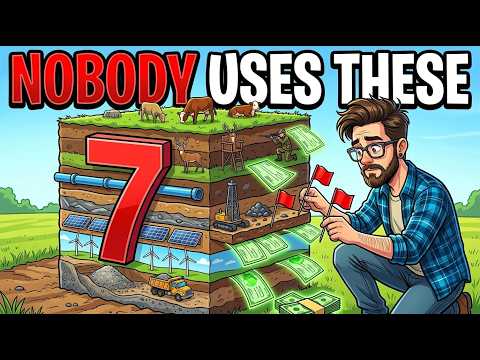
Every neighborhood is full of income nobody notices. The blank wall on the side of a building, the empty lot behind a strip mall, the coin machine tucked by the exit door — none of it looks like a business. But each one represents a recurring cash flow model built on a simple idea: control the space, not the property, and collect the spread. This roundup combines two of the most requested breakdowns from the channel into a single guide covering twelve boring, low-glamour income streams that share one trait — the operator rarely owns the real estate or the equipment outright, yet still gets paid every month.
The first half of this list covers ways to rent out space you don't own outright — from the roof of your own car on its normal commute to a garden plot to a seasonal empty lot. The second half ranks six coin-operated machine businesses from easiest to start to biggest long-term ceiling, including the exact spot-selection strategy one arcade attendant used to build an entire vending route.
Key Takeaways
- Twelve total income streams are covered: six space-rental models and six coin-machine businesses.
- None of the models require owning the underlying property, building, or land outright.
- The core mechanic across every model is the same: control access to a spot, then collect rent or a per-use spread on it.
- The coin-machine section is ranked specifically from easiest entry point to highest income ceiling.
- The final entry in the ranking is presented as having the largest ceiling of all twelve businesses, despite being the one most people overlook.
- A spot-selection strategy built by a working arcade attendant anchors the coin-machine half of the guide.
Renting Out Space You Don't Own
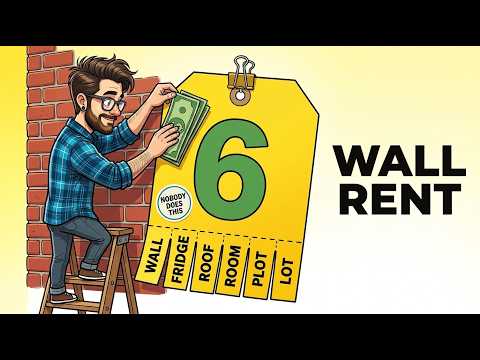
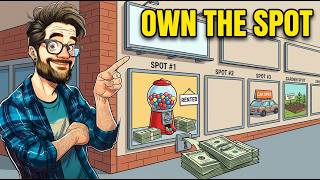
The premise behind the first six businesses is that value can be extracted from a location without ever holding title to it. A blank exterior wall, for example, is not simply architecture — it is inventory. Someone collects rent on that wall every month, and that someone is typically not the building owner. The party collecting the check controls advertising rights or usage rights on the space, and that control is the entire business.
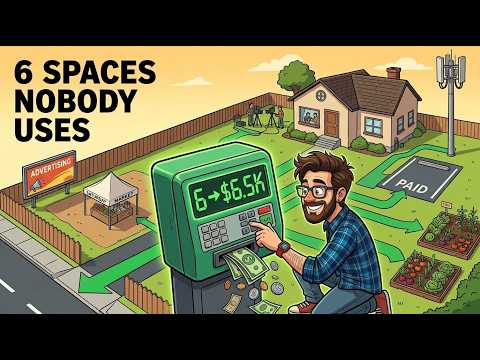
The same logic extends to a car roof during its normal daily commute, a garden plot carved out of unused land, and an empty seasonal lot that only fills a few months a year. In every case, the person profiting is not the one holding the deed. They have simply identified an underused spot, secured the rights to use it, and rented that access to someone else who needs it — an advertiser, a grower, a seasonal vendor, or a driver looking for parking. The model scales because the operator's capital is tied up in a contract or a lease arrangement, not in the underlying asset itself.
This approach pairs well with other low-capital models covered in 6 Boring Businesses That Make Money (Under $500 to Start), which similarly emphasizes control over ownership as the path to fast, low-overhead income.
Why Boring Space Beats Flashy Ventures
What makes these six space-rental ideas repeatable is that they don't require the operator to build anything new. The wall already exists. The car already makes its commute. The lot already sits empty for part of the year. The business is simply inserting a paid use case into dead space and collecting the difference between what the space is worth idle and what it's worth occupied.
This is a meaningfully different strategy than the more commonly discussed cash-flow assets, such as those detailed in 6 Boring Cash-Flow Machines to Buy With $30,000, where the operator typically does own the equipment. Renting space you don't own trades a smaller margin per unit for a dramatically lower barrier to entry, since there's no property purchase and often no major equipment purchase either.
Six Coin Machines, Ranked From Easiest to Biggest Ceiling
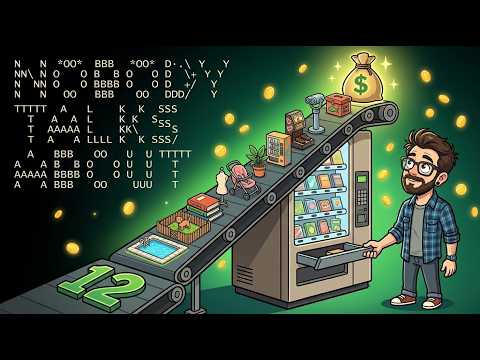
The second half of the guide shifts from rented space to rented machine time, ranking six coin-operated machine businesses in ascending order of difficulty and descending order of how much capital or hustle is required to get the first unit running — while the ranking climbs toward the highest income ceiling of the group by the final entry.
The coin machine itself, the guide stresses, is not really the business. The machine is a commodity; almost anyone can buy one. The business is the spot — the specific piece of foot traffic, the specific wall, the specific corner of a laundromat or convenience store where that machine sits. Two identical machines can produce wildly different income purely based on the location they occupy, which is why spot selection, not machine selection, is the actual skill being taught.
Control the spot, own nothing, and quietly keep the spread.
That principle is illustrated through the story of an arcade attendant named Harry, who built an entire multi-machine route not by buying the best equipment, but by systematically identifying and locking down the best-performing spots before competitors could claim them. His approach treated each new location as a negotiation over rent and foot traffic, not a purchase decision about the machine itself.
The Overlooked Machine With the Biggest Ceiling
The guide deliberately saves its highest-ceiling coin machine for last in the ranking, noting that it is the one "almost nobody looks at twice." Rather than being the flashiest or most capital-intensive machine on the list, it earns the top ceiling ranking precisely because it's overlooked — meaning less competition for the best spots and more room for an early mover to lock in favorable placement before the category gets crowded.
This mirrors a pattern seen across other passive-income models covered on this channel: the biggest returns tend to sit in categories that look unglamorous on the surface. Readers interested in a broader set of low-visibility rental models can also review 6 Rental Business Ideas That Make Money Without Doing the Work for additional context on how spot-based and rental-based income streams compare against more traditional small-business models.
How to Approach Getting Started
Across all twelve businesses in this guide, three practical steps repeat:
First, identify underused space or foot traffic before deciding what to put there. The wall, the lot, or the store corner comes first; the specific machine or use case comes second.
Second, secure the rights to that spot through a lease, contract, or agreement rather than purchasing the property outright. This keeps upfront capital low and preserves flexibility if a spot underperforms.
Third, treat the machine or signage as a replaceable commodity. If one coin machine underperforms in a given spot, the fix is rarely a better machine — it's usually a better spot.
Watch the Full Breakdown
This article summarizes the key mechanics behind all twelve businesses, but the original video walkthrough goes into far more detail on setup costs, negotiation tactics for securing spots, and the specific reasoning behind the ranking of the six coin machines. For the full visual breakdown, including how Harry structured his arcade machine route spot by spot, watch the video on the HS channel.
Frequently Asked Questions
Do you need to own property to rent out space for income?
No. Every model in this guide is built on controlling access to a spot through a lease, agreement, or contract rather than owning the underlying property or land outright.
What makes a good spot for a coin-operated machine?
Foot traffic and consistency matter more than the machine itself. A high-traffic, reliable location will outperform a better machine placed in a weak spot, which is why spot selection is treated as the core skill in this business model.
Which coin machine has the biggest income ceiling?
According to the ranking in this guide, the final entry — the machine ranked last, and the one most people overlook — carries the highest income ceiling of all six coin machines covered.
Is renting a car roof or a wall for advertising a real business model?
Yes. These models work by securing usage or advertising rights on space that already exists (a wall, a car's daily commute route, a seasonal lot) and renting that access to a party that needs it, without owning the underlying asset.
How much capital is needed to start a coin-machine route?
It varies by machine type, but the guide ranks the six machines from easiest (lowest capital and effort to start) to hardest, with the highest-ceiling machine appearing last in that ranking.