- Key Takeaways
- Why Boring Businesses With No Storefront Work
- Part One: Seven Businesses That Fit in One Spare Room
- Part Two: Seven Ways Empty Land Pays You Rent
- How to Choose Between the Spare Room and the Land
- Common Mistakes With No-Storefront Businesses
- Watch the Full Video Walkthrough
- Final Thoughts
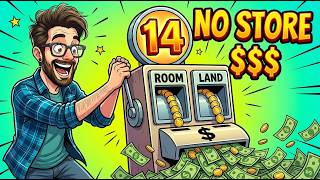
A downtown shop pays rent on the same amount of floor you already heat in your spare room. The empty field behind that shop can earn money without a single brick being laid. That contrast is the idea behind this guide to 14 boring businesses that need no storefront. Seven run from one spare room you already pay for. Seven let empty land pay you rent. None needs a lease, a shopfront or a skilled trade.
The guide combines two of our deepest deep-dives, HS-280 and HS-281, into one. The first half covers materials-in, finished-goods-out businesses. The second half covers ground-in, rent-out income. The first group is ordered from easiest to start to biggest ceiling. The second ends with the one the video says carries the biggest ceiling of all fourteen.
Key Takeaways
- Seven of the fourteen businesses fit inside one spare room you already pay for, so no storefront or lease is needed.
- The spare-room list is ordered from easiest to start first to biggest ceiling last.
- The other seven are ways empty land pays you rent. The herd, the crew, the trucks, the panels and the machines all arrive with somebody else, and nothing gets built.
- The last land idea needs no construction, no staff and no trade, only the ground and a signature.
- That final idea carries the biggest ceiling of all fourteen.
Why Boring Businesses With No Storefront Work
A storefront bundles three costs together: rent, build-out and staffing. Each has to be paid before the first customer walks in, and each keeps running whether or not sales arrive. A business with no storefront removes most of that fixed weight. What is left is a small, repeatable operation that earns whenever it runs.
The video groups the fourteen ideas into two simple formulas.
- Materials in, finished goods out. You take in raw inputs, add a bit of work, and ship out something people pay for. The spare room is your factory floor.
- Ground in, rent out. You own or control land, and someone else brings everything needed to use it. You collect rent.
In the video's words, neither one needs a storefront, a lease or a trade. That is what makes these ideas boring, and boring is the point. Plain, repeatable work with a clear buyer tends to hold up better than a clever idea that depends on foot traffic. If you want a broader starting list at low cost, our guide to 6 boring businesses that make money for under $500 to start is a good companion.
Part One: Seven Businesses That Fit in One Spare Room
The first seven businesses are built around a room you already pay for. You are not renting a second space, so the baseline overhead is the same whether the business exists or not. Anything the business earns sits on top of costs you already carry.
Ordered by How Easy It Is to Start
The list runs from easiest to start first to biggest ceiling last. The ordering matters because the two goals pull in opposite directions. The easiest ideas need the least equipment, the least learning and the fewest decisions, but they usually cap out sooner. The ideas near the end of the list take more setup and more skill at running a process, and they offer more room to grow.
A sensible way to use the ranking is to start near the top, prove that you can find customers and deliver reliably, and only then consider moving down the list. Beginners who open with the biggest-ceiling idea often stall because they are learning production and sales at the same time.
Meeting Harry, the School Bus Scheduler
Along the way the video introduces Harry, a school bus scheduler. Harry has a regular job and a spare room, and does not want to quit one to staff the other. His story shows what a spare-room business looks like in practice. It is built around a limited number of hours and fits around a day job. It grows by repeating a process, not by adding rent.
That is the practical test for every idea in this half of the list. Can you run it in the hours you actually have? Can you do it with the room as it is, without a build-out? If the answer to both is yes, the idea is worth a closer look.
What to Check Before You Start
Before putting money into any spare-room business, run through four checks.
- Space. Confirm the work and the stored materials fit in the room without taking over your living space.
- Rules. Check local home-business rules, any lease or HOA terms, and insurance. Requirements differ by location, so confirm them where you live.
- Buyer. Know who pays for the finished goods before you buy the first batch of materials.
- Repeatability. A good spare-room business is one you can do the same way each time. If every order is a custom puzzle, the hours add up quickly.
For people who like the idea of a low-maintenance, cash-producing asset, our article on 6 rental business ideas that make money without doing the work covers a related set of options.
Part Two: Seven Ways Empty Land Pays You Rent
The second half of the video turns from the room to the ground. Land is unusual because it can earn income while you do very little to it. The key point in the video is that in all seven ideas, the people and equipment that generate the income arrive with somebody else. The herd, the crew, the trucks, the panels and the machines are all brought by the tenant or operator. Nothing ever gets built by you.
The Tenant Brings Everything
That one fact changes the economics. A typical business owner pays for equipment, hires staff and carries the risk of a slow month. With land rent, the operator carries those costs and risks, and you provide the one thing they cannot easily create, which is the ground. The pattern in the video follows what the land hosts:
- The herd. Animals arrive with their owner and use the land.
- The crew. A working team arrives with its own people and tools.
- The trucks. Vehicles arrive and need space.
- The panels. Equipment is installed and operated by someone else.
- The machines. Specialized equipment arrives with the operator who runs it.
Each pattern turns idle acreage into a line item. The details of each idea, including how the rent is structured, are covered step by step in the video. The sections below cover what to know before you sign anything.
What to Check Before Leasing Land
Land income looks easy because you do no daily work, but the paperwork is where the money is protected or lost. Keep these points in mind for any of the seven ideas.
- Written agreement. Put every term in writing, including length, payment schedule, who maintains what, and how either side can exit.
- Insurance and liability. Ask what coverage the tenant carries and whether you are named on it. Check your own policy as well.
- Zoning and permits. Land use is regulated locally, so confirm what is allowed on your parcel before agreeing to anything.
- Access and condition. Document the state of the land at the start so there is a clear record at the end.
- Professional review. For anything long-term, have a lawyer or qualified advisor read the contract. This is general education, not legal or tax advice.
The Last Idea: No Construction, No Staff, No Trade
The final idea on the land list is the reason the video asks you to stay to the end. It needs no construction, no staff and no trade at all. All it needs is the ground and a signature. According to the video, it also carries the biggest ceiling of all fourteen businesses.
That combination is rare. Most ideas that offer high ceilings also require money, skill or labor up front, and most ideas that need nothing up front have low ceilings. This one reverses the usual trade-off, which is why it sits at the end of the list. We have deliberately left its name for the video, because the way it is structured is what makes it work.
How to Choose Between the Spare Room and the Land
The two halves of this list suit different situations, and you may fit both.
If You Have a Spare Room but No Land
Start with the spare-room list. Pick one of the early, easy-to-start options, run it for a few cycles and track the time you spend against what you earn. Move down the list only after the simple version is steady.
If You Have Land and Little Time
Start with the land list. Because the tenant brings the people and equipment, your time commitment is mostly the setup: finding a tenant, agreeing terms and getting the paperwork right. After that, the income arrives without daily work.
If You Have Neither
The principle still applies. Business models that avoid a storefront keep fixed costs low, and low fixed costs give you room to learn and adjust without pressure. Our guides on mobile auto detailing and starting a junk removal business show two other ways to earn without a shopfront.
Common Mistakes With No-Storefront Businesses
- Skipping the buyer check. Making a product before confirming who will pay for it is the most common early mistake.
- Ignoring local rules. Home-business and land-use rules can stop an otherwise good idea, so check them first.
- Verbal land deals. A handshake agreement leaves you unprotected if anything goes wrong.
- Starting at the top of the ceiling. The biggest-ceiling idea is not the best first step. Prove the basics first.
- Expecting instant income. Even boring businesses take time to find their first customer or tenant.
Watch the Full Video Walkthrough
This article gives the framework, but the video shows the complete list of all 14 ideas in order, including the final land idea with the biggest ceiling. Watch 14 BORING Businesses That Need No Storefront (And Still Pay Like One) on the Harry's Stash YouTube channel to see how each one works. The video is a compilation of two of our deep-dives, HS-280 and HS-281, stacked into one.
Final Thoughts
A storefront is only one way to run a business, and for many people it is the most expensive. Seven businesses can run from a spare room you already pay for, and seven can turn idle land into rent, with the tenant bringing the herd, the crew, the trucks, the panels and the machines. Start with the easiest idea that fits what you have, check the rules, put every agreement in writing, and let the boring, repeatable parts do the work.