- Key Takeaways
- The Silent Placement Engine: Why Location Beats Everything
- Machine 1: Coin-Operated Air and Tire Inflation Unit
- Machine 2: Coin-Operated Vacuum Station
- Machine 3: Ice Cream Vending Kiosk
- Machine 4: Automated Retail Kiosk
- Machine 5: Parcel and Luggage Locker Rental
- Machine 6: Farm Fresh Milk Vending Booth
- Machine 7: Coffee Robot Kiosk
- The Three Filters Every Operator Should Apply
- Watch the Full Breakdown
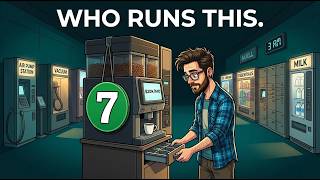
Somewhere in a quiet mall at three in the morning, a robotic arm is pulling shots of espresso. No barista. No cashier. Nobody. That machine is generating close to twenty thousand dollars a month for an owner who is fast asleep. But the coffee robot is not the real story — the real story is every machine you have walked past for years without once asking who owns it. The air pump at the gas station. The vacuum at the car wash. The ice cream kiosk glowing in the corner of a mall food court. Each one is a fully self-contained business with no employees, no register, and no owner in sight. Somebody bought it once, placed it correctly, and has been collecting ever since.
Key Takeaways
- A coin-operated air and tire inflation unit generates $150–$600 per month with a startup cost of $2,500–$6,000 and virtually no ongoing labor.
- A vacuum station at a busy car wash pulls $1,000–$3,000 per month, with an accessories vending strip adding another $500–$2,000 on top.
- A mall-placed ice cream vending kiosk has reported net income of $7,000–$17,000 per month at high-traffic locations, with one manufacturer citing $15,000–$18,000 from just 100–120 cups per day.
- A coffee robot kiosk doing 150 cups per day at $4.50 per cup generates approximately $20,000 per month in gross revenue, with a real-world operating case netting $3,200 per month at a 29.5% margin.
- Location is the only variable that separates a dead machine from a profitable asset — always scout the site before committing any capital.
- Every viable machine passes three filters: traffic before the machine, a host who benefits from the placement, and a restock schedule of twice per week or less.
The Silent Placement Engine: Why Location Beats Everything
Before examining individual machines, there is one concept that determines the outcome of every automated retail business ever placed: the site is half the business. The machine is interchangeable. The location is not. Experienced operators call this the Silent Placement Engine — the idea that you are not really buying a machine at all. You are buying access to a location where traffic already flows, and letting a quiet box collect a toll on it.
This distinction matters because beginners consistently make the same mistake: they chase a sophisticated machine in a dead location. Professionals do the exact opposite — they identify high-traffic spots first, then decide which machine fits. Scout the site before you buy the machine. That single rule separates operators who clear thousands per month from those who wonder why their investment barely covers its own maintenance. One operator in this exact situation bought a second air machine and placed it at a quiet country road station because the site fee was cheap. That machine barely cleared twenty dollars a month. He pulled it, dropped it at a high-traffic car wash by the interstate he had already scouted, and was back to real money inside a month.
For a broader look at low-capital businesses built on similar principles, the 6 boring businesses that make money under $500 to start covers complementary ground on the entry-level end of the spectrum.
Machine 1: Coin-Operated Air and Tire Inflation Unit
The air pump at the corner of nearly every gas station and car wash lot is the most overlooked automated business in a metro area. A coin- or card-operated tire inflation unit generates between $150 and $600 per month — entirely in one- and two-dollar increments from drivers who feed it without a second thought. The startup cost runs $2,500 to $6,000 installed, and that price is precisely the moat. It is high enough to deter casual competitors, low enough that a single operator can place several units across a metro area.
The business model is straightforward: identify gas stations, car washes, and convenience stores with at least 300 cars per day, call the site owner, and offer a flat site fee of $50–$150 per month or a revenue split of 10–15%. The machine bolts down in a matter of hours. There is no inventory to manage and no license required beyond a basic business registration. Once a month, an operator checks for a jammed coin slot. Getting live in under two weeks on a single placement is realistic, and a route of three or four well-sited units in the same metro area builds meaningful income without meaningful overhead.
Machine 2: Coin-Operated Vacuum Station
The vacuum bay at a self-serve car wash is a step up in both capital and income. A single vacuum bay generates $1,000 to $3,000 per month, and the small vending strip beside it — selling air fresheners, wax, and microfiber towels — adds another $500 to $2,000 on top. Fortune magazine documented the self-serve car wash as a passive income model, framing vacuum islands specifically as a bolt-on revenue layer to a wash that already runs itself.
A multi-bay island costs $15,000 to $40,000 — real capital, and deliberately so. That investment is the barrier to entry that protects any operator who clears it. The starting move is not to build a car wash. It is to find one that already has traffic but either lacks a vacuum or has an old, poorly maintained one. Fifty cars per day through that lot is the minimum threshold worth pursuing. From there, a revenue-share conversation with the wash owner aligns incentives: the owner earns money from a machine they did not buy, and the operator earns income from a location they do not own. Maintenance is light — emptying coin canisters and wiping filters once per week. By month three on a fifty-car lot, operators typically report consistent income above $1,000 per month. The best sites to find are busy washes with broken or neglected vacuums — drive your own area on a Saturday and that is your prospect list.
Machine 3: Ice Cream Vending Kiosk
Ice cream vending machines demonstrate the widest income range of any machine on this list, because placement matters more here than anywhere else. Conservative operators report net income of $800 to $4,200 per month. Drop the same machine into a high-traffic mall or university lobby, and reported net income jumps to $7,000 to over $17,000 per month. Vending data from manufacturer Huaxin showed one mall-based unit generating $15,000 to $18,000 per month from just 100 to 120 cups per day — a figure independently corroborated by the vending profit modeling at Vending Lab. Two separate sources, same income range.
The machine itself costs $6,000 to $20,000. In a prime spot, operators have reported recovering the full machine cost in as little as one to one-and-a-half months. Site terms run as either flat rent ($300–$1,200 per month) or a 10–25% revenue share. These units are self-contained freezers that hold their own temperature, so ice cream melting between route visits is not a concern. Restocking happens once or twice per week. The first placement is often the most straightforward pitch on this list — a busy recreation center or waterpark lobby earns passive income for doing nothing, and most property managers agree quickly. The core placement principle: prioritize dwell time over raw foot traffic. A location where people stand and wait consistently outperforms one where they rush past.
Machine 4: Automated Retail Kiosk
The locker-style kiosk in grocery store entryways and apartment lobbies has evolved well beyond its movie-rental origins. Modern units dispense phone accessories, daily essentials, local goods, and convenience items. Income in the right setting commonly runs a few hundred up to around $1,000 per month per unit, based on comparable automated retail hardware data. Machine cost ranges from $8,000 to $25,000.
The locations that work are those with walk-past traffic at scale — apartment lobbies serving a thousand daily residents, transit hubs, campus buildings, or any corridor where the same wall sees thousands of people every day. Operators take a flat fee or 10–20% of sales, restocking weekly for fast-moving essentials and on a slower cadence for accessories. This is the humble end of the automated retail category, and it functions reliably when foot traffic is genuine and consistent. When it is not, no machine compensates for a dead location.
Machine 5: Parcel and Luggage Locker Rental
Smart locker banks — the kind operated by bag storage networks like Bounce and Nannybag near train stations and airports — charge roughly $5 to $10 per bag per day or a couple of dollars per parcel drop. A wall of 20 to 40 lockers in a transit-heavy or tourist-heavy location can generate a few hundred up to around $1,000 per month in hands-off volume. The public income data on this model is thinner than the other machines on this list, so that range should be treated as a starting point rather than a guarantee.
The locker bank itself costs $10,000 to $30,000. Revenue sharing with a train station, hostel, or busy retail host keeps startup capital lighter and lets the location do the selling. In a tourist city, a well-placed wall of lockers works regardless of where the operator is — a genuinely location-independent asset when sited correctly.
Machine 6: Farm Fresh Milk Vending Booth
The farm milk dispenser solves a specific problem elegantly. A dairy farmer selling milk to a supermarket receives the wholesale price. A farmer selling the same milk through a vending booth at the farm gate receives the full retail price — every liter, every transaction, with no middleman. The Irish Farmers Journal, which advises working farmers on this investment type, calls it a genuine new income stream for a farm that already has the milk supply and the local demand.
The capital requirement is substantial: a cabin, dispensing machine, and associated infrastructure run €60,000 to €80,000 (approximately $65,000 to $87,000). Financed at roughly 6% over seven years, the annual loan cost is approximately $14,000. The advisory benchmark applied by the Irish Farmers Journal is straightforward — the booth only makes financial sense when it clears significantly more than that annual debt cost. Operators keeping these machines are comfortably clearing the threshold; those who are not have already removed them.
This machine comes with its own site — the farm — so there is no landlord negotiation. Restocking is daily because fresh milk is perishable. Planning permission and food safety testing add lead time that the other machines on this list do not require, but those same requirements represent the tallest moat on the list. This machine fits one specific operator: a farm that already milks a herd and sits within driving distance of a town with genuine appetite for local food.
Machine 7: Coffee Robot Kiosk
The robotic coffee kiosk sits at the top of the category in both income and complexity.
A robotic arm doing 150 cups per day at $4.50 per cup generates approximately $20,000 per month in gross revenue. A documented operating case from Denmark, running just 100 cups per day at a discount price point, netted around $3,200 per month at a 29.5% margin.
Vending profit modeling on coffee alone has been calculated at over $7,000 per month before adding hot chocolate and flavored milk variants. Robotics company CafeXbot publishes one of these operating models publicly — alongside the Danish case and independent vending profit calculators, that produces three separate data points pointing at the same income range.
Startup cost is the widest range on this list: from approximately $57,000 for a lean robotic coffee setup up past $400,000 for a full financed build. In tighter configurations, breakeven arrives near three months. The machine requires approximately 2,000 people per day walking past and converts at five to ten percent — roughly 3,000 cups per month to reach profitability. The site is typically a mall lease with a capped rent. Landing a mall placement means presenting the property manager one clear case: 2,000 people per day already walk that corridor, your machine turns a portion of them into revenue, and the mall collects rent without managing any labor.
Even a fully automated coffee robot needs roughly one hour per day of cleaning and restocking — a route stop, not a shift. No one stands behind a counter for eight hours. That single distinction defines the entire self-service kiosk category. For those building a portfolio of passive income assets alongside automated machines, the 6 boring cash-flow machines to buy with $30,000 covers a complementary set of assets worth considering together.
The Three Filters Every Operator Should Apply
After mapping all seven machines, the pattern is consistent: the right location outperforms the right machine every time. Before placing any unit, apply three filters.
Filter 1: Traffic before the machine. Scout the site first. A cheap air pump at a packed car wash generates more income than a coffee robot in a quiet corridor. The location must have real, consistent, measurable traffic before any capital is committed.
Filter 2: A host who wins when you win. The most durable placements are structured so the property owner benefits directly — either through a site fee or a revenue share. When the host earns money from your machine, they become an advocate rather than just a landlord.
Filter 3: A restock you can run on a route. If a machine requires daily visits, it stops being passive and becomes a job. The benchmark is twice per week or less. Any machine that demands more than that should be carefully evaluated before committing capital.
"An asset puts money in your pocket. A liability takes money out." — Robert Kiyosaki, Rich Dad Poor Dad
Every machine on this list is an asset when sited correctly — and a liability when placed in a dead location. One practical note for any machine that touches food: the ice cream kiosk and the milk booth each come with local health regulations that vary by city. A brief check of municipal rules before placement maps the full compliance picture and avoids surprises after the machine is already installed.
Watch the Full Breakdown
The numbers behind these seven machines are clearer with visuals. The full YouTube video walks through each machine in sequence — per-unit income figures, startup costs, and placement strategy — alongside the story of one operator who built a four-machine route generating $3,743 per month while still working a night shift. Watch 7 Machines That Run a Business Without You for the complete walkthrough, including the exact revenue-share pitch that gets most property managers to agree on the first conversation.