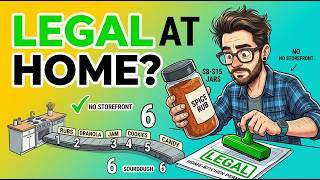
Most people assume selling food from a home kitchen is against the law. In reality, every state, plus the District of Columbia, allows some kind of homemade food sales, according to the Institute for Justice. These rules are called cottage food laws, and they make a home kitchen business possible with no storefront, no commercial kitchen and no landlord. This guide covers six boring cottage food business ideas, what each sells for, which state rules allow it, what it costs to start, and who is already doing it.
Key Takeaways
- Every state and D.C. allows some homemade food sales, but each state sets its own food list, yearly sales cap and label rules.
- Florida and Wyoming both allow up to $250,000 a year in approved foods; Texas allows $150,000, California Class A about $88,000 and Connecticut $50,000.
- Six foods cover most of the opportunity: spice blends, granola, jams and jellies, decorated sugar cookies, freeze dried candy and sourdough bread.
- Start-up costs range from $75 to $200 for spice blends up to $1,795 or more for a freeze dryer.
- The common thread is the Pantry Premium: a few dollars of pantry ingredients become a product people happily pay for, because a state law lets a home kitchen sell it.
Why Cottage Food Laws Matter
One baker in Broken Arrow, Oklahoma, Sarah Grunewald, says she brought in $36,000 in her first year baking bread at home, then $61,000 in her second year. That is money brought in, not profit, but it shows how far a home kitchen can go.
The limits can be large. Florida lets a home cook sell up to $250,000 a year of approved foods with no license, permit or registration, and Wyoming has the same $250,000 line. Still, the rules are not the same everywhere. Each state picks its own list of foods, its own sales cap and its own label rules, so check your own state's official cottage food page before you sell a single jar.
Every state, plus the District of Columbia, allows some kind of homemade food sales. - Institute for Justice
1. Spice Blends and Barbecue Rubs
This is the easiest spice blend business to start. Gabrick Barbecue in Dripping Springs, Texas charges $11.95 for its All Purpose rub, made in small batches. Oaktown Spice Shop in Berkeley, California sells a Sweet Heat rub for $9.99. Homegrown, a guide for home food sellers, puts most homemade jars at $8 to $15.
Florida's cottage food rules name dry seasonings, and California's approved list, as posted by Butte County, names spice mixes and rubs. A dry blend is about as simple as cottage food gets, because nothing wet is in the jar.
The Numbers
Homegrown's math: sell 160 jars at $10 for $1,600. Ingredients and the jar run about $3 to $4 each, so you keep about $6 to $7 a jar, roughly $950 to $1,100 a month. Tabres figures a $14 jar keeps about 83% after the cost of making it. Startup runs $75 to $200 for a kitchen scale, mixing bowls, jars, labels and your state's permit if required.
Ashland Spice Company in Ashland, Ohio, a family-owned home kitchen operation, has been mixing small batches since 2014. Sales numbers were not available. GlobalData put American sales of herbs, spices and seasonings at about $2.7 billion in one year. Small Business Idea says butcher shops and grill shops can turn into monthly reorders, and puts the yearly range for a spice business at $5,000 to $40,000. A farmers market booth runs about $20 to $75 a week, and the USDA directory lists more than 8,600 farmers markets. Give every blend one job: one for brisket, one for chicken, one for fries.
2. Homemade Granola
Mad's Granola from Wayne, Pennsylvania sells a 12 ounce bag for $15 at the Fairmount Farmers Market in Philadelphia. Homegrown puts most homemade bags at $10 to $14, and a good market day at $300 to $500. Florida and California both name granola on their lists. One caution: Ohio does not allow reduced oxygen packaging for cottage foods, so a vacuum sealed bag can be a problem there.
Homegrown's math: 120 bags at $10 is $1,200, and ingredients plus the bag run under $2. You keep about $8 a bag, close to $1,000 a month, or about four fifths of every sale. Startup is about $100 to $300; in one example most of it was 1,000 pouches from Uline at 27 cents each, plus 10 cents a label. Tamara Ketchian in Orange, Connecticut started Wildwood Granola in 2021 instead of opening a coffee shop. She did up to five markets and events a week, starting under cottage food rules and later moving into a commercial kitchen.
3. Jams and Jellies
Leaning Oaks Farms in Leslie, Missouri sells 8 ounces of strawberry jam for $8, including a $1 returnable jar fee. Honestly Profitable puts homemade jars at $7 to $12, and ZenBusiness says $8 to $15. Florida's list names jams and jellies, but this one needs care: some states limit canned or acid foods. Wisconsin has a separate $5,000 yearly cap for canned goods, and some states require an acid test on certain recipes. Read your state page twice.
Honestly Profitable's math: 100 jars at $9 is $900, materials run about $300, leaving around $600. Most first-year jam makers land between $200 and $1,500 a month. A Ball electric canner was listed on Walmart Business at $289 and a twelve pack of Ball pint jars was about $13, or you can start with a big pot you already own. Robert and Paula Grosz of Whisky Ridge Farm in Murray, Kentucky started farming in 2015, noticed their jams and jellies outsold the vegetables, and shifted to making jam at home under cottage food rules.
4. Decorated Sugar Cookies
Customers pay for the party, not the flour. My Cookie Cottage in Carpentersville, Illinois starts decorated cookies at $56 a dozen. BakeProfit puts custom sets at $36 to $60 a dozen, and Price Profit Tools says $36 to $48 for simple and $48 to $72 for detailed sets. Florida's list names cookies, and labels generally need an ingredient list plus a line saying the food was made in a home kitchen. Check your state's exact wording before you print.
BakeProfit's math: 20 dozen at $48 is $960, with materials about $5.25 a dozen, or around $105. Sourdough Starter puts cookie margins at 60 to 70% once everything is counted. The honest part: Borderlands Bakery worked out one $55 dozen at about $16 an hour after all the icing time, so speed is where the money hides. Pick three designs, such as a baby set, a birthday set and a team set, and get fast at them.
Startup per Baking Subs is $425 to about $1,000, with packaging at $50 to $100 and insurance around $200 to $350 a year. Tina Karnath in Saginaw, Michigan made her first sale in September 2017 for Chunky Chicken Cookie Company, starting at $25 a dozen and growing through Facebook and word of mouth. Her best week was 46 dozen.
5. Freeze Dried Candy
TeresasPlants in Delta, Colorado sells a 3 ounce bag of freeze dried taffy for $7 on Etsy, and Stensland Family Farms sells Cloud Crunchies at $6 for 3.5 ounces. Michigan's agriculture department lists freeze dried candy by name, California's approved list does too, Washington allows freeze drying with a permit, and Maryland and Utah name it. A few states, like New York, do not allow freeze dried cottage foods, so check this one first.
The start is the big one: Harvest Right's Small Home Pro lists at $1,795, the Medium at $1,995 and the Large at $2,995, machine alone. Amanda Geopfert in Fort Dodge, Iowa, profiled by The Messenger in 2024, bought a machine, tested batch after batch and sells at vendor shows, events, on Facebook and through her website. No real income figure from a freeze dried candy seller could be found, so run the math for your own town before buying.
6. The Sourdough Micro Bakery
Bread has the biggest proof. Busy Bee Bakery in Burlington, Massachusetts sells loaves at $15, and Fire and Flour in Lynnfield, Massachusetts at $12, part of the rise in cottage bakeries around Greater Boston reported by the Boston Globe. Sarah Grunewald started by baking wholesale for a local grocery store, then added porch pickups.
Florida's list names breads. California's Class A cottage operation can sell up to about $88,000 a year with a county registration, which was $118 in Los Angeles County. Texas allows up to $150,000 with a food handler card, and Connecticut's cap is $50,000.
DoughPlan puts loaves at $8 to $15, and Baking Subs says most micro bakeries bring in $500 to $2,000 a month in year one. One example: 160 loaves a month at $10 is $1,600, ingredients about $2.50 a loaf, leaving around $1,200. Sourdough Starter's subscription example is 20 subscribers at $40 a month, or $800 monthly. Lean startup is about $120 to $450 per Micro Bakery Girl: a six quart Dutch oven was about $65 at Target, two proofing baskets about $28, and a KitchenAid Artisan about $345 at Walmart. Take orders before you bake: preorder form Monday, bake Friday, pickup Saturday.
The Pantry Premium and How to Choose
Look at the tags: $11.95 for a rub, $15 for granola, $8 for jam, $7 for candy. Inside are salt, oats, fruit and sugar. The law is the permission, the kitchen is already paid for, and your time and care are the premium. Ken Forkish's book Flour Water Salt Yeast fits the idea: four ingredients, and everything else is time and care.
Run your idea through three filters. Is your food on your state's list? Can you make it well ten times in a row? Who would buy from you this month? For related ideas, see 6 Boring Businesses That Make Money (Under $500 to Start).
One Label Mistake
In an example, Harry, a firefighter, mixed and labeled his first batch of barbecue rub the night before his first market. A last check of his state's page showed his labels lacked the full ingredient list and the home kitchen line. He reprinted every label that night. His rule: no label, no table. By month twenty, as an example and not a promise, he sold 177 jars of rub at $11, 168 sourdough loaves on preorder at $12 and 29 bags of holiday granola at $12, about $4,311 brought in before ingredients.
Watch the Full Video
Want a visual walkthrough with every price tag and state rule? Watch the full video, 6 BORING Home Kitchen Businesses Almost Nobody Knows Are Legal, and tell us in the comments which of the six you would start.
For educational purposes only. This is not financial advice. Cottage food rules differ in every state, including allowed foods, yearly sales caps, online and mail sales, permits and label wording. Canned goods and freeze dried candy have extra rules or are not allowed in some states. Prices and earnings vary and change over time, and the examples are not promises.