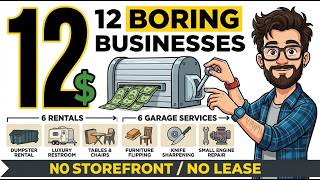
Some of the most dependable small businesses are the ones nobody brags about. They have no flashy app, no storefront and no trend to chase. They solve plain, repeat problems for customers who need the job done. This guide stacks two lists of boring businesses into one: six rental businesses and six garage businesses, each ranked from the easiest way in to the biggest.
Key Takeaways
- Four out of six of the garage businesses on this list get busier right as the weather turns cold, just when most small businesses slow down.
- None of the garage businesses needs a storefront or a lease. They run out of one ordinary garage bay.
- The rental list covers things people need for a week, a night or a few months, from dumpsters to luxury restroom trailers.
- Both lists climb from the easiest entry point to the biggest opportunity.
- The last idea on the garage list brings in the biggest ticket per job.
Why Boring Businesses Keep Getting Overlooked
Most people looking for a business idea chase whatever is loud: dropshipping, content, software. The result is crowded markets and thin margins. Boring businesses work the other way around. Demand is steady because the need is practical, and competition is often a handful of local operators instead of thousands of online sellers.
The two lists below share a pattern. Each business sells a result, such as a cleared driveway, a sharp knife or a clean event restroom, and the customer usually has no interest in doing it themselves. If you like this style of idea, our guide to 6 boring businesses that make money for under $500 to start covers a complementary set of low-cost options.
Part One: Six Rental Businesses
The first list is built around rental businesses. They rent out things people need for a week, a night or a few months and then never want to see again. That last detail matters. The customer does not want to own a dumpster or a restroom trailer, so they happily pay to borrow one and send it back.
How the Rental Model Works
A rental business buys an asset once and rents it out repeatedly. The list climbs from the easiest way in to the biggest. At the accessible end are everyday items such as dumpsters, which people need for cleanouts, renovations and moves. At the other end sit larger, higher-ticket assets such as luxury restroom trailers, which serve weddings, events and job sites.
Because the asset is the product, the work between rentals is mostly delivery, pickup and a clean-up. That is why rental ideas appeal to people who want income without spending every hour working in the business. For a deeper look at the model, read 6 rental business ideas that make money without doing the work.
What to Look for in a Rental Idea
- A short, defined need. A week, a night or a few months. Customers know the rental has an end date.
- An item people would rather not own. Storage, maintenance and cost make buying unattractive for a one-off use.
- Simple logistics. Delivery and pickup should be repeatable and easy to schedule.
Part Two: Six Garage Businesses
The second list is six businesses that run out of one ordinary garage bay. Examples include furniture flipping, knife sharpening and small engine repair. There is no storefront and no lease. Your overhead is mostly tools, materials and your time.
Garage Businesses That Get Busier in Cold Weather
Four out of six of these garage businesses get busier right as the weather turns cold, just when most small businesses slow down.
That seasonal pattern is a real advantage. Many small businesses, especially outdoor ones, see income fall in winter and scramble to cover fixed costs. A garage business that picks up as temperatures drop can balance another seasonal income stream or keep your cash flow steady through the slowest months. Work happens indoors, out of the weather, in a space you probably already have.
Why a Garage Is Enough
One garage bay is a workshop, a storage area and a pickup point in one. Furniture flipping needs room to strip and refinish pieces. Knife sharpening needs a bench and a few quality tools. Small engine repair needs a bench, hand tools and parts on hand. None of it requires customers to walk in off the street, so rent is not a factor.
The list climbs from the easiest way in to the biggest. The last idea on the garage list brings in the biggest ticket per job, which makes it the strongest option for people willing to learn a more skilled service.
How to Choose Between the Two Lists
Rental and garage businesses suit different people, so the right pick depends on your starting point.
- Choose rental if you would rather buy an asset and let it earn repeatedly, and you are comfortable with delivery, pickup and scheduling.
- Choose a garage business if you prefer hands-on work, want to start with tools you already own or can buy cheaply, and want income that holds up in winter.
Either way, start with the easiest entry point on the list. Prove demand locally, collect your first customers and reinvest before you move toward the bigger ideas. If your interest leans toward owning a larger cash-flowing asset, see 6 boring cash-flow machines to buy with $30,000 for a different budget level.
Common Mistakes to Avoid
- Jumping to the biggest idea first. The higher-ticket options ask for more skill or capital. Earn the experience on an easier entry point.
- Ignoring local rules. Rentals and workshops can involve insurance, permits or zoning. Check your local requirements before you open.
- Skipping a simple offer. One clear service with a clear price beats a long menu. Customers of boring businesses want fast, reliable results.
Watch the Full Video
This article summarizes the two lists, but the video walks through them step by step. Watch 12 BORING Businesses That Most People Overlook on YouTube for the full visual walkthrough, including the last garage idea with the biggest ticket per job. Subscribe to Harry's Stash for more practical business ideas.
Final Thoughts
Boring businesses reward people who prefer steady demand over hype. Six rental ideas and six garage ideas give you twelve ways to start with modest overhead, no storefront and customers who already need what you offer. Pick the easiest entry point that fits your skills, test it locally and build from there.