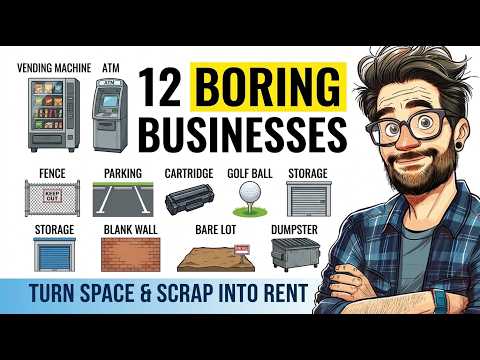
Charles Schulz sat at the same desk for fifty years and drew Peanuts almost every single day of his working life. No pivots, no rebrands, no chasing the next platform. That kind of repetition looks boring next to a sixty-hour side hustle grind — but it is exactly the discipline that separates operators who compound wealth from people who are simply working themselves harder in place. If your revenue line looks the same as it did three years ago despite longer hours, the problem usually is not effort. It is structure.
This article breaks down two connected ideas: the boring, unglamorous habits that operators who actually build sellable wealth run for decades, and the four popular side hustles that quietly cap your income before you even start, because a platform owns the customer or an algorithm owns the price. Together, that is nine habits and four hustles to skip — thirteen lessons in one breakdown.
Key Takeaways
- Working more hours does not automatically build wealth — skill can plateau while equity stays flat, even at sixty hours a week.
- Most "start tomorrow" side hustles fail a simple test: if a platform owns the customer relationship or an algorithm sets the price, your hours never convert into something you can hold or sell.
- Boring, repeatable structures — not hustle — are what let operators compound value over years instead of resetting every quarter.
- Nine specific operator habits, including a "168-hour rule," separate people who build a sellable business from people who effectively bought themselves a job.
- A real-world example, Harry, a landscaping route owner, shows what happens when someone tries to bridge a slow season with a gig-app side hustle instead of a structural fix.
Why Sixty-Hour Weeks Don't Always Build Wealth
There is a specific trap a lot of hard-working operators fall into: hours go up, but the revenue line does not move. Skill plateaus. Equity stays flat. It feels like a discipline problem, so the instinctive fix is to work even more. But the gap is not effort. It is that time spent without a structure behind it does not compound — it just repeats.
Charles Schulz's fifty years at the same desk is the counterexample. That kind of long, boring consistency is not glamorous, but it is the pattern behind operators who actually build something they can hold or eventually sell, rather than a job they simply reinvent every few years. The distinction matters because it changes what you should be optimizing for: not more hours, but hours that build an asset.
The Side Hustle Trap: Four Hustles That Cap Your Income on Day One
Most "start tomorrow" side hustles fail a simple test before you ever log your first hour: does a platform own the customer relationship, or does an algorithm control the price you can charge? If the answer is yes to either, the hours you put in never turn into something you can hold, grow, or sell later. You are renting your time to someone else's system.
That is the core problem with four popular gig-economy side hustles in particular. They can generate quick cash, but they do not build equity. There is no customer list you own, no price you set, no asset that exists independent of the app. When the platform changes its algorithm or its payout terms, your income changes with it — instantly, and without your input.
Harry's Landscaping Route and the Winter Bridge Mistake
The clearest illustration of this trap is Harry, a landscaping route owner who already had something real: a book of recurring customers and a route he controlled. When winter slowed his landscaping revenue, he tried to bridge the gap with one of the four gig-app side hustles rather than reinforcing the boring, owned structure he already had. The math did not work the way he expected — the hours he spent driving for an app did not build toward anything, while the hours he could have spent shoring up his existing customer base would have. It is a useful case study in why a side hustle that looks like fast cash can actually distract from the asset you already own.
Operators exploring seasonal or recurring-revenue models can see a similar structural logic play out in how junk removal businesses build real, ownable margins instead of renting time from a platform.
Nine Boring Habits Operators Who Compound Actually Run
The operators who build businesses that eventually sell — rather than jobs that simply keep them busy — tend to run structures that look unremarkable from the outside. They are not chasing a new hustle every quarter. Instead, they repeat a small set of boring habits for years, the same way Schulz repeated his desk routine for fifty years.
Among these nine habits is what gets described as the 168-hour rule: a discipline for how operators think about and allocate every hour in a week, rather than just the hours spent "at work." It is one example of how the habits in this breakdown turn ordinary effort into something that compounds instead of resetting to zero every year. Each of the nine habits works the same way — individually small, collectively the difference between an operator who owns an appreciating asset and one who owns a demanding job.
Most start tomorrow side hustles cap your income on day one, because the platform owns the customer or an algorithm owns the price, so the hours never turn into anything you can hold or sell.
This same principle — building something you can hold rather than renting your hours to a third party — runs through many of the low-cost, ownable business models covered in boring businesses that make money for under $500 to start.
The One Habit That Separates a Business Seller From a Job Owner
Of the nine habits, one in particular is described as the deciding factor: the habit that separates the operator who eventually sells a business from the operator who simply bought himself a job. It is the habit that determines whether the years of boring, repeated effort produce an asset with value beyond the founder's own labor, or whether the entire operation collapses the moment the operator stops showing up.
That distinction is the throughline of this whole breakdown. Hustle, by itself, produces income only as long as you keep working. Boring, structural habits — the kind that do not make for exciting highlight reels — are what produce something that keeps producing value even when you are not the one doing the work.
Watch the Full Breakdown
This article summarizes the key ideas, but the full video walks through all nine operator habits and all four side hustles to avoid in detail, including the complete story of Harry's landscaping route and the specific mechanics of the 168-hour rule. For the full visual walkthrough, watch the video on the Harry's Stash YouTube channel.