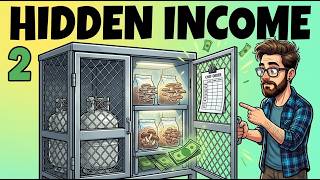
Walk into almost any gas station in America and you will walk past a steel cage packed with propane tanks. Nobody stops to wonder who owns it. Somebody is getting paid every time a customer swaps a tank — and that somebody is not the gas station owner. That quiet, overlooked exchange is one of two businesses covered in this deep dive: the propane tank exchange route model, and a gourmet mushroom farming operation that runs entirely out of a single spare room. Both generate recurring cash flow. Neither requires a storefront, a dedicated staff, or a marketing budget.
Key Takeaways
- The steel propane cage at gas stations is owned by a third-party exchange company — not the retailer
- Propane exchange is a route-based business with recurring, predictable demand driven by location
- Gourmet mushroom farming can start in one spare room with minimal upfront investment
- Specialty mushrooms sold to local restaurants command premium prices and generate weekly recurring orders
- Both businesses require no storefront, no dedicated staff, and no complex technical skills to operate
- These models grow on consistency and geography — not advertising or social media presence
The Propane Tank Exchange Business
The steel cage sitting outside every gas station, convenience store, and hardware chain is not a retail fixture — it is a revenue-generating asset owned by a route operator. The model works on a simple, repeatable exchange: a customer brings in an empty propane tank, pays a flat fee, and walks away with a full one. The store handles the transaction at the point of sale and keeps a small commission. The exchange company handles everything else: filling and certifying the tanks, delivering full inventory, collecting empties, and maintaining the display cages.
Companies like Blue Rhino and AmeriGas built national networks on this exact model, placing cages at tens of thousands of retail locations across the country. But the model is not exclusive to national players. Independent route operators have built durable local businesses by supplying smaller retail chains, hardware stores, garden centers, marinas, and campgrounds — locations that large national distributors frequently underserve or bypass entirely.
Why the Model Works Without a Storefront
The exchange operator needs no retail space, no foot traffic, and no marketing budget. Demand comes built-in: propane tanks run out. Customers do not comparison-shop for propane exchange — they buy from whichever cage is in the parking lot they are already standing in. That single fact makes location the primary competitive moat of the business. Once a cage is placed and a retail agreement is signed, the revenue recurs automatically with every customer swap.
Demand peaks in spring and summer as outdoor grills come out, and again in late fall as patio heaters and camping season wind down. A well-managed route covers enough retail stops to smooth the seasonal curve and produce consistent weekly cash flow across most of the year. The larger the route, the more locations carrying inventory, and the more insulated the operator is from any single location's off-season slowdown.
How to Start a Propane Exchange Route
An independent operator entering this space typically begins by securing a supply agreement with a licensed propane distributor, acquiring a fleet of exchange tanks — purchased outright or leased — and then approaching retail locations to host a display cage. The pitch to a retailer is straightforward: the cage requires no floor-space investment from the store, the exchange company manages the inventory entirely, and the retailer earns a commission on every transaction without handling the product directly.
The ongoing operation is route-based and physical: driving a scheduled circuit, swapping empty tanks for certified full ones, and maintaining accurate records for safety compliance. The route itself is the asset. Every retail location added to the route increases revenue without adding proportional complexity. An operator covering fifteen stops earns substantially more than one covering five, but the daily work structure remains essentially the same.
The Economics of the Cage Model
The appeal of propane exchange lies in its structural simplicity. The operator acquires tanks once and then earns revenue repeatedly from the same physical assets over years of use. Tanks are refilled by the supplier, and the margin lives in the spread between the refill cost and the retail exchange price paid by the end customer. That margin is consistent and predictable — it does not fluctuate based on consumer trends, platform algorithms, or discretionary spending cycles. People need propane whether the economy is expanding or contracting.
Scaling the business means adding retail locations, not rebuilding the operation from scratch. Each new cage placement is an additional recurring revenue stream. Over time, an operator who secures enough placements in a defined territory creates a business that is genuinely difficult for a competitor to displace — because the established retail relationships, placed cages, and ingrained customer habits all function as retention mechanisms simultaneously.
Gourmet Mushroom Farming — One Room, Weekly Revenue
The second business requires no farm, no outdoor land, and no culinary credential. Gourmet mushroom cultivation — growing specialty varieties like oyster, lion's mane, or shiitake — can be started in a single spare room, a basement corner, or a converted closet. The production cycle for fast-growing varieties like oyster mushrooms can complete in as little as ten to fourteen days from inoculation to harvest, which means a disciplined operator can produce and deliver multiple times per month from a modest growing space.
The market for specialty mushrooms at the restaurant level is strong and structurally underserved in most local markets. Chefs who want fresh, locally grown oyster or lion's mane mushrooms are often forced to source from distant commercial distributors with inconsistent quality and long lead times. A local grower who shows up every week with a reliable, fresh product fills that supply gap — and builds a supplier relationship that is extremely difficult for a distant competitor to displace on price alone.
The Weekly Delivery Route That Refills Itself
The delivery side of mushroom farming mirrors the propane exchange model more closely than it might appear. Both run on a scheduled route, predictable stops, and recurring revenue that requires no ongoing new-customer acquisition once relationships are established. A mushroom farmer supplying five to ten restaurant accounts on a weekly basis is effectively running a subscription-style cash flow business. Each account represents a standing order. The retention mechanism is quality and reliability — not discounts, promotions, or advertising spend.
Oyster mushrooms are particularly well-suited to new operators. They colonize substrate quickly, fruit aggressively, and tolerate a wider range of growing conditions than most other specialty varieties. Pearl Oyster and Blue Oyster are fast producers with high yields and strong demand at restaurants emphasizing fresh, local ingredients. Pre-inoculated grow bags with sterilized substrate reduce early complexity significantly, allowing a new operator to concentrate on growing, harvesting, and building a delivery route rather than mastering substrate preparation from scratch.
Getting Your First Restaurant Accounts
Customer acquisition in this business is local, direct, and personal. The standard approach is to visit restaurants in person during quieter hours — mid-afternoon before dinner service — with a small sample of fresh mushrooms and a simple one-page overview covering product, pricing, and delivery schedule. Restaurant buyers respond to freshness and reliability above everything else. A free sample followed by a consistent, on-time first delivery is frequently enough to convert a trial into a standing weekly order.
Starting with two or three accounts before scaling is a deliberate strategy, not a limitation. It allows a new grower to calibrate harvest timing, portion sizing, and delivery frequency against real demand before committing to a larger operation. Overproducing before accounts are secured creates waste; underproducing after accounts are locked in damages reliability. Growing the route in step with actual demand is how the business builds without unnecessary risk or wasted inventory.
What You Actually Need to Get Started
The core inputs for a mushroom growing operation are straightforward: grow bags or blocks with an appropriate substrate (typically straw for oyster mushrooms or hardwood sawdust for shiitake and lion's mane), mushroom spawn or pre-inoculated bags, a clean growing space with humidity and temperature control, and a basic ventilation setup. Many operators begin with a single grow tent inside a spare room before expanding. A hygrometer to track humidity, a spray bottle for hand-misting, and a small circulation fan are the essential tools for a first setup.
The business scales incrementally and organically. Adding a second grow tent, a second batch of bags, and a second restaurant account all happen in sequence — each step justified by the revenue the previous step is already generating. Unlike businesses that require a complete infrastructure build before earning any revenue, gourmet mushroom farming allows an operator to start at the smallest viable scale and grow from there. That low floor and high ceiling is precisely what makes it work as a side business that can become a primary income over time.
What Both Businesses Share
On the surface, propane tank exchange and gourmet mushroom farming appear to have nothing in common. One involves steel cages, certified tanks, and a delivery truck. The other involves dark shelves, humidity gauges, and grow bags. But beneath those surface differences, both businesses operate on the same structural logic: a recurring delivery route, a customer who needs the product on a regular cadence, and a geographic proximity that gives the local operator a natural advantage over any distant competitor.
Both businesses also share a quality that actively works in the operator's favor: they are boring. Nobody is racing to launch a propane exchange startup. Nobody is pitching gourmet mushroom farming to venture capital. The low profile means less competition, lower acquisition costs for retail or restaurant accounts, and a business that attracts operators serious about building something durable rather than chasing trends.
The boring business formula: recurring demand, captive geography, and no marketing required.
If you are drawn to this type of low-overhead, route-based income model, there are several comparable structures worth studying. 6 Boring Businesses That Make Money (Under $500 to Start) covers similar models at an even lower entry point. For a broader look at cash flow businesses across different capital levels, 6 Boring Cash-Flow Machines to Buy With $30,000 (No Skills Needed) is worth reading alongside this one.
Watch the Full Video Breakdown
This article covers the core structure of both businesses, but the video goes deeper — walking through the economics, the setup process, and the specific operational details that make each model work in practice. Watch the full breakdown on the Harry's Stash YouTube channel: 2 BORING Businesses That Hide in Plain Sight. It is the most efficient way to see the complete picture for both businesses in one sitting.