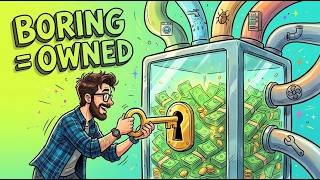
A plumbing company owner turns down a bigger offer from private equity and sells to you instead. Nobody on the soccer sideline knows. Another man's name is on the truck, but the business quietly belongs to you. That is the whole idea behind boring businesses: the work is unglamorous, the brand is local, and the ownership is invisible. This guide walks through seven of them, arranged as two separate climbs from small and simple to larger and more established.
Key Takeaways
- Boring businesses reward ownership over visibility. The name on the truck can belong to someone else while the cash flow belongs to you.
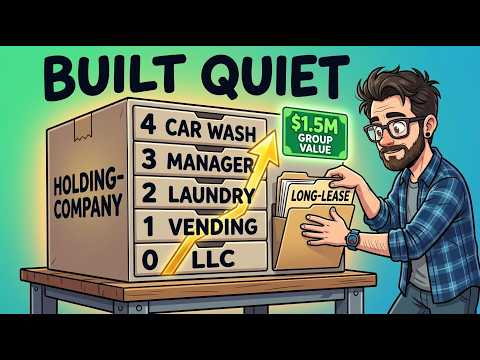
- The first climb has three steps: a small vending route, a laundromat bought on water bills and a long lease, and a holding company that adds self-serve car washes.
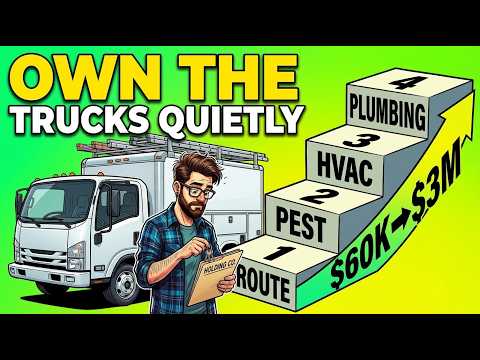
- The second climb has four levels: a pest control route you run yourself, a small pest company, an HVAC company bought from its founder, and a plumbing company.
- Each step builds on skills and cash flow from the one before it, so the order matters.
- The early stretch of the first climb contains one make-or-break week, and how you handle it decides whether anything after it exists.
Why Boring Businesses Work
Most people chasing business ideas look for something exciting: a viral app, a trendy brand, a product that gets attention. Boring businesses go the other way. They sell things people need whether or not they are paying attention: snacks from a machine, clean clothes, a washed car, a pest-free home, a working furnace, a fixed pipe. Demand is steady, customers are local, and competition is usually other small owners instead of venture-funded startups.
The second advantage is that these businesses are easy to leave quiet. Many are not owned by a recognizable person at all. A founder's name may stay on the vehicles and the invoices for years after the ownership has changed. That is the picture behind the plumbing sale above, and it is why this category appeals to people who want income without becoming a public figure.
If you want a broader menu of small, low-cost options before you commit to a path, our guide to 6 boring businesses that make money for under $500 to start covers the lowest-barrier end of the spectrum.
Climb One: Vending, Laundromat and Car Wash
The first climb is three businesses on one quiet path. Each is a step up in size and in the kind of decision-making it demands.
Step 1: A Small Vending Route
A small vending route is the entry point. It is simple to understand: you place machines in locations with steady foot traffic, stock them, collect the money, and learn which spots perform and which do not. The real product of this first step is not just income. It is practice at the habits every later business requires: choosing locations, tracking numbers, managing suppliers, and showing up on schedule.
Vending also teaches you the discipline of route thinking. A route is a repeatable loop. Once you can run one loop reliably, you can think about running more of them, and you start to see business as a system instead of a series of chores.
Step 2: A Laundromat Bought on Water Bills and a Long Lease
The second step is a laundromat, and the key detail is how it is evaluated. Instead of trusting the seller's story, the buyer leans on two pieces of evidence: the water bills and the length of the lease. Water use is a hard-to-fake proxy for how many loads are actually being washed. A long lease protects the business from the most common way a laundromat dies, which is losing its location.
This approach reflects a broader rule of buying small businesses: verify what you can measure, and secure the things you cannot replace. For a deeper look at what to check and what to avoid, see our guide on how to buy a laundromat, including real costs, returns, and red flags.
Step 3: A Holding Company That Adds Self-Serve Car Washes
The third step changes the structure of the whole climb. Instead of owning one more standalone business, you own a holding company that can add assets one at a time. In this story, the holding company adds self-serve car washes. Like laundromats, self-serve car washes are customer-operated, location-dependent, and built around equipment and utilities rather than a large staff.
The holding company matters because it turns separate purchases into a portfolio. Each new asset can be evaluated with the same discipline learned in the earlier steps, and the whole thing grows without any single business needing to become huge.
The pattern in the first climb: a small route teaches the habits, a laundromat teaches how to buy on evidence, and a holding company teaches how to stack assets.
The Week Everything Might Fail
The first climb includes one week when everything looks like it might fail. That detail is worth pausing on, because it is the part most business content leaves out. Growth stories are usually told as a straight line. In practice, there is often a stretch where cash is tight, a purchase is pending, and several things can go wrong at once. How an owner behaves during that stretch, whether they panic, freeze, or work the problem methodically, decides whether the later businesses ever exist. The full story, including how that week is handled, is told in the video.
Climb Two: Four Levels of Home Services
The second climb moves into home services, where customers call because something is wrong or needs regular attention. These are classic boring businesses: recurring, local, and trusted through reputation.
Level 1: A Pest Control Route You Run Yourself
The first level is a pest control route that you personally run. Doing the work yourself has a clear purpose. You learn the service, the customers, the seasonal rhythm, and what actually causes complaints and cancellations. Anyone who later hires technicians or buys a company will make better decisions if they have done the job with their own hands first.
Level 2: A Small Pest Company
The second level is stepping up from a route to a small pest company. Instead of being the only worker, you own an existing operation with its own customers and routines. The skills from the first level carry over directly, but now the job shifts toward oversight: reviewing numbers, keeping customers, and making sure the work is done properly by someone else.
Level 3: An HVAC Company Bought From Its Founder
The third level is an HVAC company bought directly from its founder. Founder-owned trades companies are a natural fit for this kind of purchase. The person who built the company may be ready to step back, and what they care about is often who will look after their customers and employees. A direct purchase from the founder can also mean a smoother handover than a sale driven purely by the highest bidder.
Level 4: A Plumbing Company With Someone Else's Name on the Truck
The fourth level is the plumbing company from the opening story. The owner chooses to sell to you rather than accept a bigger offer from private equity. The founder's name stays on the trucks, the customers see a familiar brand, and the ownership changes quietly. Nobody on the soccer sideline knows.
This is the clearest illustration of why boring businesses suit people who value privacy and stability over recognition. The business keeps its local identity, and you hold the equity.
What the Two Climbs Have in Common
Though one path runs through vending, laundromats and car washes and the other through pest control, HVAC and plumbing, they share a few principles:
- Start small and learn the work. Both climbs begin with something you can run yourself, whether a vending route or a pest control route.
- Buy on evidence. The laundromat is judged on water bills and a long lease, not on promises.
- Respect the founder. The HVAC and plumbing examples show that sellers often value a trustworthy buyer over a maximum price.
- Stack, don't sprawl. A holding company or a series of steps lets each purchase build on the last.
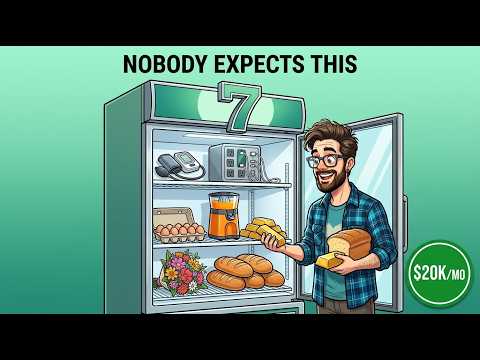
If you have a smaller budget and want to see what is possible at the entry level, you may also like 5 boring $20K cash-flow machines that pay you every month.
Common Mistakes to Avoid
The stories above are about opportunity, but boring businesses still carry risk. A few cautions apply to nearly every example:
- Skipping the learning step. Buying a trades company without understanding the service makes it hard to judge the people running it.
- Ignoring the lease. For location-based businesses such as laundromats and car washes, a short lease can erase the value of the whole purchase.
- Underestimating the hard week. Any growth path has a stretch where cash and confidence are tested. Plan for it before it arrives.
- Growing too fast. Each step in these climbs works because the owner is ready for it. Skipping steps removes the practice that makes the next one manageable.
Watch the Full Video Walkthrough
This article gives the outline, but the video tells both stories in full, including the week in the first climb where everything looks like it might fail. Watch 7 Boring Businesses That Nobody Knows You Own on YouTube for the complete walkthrough, and subscribe if you want more deep-dives on small businesses that quietly build wealth.
Final Thoughts
Boring businesses are not about being unremarkable. They are about choosing durable, local, need-based services and building ownership step by step. Whether your path starts with a vending route or a pest control route, the pattern is the same: learn the work, buy carefully, protect the location or the relationships, and let the compounding happen out of sight. Eventually, someone else's name may be on the truck, but the business is yours.