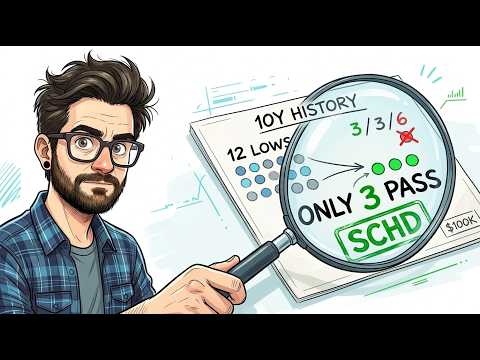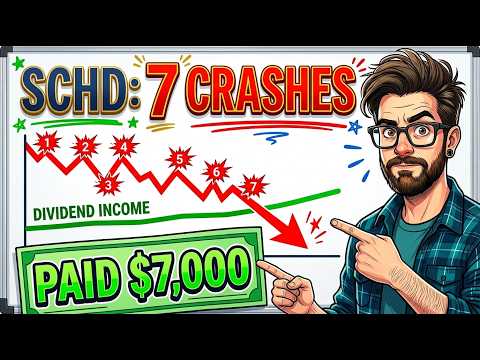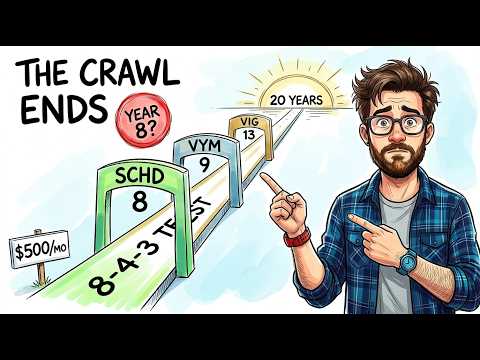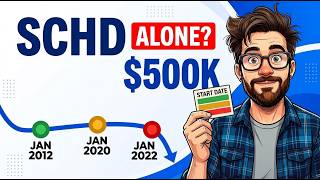
Can you retire on SCHD alone? To get a real answer instead of a feeling, this analysis ran fifteen calendar years of actual SCHD prices and dividend payments, 2012 through September 2026, through three hypothetical retirement start dates. Every modelled retiree survived, and every account is worth more than the $500,000 it started with. But how the retirement felt depended almost entirely on the start date, which no retiree gets to choose.
This is a model built on published history, not a real account, and it is education rather than financial advice. Past performance does not guarantee future results.
Key Takeaways
- All three retirees (January 2012, January 2020 and January 2022) lasted on SCHD alone, and each account is worth more than the starting $500,000 today.
- The January 2012 account is worth more than $2 million, and its dividend check grew to almost four times its first-year size from the same shares.
- The 2020 crash cost the four percent retiree about $5,700 of future value, while the slow 2022 to 2025 stretch did roughly three times the damage in shares sold.
- SCHD's dividend payout rose in dollars every full calendar year, but 2023 and 2026 were flat years that lost to inflation.
- A one-year SGOV cash bucket meant zero shares were sold below the start price for both unlucky retirees, at a cost of about $2,700 to about $17,000.
How the SCHD Retirement Model Works
The model uses Yahoo Finance's daily price and distribution history for SCHD, adjusted for the three-for-one split in October 2024, so every price and payment lines up with today's shares. A hypothetical $500,000 goes in at the closing price on the first trading day of each start year. Every dividend is counted on its ex-dividend date as a stand-in for the payment date. Every figure was run twice with two separately written calculations and checked against each other.
Each retiree gets two spending rules:
- Dividends only: spend whatever SCHD pays that year and never sell a share.
- The 4% rule: take 4% of the starting money in year one ($20,000 on $500,000), then raise the paycheck each January by the previous year's inflation (CPI, December to December). Dividends pay first, shares are sold to cover any shortfall, and any surplus buys more shares. It was run quarter by quarter, because that is how SCHD pays.
The 4% figure comes from William Bengen, who published it in 1994 after testing large American stocks and intermediate government bonds against history back to the 1920s. His exact worst case was about 4.15%. In his 2025 book he raised his number to 4.7% using a broader mix of seven asset types, and Morningstar's base case for someone retiring in 2026 is 3.9% for portfolios holding roughly 30% to 50% in stocks.
None of those portfolios is a single fund that is 100% stocks. Retiring on SCHD alone is therefore a harder test than the one the rule was built on, which is why the bucket fix later in this article exists.
The Early Retiree: January 2012
On January 3, 2012, SCHD closed at about $8.81 in split-adjusted terms. The fund was less than three months old, and $500,000 bought about 56,800 shares.
Each share paid 27 cents in 2012, or about $15,300 for the year, not $20,000. The starting yield was only about 3.1%, so living on dividends alone meant about $4,700 less than the textbook paycheck, roughly $390 a month. The four percent retiree needed $5,000 a quarter, and the first dividend check in March was about $2,600. They were selling shares in the very first quarter, about 510 shares by the end of 2012, although at a price that had climbed to about $9.45 by December.
What the dividends-only paycheck paid
The dividends-only paycheck was about $17,100 in 2013, nearly $19,800 in 2014 and about $21,700 in 2015. That fourth year was the first in which dividends alone beat the four percent retiree's inflation-adjusted paycheck. The check reached about $25,500 in 2017 and about $32,500 in 2019. In the 2020 crash year it went up, to about $38,400. By 2025 the same 56,800 shares paid about $59,500, almost four times the first year's check without buying a single additional share.
To keep pace with prices, the 2012 paycheck needed to reach only about $21,500 by 2025. SCHD's annual payout per share rose in every calendar year from 2012 through 2025, growing about 10.6% a year over the last ten of those years. Measured against the original half million, the 2025 paycheck works out to a yield on cost of almost 12%.
The 4% rule from 2012
The four percent paycheck started at $20,000 and reached about $28,000 in 2025. Selling happened only early: about 500 shares in 2012, about 300 in 2013, smaller amounts through 2016 and one tiny top-up in 2018. After that the dividends covered the paycheck every year and the leftover bought more shares. The retiree sold about a thousand shares in total, then bought back far more, and today owns about 64,700 shares.
Over almost fifteen years the four percent retiree withdrew about $342,000, and at today's price of about $32.77 the account is worth about $2.12 million. The dividends-only retiree withdrew more, about $523,000, and has about $1.86 million. The retiree who spent more ended up with less, and neither came close to running out. The original half million would need to be about $739,000 today just to buy what it bought in 2012.
Why this start date was so kind
Three things lined up, and none was skill. The price rose about 3.7 times, from about $8.81 to about $32.77. The good years came first, with total returns of about 11% in 2012 and about 33% in 2013, so even the four percent account was worth about $684,000 by the end of 2013. And the bad years, including a flat 2015, a roughly 5.5% drop in 2018 and the 2020 spring crash, landed on an account well above its starting value. The worst moment was about $495,000 in June 2012, just $5,000 below the start.
Vanguard defines sequence of returns risk as the risk of impairing your lifetime spending power by withdrawing during a down market early in retirement.
The Crash-Year Retiree: January 2020
On January 2, 2020, SCHD closed at about $19.36, and $500,000 bought about 25,800 shares. That is fewer than half as many shares as the 2012 retiree owned, because the price had more than doubled.
In the second half of February the pandemic selloff hit. On March 23, SCHD closed at about $13.17 and the account was worth about $340,000, down roughly a third in under three months. Two days later, on March 25, SCHD went ex-dividend at 14.73 cents a share, a check of about $3,800. The dividends-only retiree simply spent it. The four percent retiree needed $5,000, so they sold roughly 84 shares at about $14.21 to cover about $1,200, two days after the low. That is what sequence risk looks like in practice.
What the crash did to the paycheck
Almost nothing. SCHD's payout per share rose about 17.5% in 2020, and the dividends-only retiree collected about $17,500 in the first year, then about $19,400 in 2021, about $22,100 in 2022, about $22,900 in 2023 and about $27,100 in 2025. To keep pace with inflation, the first-year paycheck needed to reach only about $22,000 by 2025. The starting yield of about 3.5% was the highest of the three start dates, so dividends covered about 87% of the four percent paycheck in year one, versus about 77% for the 2012 retiree. A smaller gap means fewer shares sold at low prices.
SCHD was back above its January high by early November 2020 and the year ended at about $21.38.
The bill for the crash
In 2020 the four percent retiree sold about 175 shares below the start price: 84 in March, about 71 in June and about 20 in September. At today's price those shares would be worth about $5,700. That is the real cost of the crash: not a third of the money, but about $5,700 of future value. Year-end balances were about $549,000 in 2020, about $690,000 in 2021 and about $645,000 after the 2022 bear market, never below $500,000. Today the four percent account is worth about $845,000 after withdrawing about $152,000, and the dividends-only account is about $846,000. In real terms the retiree needed about $649,000 to stand still, so they are roughly $200,000 ahead.
The Bear-Market Retiree: January 2022
The most instructive start date had no pandemic and no 30% plunge. On January 3, 2022, SCHD closed at about $26.94, within a couple of percent of its then all-time high, after returning about 30% in 2021. The $500,000 bought about 18,560 shares. The starting yield was about 3.2%, so first-year dividends were about $15,850, or about 79% of the four percent paycheck, a bigger gap than the crash-year retiree faced.
Then prices rose about 6.5% from December to December and stocks fell. By September 30, 2022 SCHD was at about $22.14 and the dividends-only account was worth about $411,000. SCHD did its job relatively well, losing only about 3% with dividends included, while VOO lost about 18%. But the four percent rule does not care about relative performance. The retiree needed $5,000 a quarter, dividends covered about $4,000, and they sold shares below the start price every quarter of 2022, about 170 shares by December. The 6.5% inflation raise then pushed the 2023 paycheck to about $21,300 just as shares were cheap.
2023: the first flat dividend year
SCHD's payout per share rose only about 3.8% in 2023, the slowest calendar-year growth in its history up to that point. The dividends-only paycheck was about $16,450, when keeping up with prices required about $16,870, a real pay cut of about $420. The paycheck never fell in dollars in any full calendar year for any start date, but a raise smaller than inflation still buys less.
SCHD passes through what its roughly hundred companies pay, minus a tiny fee, and its index reshuffles holdings annually and rebalances quarterly. Some years that trades current income for future growth. With a total return of only about 4.5% in 2023, the four percent retiree sold about 213 more shares. The worst day came on October 27, 2023, almost two years in, when SCHD closed at about $22.30 and the four percent account was worth about $406,000.
Year-end balances for the four percent retiree were about $463,000 (2022), $461,000 (2023), $493,000 (2024) and $491,000 (2025), four year ends in a row below the half million. SCHD never collapsed. The price drifted sideways while bills rose and each quarterly sale shaved off more shares: about 510 shares sold below the start price, versus 175 for the crash-year retiree. A drop about half as deep did roughly three times the damage.
2026: the second flat year, and the turn
The first three SCHD payments of 2026 add up to 77.59 cents a share, versus 76.94 cents for the same three payments last year, growth of less than one percent. For this retiree that is about $120 more over nine months, while inflation of about 3.4% would have required roughly $365 more than that. In March the index removed 22 companies and added 25, and energy fell from roughly 23.5% of the fund to about 16% while consumer staples and health care grew. The portfolio yield stayed near 3.4%.
Meanwhile the price took off, from about $27.43 at the start of 2026 to about $32.77, up about 19% on price alone in nine months. The four percent retiree has taken out about $103,000 and has an account worth about $582,000. The dividends-only retiree has collected about $84,600 and has about $608,000. Inflation since January 2022 means about $596,000 is needed to stand still, so the dividends-only retiree is about $12,000 ahead and the four percent retiree about $13,000 behind. In dollars it survived comfortably; in real money it is roughly even.
SCHD versus VOO for a retiree
VOO came out ahead on total return from all three start dates, and the same 2022 retiree using VOO and the 4% rule would have about $700,000 today. But VOO's 2022 dividends on $500,000 would have paid about $6,800, less than half of what SCHD paid. With VOO the paycheck mostly comes from selling; with SCHD most of it simply arrives. For a related look at this trade-off, see the DGRO vs SCHD dividend growth stall comparison.
The Fix: A One-Year SGOV Bucket
Two of the three start dates sold shares below their starting price. A simple retirement bucket strategy sells none. Keep one year of spending in SGOV, a fund holding US Treasury bills maturing within three months. Whenever SCHD trades below its start-date price, take the shortfall from the bucket instead of selling. When SCHD is back above that price, refill the bucket to a full year. It is a very small version of the non-stock allocation in every Bengen and Morningstar portfolio. For a broader take, see the 3-bucket dividend strategy.
For the 2022 retiree, $480,000 went into SCHD and $20,000 into the bucket. Dividends paid about four fifths of each quarter's bill and the bucket paid the rest for ten quarters in a row, all of 2022 and 2023 and the first half of 2024, without selling a single SCHD share. At its lowest, in June 2024, the bucket still held about $8,400, helped by SGOV paying close to 5% in 2023 and a little over 5% in 2024. In September 2024 SCHD was back above the start price on its ex-dividend date, and the bucket was refilled at about $27.80. When the price dipped below the start again in June 2025, the bucket covered that quarter. Shares sold below the start price fell from about 510 to zero.
For the 2020 retiree, the bucket covered March, June and September 2020, about $3,200 in total, and was refilled in December, so again zero shares were sold below the start price. SGOV did not exist until June 2020, so the first five months were modelled as cash earning nothing, which if anything understates the bucket.
What the insurance costs
For the 2022 retiree the bucket version is worth about $580,000 today, bucket included, versus about $582,000 without it, a cost of about $2,700. For the 2020 retiree it is about $827,000 versus about $845,000, roughly $17,000 or about 2%, mostly because $20,000 sat in cash through 2021, a year SCHD returned about 30%. The bucket does not make anyone richer. It means that in the two roughest stretches, the shares were left alone to recover.
What to Take From This
- Know your starting yield. SCHD's trailing yield today is about 3.2%, so $500,000 would pay about $16,000 a year, almost exactly where the 2012 and 2022 retirees started. A four percent plan sells shares from the first quarter.
- Hold the bucket for the first few years, since those years decide almost everything.
- Expect flat years. 2023 and 2026 were raises in dollars that still lost to inflation, a normal part of a payout that has grown about 10% a year over the last decade.
- Mind the tax line. For 2026, a married couple filing jointly pays zero federal tax on qualified dividends while taxable income stays under $98,900. Check how your dividends are classified on your year-end tax form.
Watch the Full Video Walkthrough
For the year-by-year charts and the exact quarter-by-quarter trades, watch the full video, Can You Retire on SCHD Alone? I Ran 15 Years of Real Data Through 3 Retirement Start Dates, on Harry's Financial Fitness:
This article is not financial advice. Every number comes from a model built on published prices and distributions, and past performance does not guarantee future results. Always do your own research.