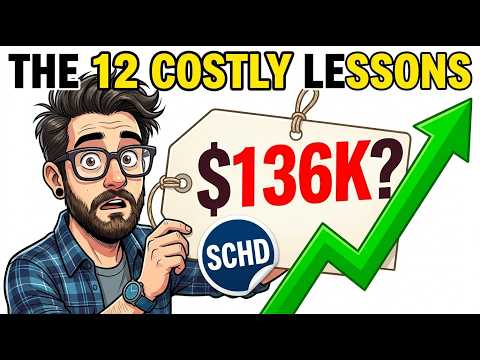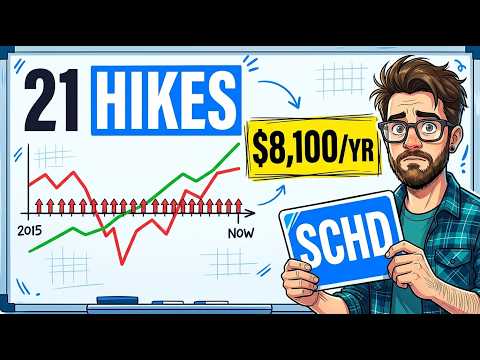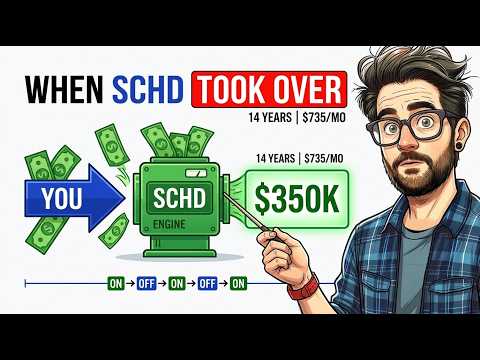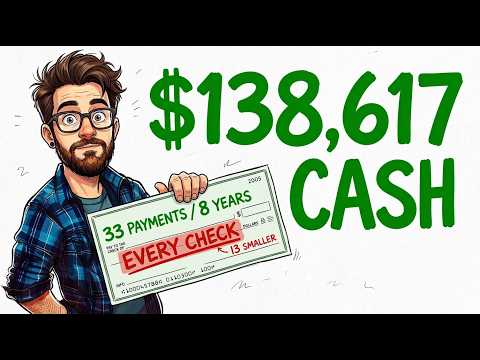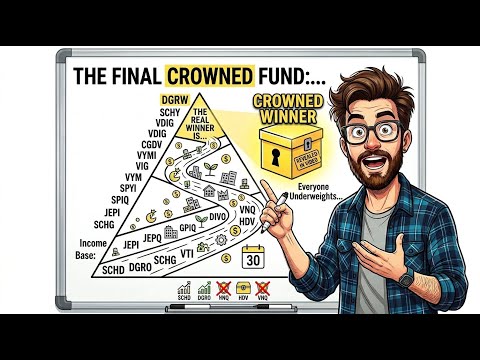
One decision separated two retirement trajectories by eighty-three thousand dollars — and most dividend investors make the wrong call without realizing it. From January 2014 through May 12, 2026, $100,000 in pure SCHD compounded to $387,199. The same amount in pure SCHG reached $663,888. A 70/30 SCHD/SCHG split landed at $470,206 — beating the dividend-only path by $83,007 while maintaining a drawdown profile that investors can realistically hold through. This analysis covers all fifteen funds considered in the full comparison and the three-question framework that points to one historically supported portfolio answer.
Key Takeaways
- $100,000 in pure SCHD from January 2014 through May 2026 grew to $387,199; the same amount in pure SCHG grew to $663,888.
- The 70/30 SCHD/SCHG split grew to $470,206, outperforming pure SCHD by $83,007 over the same 12.3-year period.
- SCHG fell 31.80% in 2022; SCHD fell only 3.26%; the 70/30 split fell 13.91% — a manageable middle path through a brutal year.
- A pure SCHG investor starting 2022 with roughly $390,000 would have seen approximately $124,000 in paper losses by year end.
- The 70/30 split delivered a 13.33% compound annual return with a maximum calendar-year drawdown of 14%.
- Account location matters: SCHD generally fits a traditional IRA or taxable account; SCHG belongs in a Roth IRA for tax-efficient compounding.
What SCHD and SCHG Actually Are
Both funds are built by Schwab, share the same low-cost ETF wrapper, and hold nearly zero overlapping securities. That structural contrast is the foundation of the entire comparison.
SCHD — Schwab US Dividend Equity ETF launched October 20, 2011, and carries a 0.06% expense ratio — six cents per $100 invested each year. Its trailing twelve-month distribution yield sits around 3.32%, generating roughly $3,500 annually on a $100,000 position. The fund screens 103 companies against four filters: ten consecutive years of dividend payments, a market cap above $500 million, a positive cash-flow-to-debt ratio, and a strong five-year dividend growth rate. Top holdings include Texas Instruments at 5.66%, Qualcomm at 5.59%, UnitedHealth at 5.09%, Coca-Cola at around 4%, and Chevron at 3.94% — names that have historically paid investors in cash every quarter regardless of what the technology sector is doing. The ten-year total return CAGR sits at 11.19%, with the dividend growing at approximately 9.29% per year over the same period.
SCHG — Schwab US Large Cap Growth ETF launched December 11, 2009, and carries an even lower 0.04% expense ratio. Its distribution yield is under 0.5% — this is a capital appreciation fund, not an income fund. SCHG screens 196 companies on growth factors: projected price-to-earnings expansion, current price-to-earnings, price-to-sales, and price momentum. The top ten holdings — NVIDIA at 11.53%, Apple at 9.5%, Microsoft at 6.8%, Amazon at 5.87%, Alphabet at 5.15%, and Broadcom at 4.49% — account for 57.5% of the entire fund. Technology alone represents 43.98% of the portfolio. The ten-year total return CAGR is 18.16%, with a five-year CAGR of 18.31% — nearly five percentage points per year above SCHD.
For broader context, VOO (Vanguard S&P 500 ETF) has historically returned 14.78% annually over the trailing decade — almost exactly between SCHD and SCHG — with an AUM of over $1.5 trillion. VIG (Vanguard Dividend Appreciation ETF) sits between SCHD and VOO with a 1.7% yield and a portfolio tilted toward dividend growers in technology and financials rather than dividend payers in consumer staples and energy. Knowing where VOO and VIG fit confirms that the SCHD vs SCHG decision is not binary — it is a range, and the 70/30 split is a historically tested point on that range.
How the Fifteen-Fund Comparison Was Structured
The full analysis tested five allocation configurations — pure SCHD, pure SCHG, 50/50, 70/30, and 30/70 — across 12.3 years of total return data from January 2014 through May 12, 2026, with dividends reinvested and no panic selling. Alongside SCHD and SCHG, thirteen additional funds were profiled to show where every alternative sits on the risk-return spectrum.
On the growth side: VUG (Vanguard Growth ETF) delivered a 17.66% ten-year CAGR at a 0.03% expense ratio — roughly half a percentage point below SCHG per year. That 0.5% annual gap compounds into $50,000–$70,000 in terminal wealth difference over twelve years on a $100,000 starting position. MGK (Vanguard Mega Cap Growth ETF) at 0.07% is even more concentrated in the largest technology names and historically produced higher returns during mega-cap bull markets but deeper drawdowns when those names rolled over. QQQ (Invesco Nasdaq 100 ETF) overlaps significantly with SCHG at similar return levels but charges 0.20% — five times SCHG's expense ratio — making SCHG the cleaner and historically cheaper choice for the growth side of any dividend-growth split.
On the dividend side: DGRO (iShares Core Dividend Growth ETF) at 0.08% requires only five consecutive years of dividends versus SCHD's ten, opening the portfolio to younger dividend growers including some technology names. Its ten-year total return sits around 11%, close to SCHD, but with a slightly lower starting yield and roughly $37 billion in AUM. VYM (Vanguard High Dividend Yield ETF) at 0.06% holds over 450 companies with a current yield of 2.38–2.44% and has historically returned around 10% annually — slightly below SCHD, with heavier financial and energy concentration. NOBL (ProShares S&P 500 Dividend Aristocrats ETF) at 0.35% screens for 25 consecutive years of dividend payments across approximately 67 holdings, making it the most defensive dividend option in the comparison. For a detailed look at how DGRO's dividend growth trajectory compares to SCHD over a full market cycle, see DGRO vs SCHD: The Dividend Growth Stall Investors Need to See.
The 2022 Stress Test: Where Pure SCHG Historically Broke Down
The year 2022 is the single most important data point in the SCHD vs SCHG comparison. It separates the configurations that retirement investors can realistically hold from those that historically drove panic selling.
In 2022, SCHG dropped 31.80%. SCHD dropped 3.26%. The 70/30 split dropped 13.91%. A pure SCHG investor who had watched $100,000 grow to approximately $390,000 by early 2022 saw that position fall to roughly $267,000 by year end — a paper loss of approximately $124,000 in a single calendar year. The 70/30 investor, starting the year at approximately $312,000, ended at roughly $275,000 — a paper loss of approximately $37,000.
A pure SCHG investor absorbed roughly $124,000 in paper losses in 2022. The 70/30 SCHD/SCHG investor absorbed roughly $37,000. That $87,000 difference in a single year is not just a number — it is the gap between an investor who holds and one who sells at the bottom, locking in the loss permanently.
Large drawdowns historically push a significant share of retail investors to sell near the bottom, converting paper losses into realized ones. The investor who exited pure SCHG in late 2022 missed 2023's 50.10% recovery. SCHD returned only 4.54% that same year — a 45.56 percentage-point gap between the two funds in a single calendar year, the largest in the history of these two ETFs. The 70/30 split captured a meaningful portion of the 2023 bounce while absorbing none of 2022's full severity.
The 70/30 Split: Full-Period Results and the Three-Question Test
The 70/30 SCHD/SCHG split — $70,000 into SCHD and $30,000 into SCHG on a $100,000 starting position, held without rebalancing from January 2014 through May 2026 — produced a terminal value of $470,206, representing a 13.33% compound annual return. That figure outperforms pure SCHD by $83,007 while keeping the income foundation intact and holding the maximum annual drawdown to 14%.
The income yield on the total portfolio has historically come in around 2.3%, with the SCHD slice generating quarterly income and the SCHG slice compounding into total wealth. For investors already running a structured income strategy, the 70/30 approach integrates naturally with layered dividend frameworks — such as those outlined in the 4-ETF Dividend Ladder: How VIG, DGRO, SCHD & DIVO Pay $613/Month — where a growth layer builds terminal wealth without disrupting a quarterly income schedule.
The Proven Split Test evaluates any portfolio configuration against three questions:
- Does it deliver real long-term growth? The 70/30 split has historically delivered 13.33% per year. Pass.
- Does it deliver real income today? The split has historically generated around 2.3% total portfolio yield, with the SCHD slice paying roughly $3,500 annually per $100,000 allocated to it. Pass.
- Can the investor actually hold through the bad years? The split's worst calendar-year drawdown was 14% in 2022 — a figure most investors can hold without panic selling. Pass.
Pure SCHD passes questions two and three but leaves $83,007 on the table over 12 years. Pure SCHG passes question one decisively but historically fails question three for the share of retirees who cannot hold a 31.80% drawdown without selling. The 70/30 split is the only configuration that passes all three.
Account Location Rules for SCHD and SCHG
The same 70/30 allocation inside a Roth IRA versus a taxable account can differ by tens of thousands of dollars in after-tax outcome over a decade. Location is not secondary to allocation — it is part of the strategy.
SCHD's dividends are qualified, taxed at long-term capital gains rates in taxable accounts, which makes SCHD workable in either a traditional IRA or a taxable account depending on whether current income is needed now. SCHG generates minimal taxable distributions — under 0.5% yield — so its growth compounds with near-zero annual tax drag. SCHG has historically worked best in a Roth IRA, where the near-zero distribution profile allows full compounding without annual friction. Placing SCHG in a Roth and SCHD in a taxable account is generally the more tax-efficient arrangement for the 70/30 split. A retiree placing SCHD in the Roth forfeits the tax-free compounding advantage on a lower-growth fund while leaving SCHG's high-growth compounding exposed to future distribution taxes.
Watch the Full Video Breakdown
The complete year-by-year return tables, portfolio value charts, and fifteen-fund analysis are available in the Harry's Financial Fitness video on YouTube. The visual walkthrough of the 2022 drawdown comparison and the full 12.3-year compounding curves — including the weighted annual return sequence that produces the 70/30 terminal value of $470,206 — makes the case for the split easier to follow alongside the data. Search for the video on the channel for the side-by-side presentation that supports every figure in this article.