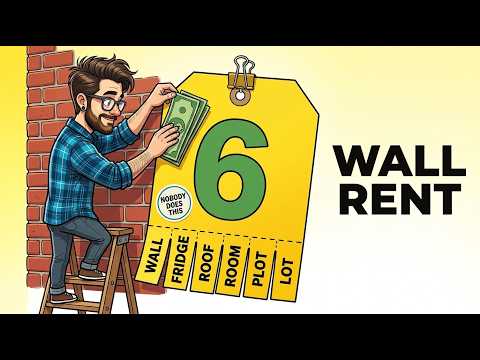
Most people picture a rental business as a shop with a counter, a fleet of vehicles, and someone standing behind a register. That picture is wrong, and it is the single biggest reason most people never start. Six ordinary assets prove it: a bounce house, a party package, a tool kit, a portable hot tub, a utility trailer, and a camper. Each one sits quietly in a driveway all week, goes out on Friday, comes back on Monday, and gets paid for the weekend in between. No fleet, no staff, no counter.
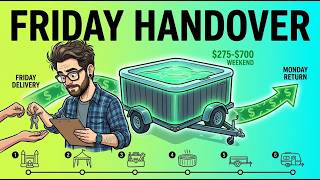
This breakdown walks through a single weekend, Friday to Monday, across all six assets, ordered by what they cost to buy. The pattern behind each one is the same rhythm: a Friday handover and a Monday check, which is the entire weekly job.
Key Takeaways
- A used bounce house ($800–$2,000) pays for itself in about seven weekends out of a 26-weekend season at an average $275 booking.
- A starter party tent package clears its own cost in roughly nine bookings against a $500 average weekend rental.
- Tool and equipment kits are the fastest door, covering their cost in five to eight rental days using the 3–5% of purchase price per day rule.
- Portable hot tubs run opposite season to bounce houses, peaking around holidays and cottage season, and generate $7,000–$10,500 a year per tub.
- A camper is the biggest ticket (used units run $8,000–$25,000) but the biggest absolute return, with top owners earning up to $50,000 a year on one listed unit.
- Every asset's real moat is a deposit, condition photos, and insurance paperwork — not a storefront.
Asset One: The Bounce House
A commercial inflatable rents for $150 to $350 a day, with weekends commanding the top of that range since 80–90% of all inflatable revenue happens between Friday and Sunday. A realistic single booking runs $250 to $400, and in a busy month one unit can go out twice in the same weekend.
One documented solo operator started with two bounce houses and a combo unit for about $12,500 and generated roughly $28,000 in his first year at a net margin near 28%. Another operator, just twenty years old and running one to three units solo, reported about $1,500 gross on a single strong Saturday.
At an average of $275 a weekend, a used bounce house costing $800–$2,000 pays for itself after about seven weekends out of a 26-weekend season — leaving nineteen weekends of pure profit.
Starting costs stay low: used units from Facebook Marketplace and inflatable resale groups, plus a general liability policy (commonly $1 million of cover) that works out to roughly $10–$15 per booking once annualized. Bookings come from parents booking birthdays, then churches, schools, and community groups for seasonal festivals and fundraisers — and those same families and event coordinators rebook year after year. The insurance and inspection tag aren't a barrier; they're the fence that keeps a neighbor with a cheap inflatable from taking a school booking away. Expect two to four weeks from purchase to first paid weekend, and smart operators keep bookings alive indoors through winter via church halls and community centers rather than storing the unit all season.
Asset Two: The Party Package
A 20x20 frame tent rents for $300 to $800 per weekend event, and a full package of tables, chairs, and linens for about 100 guests commonly bills $500 to $1,000 per event. A lean operator running four to six events a month sits around $1,200–$2,000 monthly in year one, while an established operation with five tents and a few hundred chairs can reach $3,000–$6,000 a month.
Adam Keller, interviewed on the Side Hustle Hero podcast, described making about $30,000 in his first summer running exactly this setup before scaling into a multi-truck operation. As another operator on that podcast put it, tent rentals are nearly 100% weekend work — almost nobody books a tent on a Tuesday.
A starter tent runs $2,500–$4,500, and fifty chairs plus ten tables run $1,500–$2,500. Against a $500 average weekend, the tent alone clears its own cost in about nine bookings. Bookings flow through wedding vendor referral networks and local event groups, and the moat is a single certificate of insurance, which venues and municipalities frequently require before issuing a tent permit at all.
Asset Three: The Tool and Equipment Kit
This is the cheapest door on the list. Pressure washers rent for $50–$100 a day, and a bundle of washer, hose, and surface cleaner commands $90–$120. A kit of three or four project tools packaged for a Friday-to-Monday stretch realistically bills $120–$220, and an owner running two or three kits across six to ten weekends a month sits around $700–$1,400 a month once listings mature.
James Eberhard built an early version of this model in Denver with a peer-to-peer tool-lending app called Fluid, where the community was moving tens of thousands of dollars a month between ordinary owners and borrowers. The industry rule of thumb is to charge 3–5% of the purchase price per day — a $500 pressure washer rents for $15–$25 a day, meaning twenty rental days and the tool is effectively free forever.
Starting a kit means buying a gas pressure washer ($300–$700 new, or $150–$350 used) and adding a tile saw or post hole auger ($200–$600 each). Homeowners book these for seasonal projects — driveway resurfacing in spring, deck refinishing, fence posts, gutters in fall — and the same customer returns every year for a different job. There's no license required for casual tool rental, so the only real moat is a deposit and a photo protocol before and after each loan, which filters out the operators with no clear damage policy. First booking typically arrives within one to two weeks.
Asset Four: The Portable Hot Tub
A weekend rental, dropped Friday and collected Monday, prices at $200–$500. One Edmonton operator lists a four-day weekend special at $649, and a British operator lists a Friday-to-Monday rental for £119 all in. One tub booked across 20–30 weekends a season generates roughly $7,000–$10,500 a year, averaging $580–$875 a month.
This is a fall-and-winter business that peaks around the holidays and New Year, then again at the start of cottage season — the exact opposite season to an inflatable, which makes it a natural pairing for anyone already running a bounce house. Kerr Splash in Barrie, Ontario, and Rolltide Tubs in Connecticut both publish their weekly cycles openly: delivery Thursday or Friday, pickup Monday.
Inflatable tubs run $500–$2,000, and hard-shell portables run $3,000–$6,000 new or $2,000–$4,000 used. At a $350 weekend rate, a $3,000 used tub clears its cost in about nine weekends. This is the most hands-on of the six — delivery, fill (roughly $150 in delivered water at one operator's published rate), chemical balancing, and heater walkthrough on Friday, then a drain, deep clean, and sanitize on Monday, one to two hours per turn. Cottage renters and vacation hosts rebook on a fixed calendar every year, and the moat is liability cover for water equipment plus a documented sanitation log — chemical and drain records that cottage associations require before handing out repeat bookings.
One cautionary case shows why that documentation matters: a hot tub owner in a small Ontario market skipped condition photos and skipped the deposit because the renter seemed trustworthy. The unit came back Monday with a torn liner and a missing cover clip — no photos, no deposit, no leverage. He ate about $180 in materials and lost the next weekend's booking while it was repaired. The fix was immediate: a deposit held through the booking platform and five condition photos, each corner plus the liner, before the renter touches anything. No deposit, no delivery, no exceptions.
Asset Five: The Utility Trailer
A basic utility trailer rents for about $50 a day or $125 for a weekend. A dump trailer commands $80–$150 a day, or $200-plus for the weekend. Operator data shows trailers renting 10–15 days a month at $150–$250 a day, which works out to $1,500–$3,750 gross per trailer monthly, landing around $1,000–$2,000 net once it's paid off.
New utility trailers run $2,000–$5,000, used ones $1,200–$3,000, and enclosed cargo trailers go higher at $4,000–$10,000 new. Spring and autumn are peak season, tied to moving and yard cleanup. Bookings come through peer-to-peer trailer apps and local classifieds, and the handover is almost always customer pickup: a hitch and lights check, condition photos, a small deposit. Monday is a quick walkaround under fifteen minutes. Trailer insurance is cheaper than vehicle insurance since there's no engine or driver liability on the trailer itself, and the moat is simply proper titling, valid registration, and a clearly disclosed towing weight rating. The most valuable repeat customers are small movers and contractors needing overflow capacity — a mover who likes you can rent forty times a year.
Asset Six: The Camper
The biggest ticket on the list. Peer-to-peer platform data shows $700–$1,400 a week depending on class, or roughly $120–$365 a day, and a three-night weekend realistically nets $350–$700. Owners report $1,500–$3,600 a month through peak season, and top-performing owners on one platform have earned as much as $50,000 a year from a single listed unit.
A couple documented by Entrepreneur described making nearly $25,000 in one 30-day peak-season stretch, and about $15,000 the month before, while both kept their day jobs. Used travel trailers and small motorhomes run $8,000–$25,000. At a $500 weekend rate, a $15,000 trailer takes about thirty weekends to clear — the longest payback on this list, but also the biggest absolute return, and the one asset a normal family often already owns and leaves parked eleven months a year.
Bookings run almost entirely through the two dominant peer-to-peer platforms, which take roughly 20–25%. That bite buys bundled comprehensive insurance and a verification badge that renters actively search for — the exact reason a private cash deal in a driveway doesn't compete. Families on weekend camping trips and festival-goers needing somewhere to sleep cluster around the same season and regional destinations, making the calendar predictable a year ahead. The Friday handover is the most thorough of the six: a full walkthrough of systems, hookups, and safety kit, plus condition photos and a platform-held deposit. Monday brings a systems check, tank dump, and deep clean, two to four hours. Expect four to six weeks to the first weekend, since the unit needs to pass a platform inspection first.
Three Filters for Choosing the Right Asset
With six options on the table, three filters narrow the choice. First, does it fit the season you're actually in right now — a bounce house bought in November is a coat rack until April. Second, can you handle the reset, not just the delivery: the drain, the sanitize, the linen wash, the deep clean, which is the real job and the one people quit over. Third, will the thing come home — anything that leaves the driveway needs a deposit and photos before it goes, or it isn't a business, it's a loan to a stranger.
A documented operator example shows how this compounds. A used bounce house in month one brought two weekends booked, maybe $500–$700. By month six, three or four weekends most months pushed that past $1,000. With that summer banked, he bought a used hot tub in month seven, timed to land as inflatable season faded. By month twelve, the two assets covered opposite halves of the year at roughly $2,000–$2,800 a month in peak windows. By month eighteen, with a second inflatable and a proper weekend rate card, combined income could sit near $3,975 a month — hedged, because seasons move, and still running on just two appointments a week.
Watch the Full Breakdown
For a visual walkthrough of all six assets, the published rate cards, and the exact numbers behind each payback period, watch the full video on YouTube. Seeing the Friday handover and Monday reset side by side for each asset makes the seasonal pairing between the bounce house and the hot tub especially clear.
This approach fits the same pattern covered in 6 Rental Business Ideas That Make Money Without Doing the Work, and for anyone starting with less capital, 6 Boring Businesses That Make Money (Under $500 to Start) covers lower-entry options in the same spirit.
Paul Jarvis's book Company of One frames the underlying argument: staying deliberately small is a strategy, not a failure. Every one of these six assets works as a company of one — not because it can't grow, but because the moment a shop and staff get added, the weekend stops paying for itself and starts paying rent instead.
Frequently Asked Questions
How much does a bounce house rental business make per weekend?
A realistic single booking runs $250 to $400, with a commercial inflatable renting for $150–$350 a day. A busy unit can go out twice in one weekend, and one documented operator generated about $28,000 in his first year from two bounce houses and a combo unit.
Is a portable hot tub rental business profitable?
Yes. One tub booked across 20–30 weekends a season generates roughly $7,000–$10,500 a year, averaging $580–$875 a month, and a $3,000 used tub clears its cost in about nine weekends at a $350 weekend rate.
How much can you make renting out a camper or RV?
Owners report $1,500–$3,600 a month through peak season, with top-performing owners on peer-to-peer platforms earning up to $50,000 a year from a single unit. A documented couple made nearly $25,000 in one 30-day peak stretch while keeping their day jobs.
Do I need a license to rent out tools or equipment?
There is generally no license required for casual tool rental. The real protection against a race to the bottom is a deposit and a photo protocol documenting the tool's condition before and after each rental.
What stops competitors from undercutting these rental businesses?
Insurance certificates, inspection tags, and documented deposit protocols act as a moat rather than a barrier. Venues, schools, and cottage associations require this paperwork before booking, which filters out casual operators without proper coverage.