- Key Takeaways
- The Quiet Invoice: Why Businesses Rent Instead of Own
- Machine 1: The Bottleless Water Cooler
- Machine 2: The Commercial Scent Diffuser
- Machine 3: The AED Program
- Machine 4: The Ice Machine on a Subscription
- Machine 5: The Leased Dishwasher and Its Chemicals
- Machine 6: Office Coffee Service, the Best in the Category
- A Worked Example: Harry's Stack
- How to Pick Your Machine
- Watch the Full Breakdown
The ice machine behind the bar at your favorite restaurant probably belongs to someone else. So does the water cooler in the office and the little box with a heart on it at the gym. A quiet third party owns each machine and sends a bill every month. These boring business ideas rest on one model: own a machine that another business would rather rent than buy, clean, or fix.
One company built this way, Easy Ice, started in a small town in Michigan. By 2020 it had more than 25,000 ice machines in other people's kitchens, and its cheapest plan starts at $170 a month. This guide covers six machine businesses, what each pays per month, what each costs to enter, and how one ordinary person could stack three of them. The model is called The Quiet Invoice.
This article is for educational purposes only and is not financial advice. Health inspections, plumbing permits and AED medical-direction requirements vary by state and city, so check your local rules before you sign anything.
Key Takeaways
- Six machine categories earn recurring monthly fees: bottleless water coolers, scent diffusers, AED programs, ice machines, commercial dishwashers and office coffee service.
- Hosts rent because they do not want to clean, repair or track the machine. The fee covers the problem, not just the equipment.
- Agreements are sticky. About nine out of ten bottleless coolers sit under auto-renewing agreements of one to five years.
- Entry costs range from a few hundred dollars for a commercial coffee brewer to $3,800 to $7,000 for a new 500-pound ice machine.
- Sell better service, not a cheaper price, and price the service visit before the machine goes in.
- Stacking machines into the same buildings is the fastest path to growth, because the second invoice lands at a door you already walk through.
The Quiet Invoice: Why Businesses Rent Instead of Own
Most people assume a business needs to sell something new to make money. These six sell nothing new. Each is a machine a business uses every day, and each wins because the host would rather pay a small, boring bill than own a problem. A quiet invoice is so small and so useful that nobody at the host business ever questions it.
Tien Tzuo, the founder of Zuora, wrote a book about this shift called Subscribed. His argument is that customers are moving from owning products to subscribing to outcomes. The office does not want a cooler; it wants cold water. The bar does not want an ice machine; it wants ice at nine on a Friday night.
If you like this style of income, see our guides to boring cash-flow machines you can buy with $30,000 and rental business ideas that make money without doing the work.
Machine 1: The Bottleless Water Cooler
The first machine is the one you have stood next to a thousand times. It is not the old kind with the big blue jug. A bottleless cooler is plumbed straight into the water line and filters tap water into cold, clean water all day.
What it pays
Quench is the biggest bottleless cooler company in North America. In a Yale School of Management case study of Quench USA, the starting rent was about $50 per cooler per month. Independent price guides put the average commercial rental at $50 to $70 a month, and a 50-person office at around $63.
Picture a single office park with ten buildings and two coolers each. At $50 apiece, that is $1,000 a month from one parking lot.
Why it keeps landing
In that same Yale case, about nine out of ten of these coolers sit under auto-renewing agreements of one to five years. The average customer stays roughly ten years, while the machine lasts about seven, so the customer outlasts the cooler. Offices pay because nobody wants to lift a 40-pound jug, store twenty of them in a closet, or call a repairman. The fee covers filters, cleaning and fixes.
Real companies were built on this. Steve Cole started Carolina Pure Water Systems in Raleigh, North Carolina, and grew it past 2,200 customers. Quench bought it in 2019. The study cited in the Yale case counted more than 5.8 million commercial water coolers installed across America. The average local cooler company looks after 500 to 1,000 contracts, so 80 coolers would be a tiny fraction of one percent of the market. Eighty coolers at $50 is $4,000 a month.
What it costs to start
Getting each cooler placed costs around $1,000 once you count the machine, the install and finding the customer. Quench's own case put it at about $1,100. Filters then run $50 to $100 every six months or so, which leaves most of the $50 monthly fee in your pocket. Time to the first invoice is usually a few weeks. Most new bottleless installs are offices switching away from jug delivery, so the pitch is simple: offer to make the jugs disappear.
Quench's salespeople used to win deals by promising to save customers $20 a month. It worked, and it trapped them at a barely profitable price. Smart operators sell better water, not cheaper water.
Machine 2: The Commercial Scent Diffuser
The second machine is invisible: you smell it before you notice it. The hotel lobby that smells like fresh linen is usually running a scent diffuser, and very often the hotel does not own it.
Scent marketing programs for most businesses run $100 to $500 a month, depending on the size of the space and how many units it takes, according to Powerhouse Home and Commercial Services in Austin, Texas. The company has served Central Texas properties for over thirty years, and scent is now one of its monthly services. National players like ScentAir of Charlotte have been at it since the mid-nineties.
Hosts include hotel lobbies, gyms, salons, dental waiting rooms and clothing boutiques, anywhere first impressions matter. They also talk to each other: the salon owner tells the boutique owner, who asks who did it.
- A small commercial diffuser costs around $150 to $250.
- A big unit that ties into the air conditioning runs $600 to $2,500.
- Oil is the monthly cost, roughly $30 to $40 for a small unit and more for a big lobby.
Your margin is the gap between the oil and the fee, and on a big lobby that gap is wide. Start with one salon or waiting room, refill it monthly, and add the business next door. A realistic picture is a handful of hosts in the first few months and a refill route you can run in a single afternoon.
Machine 3: The AED Program
The third machine might be the most important thing on any wall: the automated external defibrillator, or AED. Somebody has to keep it ready, and that somebody gets paid every month.
What it pays
Premedics, founded by paramedic Brent Hetherington, publishes its program prices: $60 a month if the host already owns the device, $100 a month with the AED included, and $140 with CPR training on top. Other providers list programs starting around $45 a month, and one charges $80 a month on a two-year contract.
Why pay monthly for a box on a wall? The pads expire every two to four years and the battery lasts four to five. Someone has to check it, log it, and have a doctor sign off on the program. Demand is real: roughly half of all states have some AED requirement for gyms and health clubs, and IBISWorld counts more than 100,000 gym and fitness businesses in America. Fifty of them would be a twentieth of one percent of that market, and fifty AEDs at $100 a month is $5,000 a month. Churches, offices, youth sports clubs and schools widen the pool further.
What it costs to start
New AEDs mostly run $1,200 to $3,000, and refurbished units go for $600 to $1,200. Replacement pads cost $30 to $80 and a battery runs $150 to $350, which works out to only a few dollars a month per unit over their lifespans. At $100 a month, a $1,500 AED pays for itself in well under two years, and the device lasts eight to ten.
The moat is a medical director, because programs include physician oversight. Rules differ by state, so check yours first. Then offer gyms the readiness plan, not the box. Bundling CPR classes adds $40 a month and is the version that makes a gym owner feel genuinely ready.
Machine 4: The Ice Machine on a Subscription
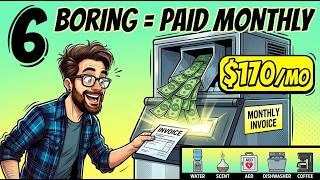
The fourth machine is where the numbers jump. Easy Ice publishes its prices: an undercounter machine starts at $170 a month, a modular machine at $210, and a large modular at $460. Installation, cleaning and repairs are included.
Mark Hangen and John Mahlmeister started Easy Ice in Marquette, Michigan, in the late 2000s. They borrowed the idea from restaurant dishwasher rentals and pointed it at ice. By January 2020 they had more than 25,000 machines in American businesses, and a private equity firm later bought a majority stake. It is not a fluke: equipment finance company Crestmont Capital puts a typical lease on a 500-pound machine at $150 to $250 a month.
Restaurants rent because when the ice machine dies on a Friday night, the bar dies with it. The National Restaurant Association counts more than a million restaurant and foodservice locations, so forty machines would be four thousandths of one percent. At $210 each, forty machines is $8,400 a month.
Costs and margins
- A new 500-pound modular machine runs about $3,800 to $7,000 for the equipment.
- Professional cleaning costs $150 to $300 a visit, twice a year.
- On a $210 modular, you keep roughly $160 to $180 a month before repairs.
- A well-cleaned machine can last ten years or more; poor maintenance can cut that to four to six.
Hire a refrigeration tech and a plumber, because the drain and water line have to be done right, and that is the moat. Health inspectors check ice machines, so confirm your city's rules. Find one bar whose own machine is limping along and make it your first customer. A realistic start is two or three machines in six months, then one or two a month as word spreads.
Machine 5: The Leased Dishwasher and Its Chemicals
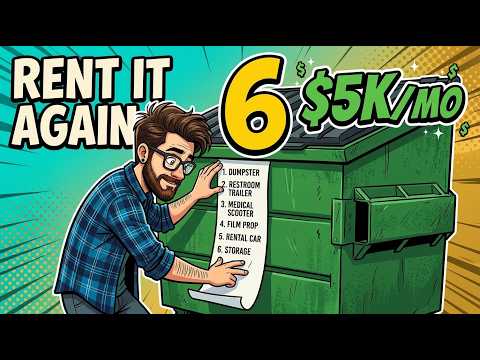
The fifth machine is where the ice idea came from: the commercial dishwasher, which restaurants often rent together with the chemicals that run through it. According to State Industrial Products, lease programs usually run $100 to $400 a month plus chemicals. Southwest Dishwashing Service, a family-owned company in Arlington, Texas, charges about $300 a month for a standard three-door unit, with maintenance and chemicals included for up to 1,500 cycles. Ecolab has offered leases near $94 a month with a minimum chemical order on top.
That is the real trick. The machine sits for years while detergent, sanitizer and rinse aid are delivered again every month. The machine is the doorway, and the chemicals are the river that flows through it.
A used undercounter unit runs $800 to $2,500, and a used door-type unit runs $2,000 to $6,000. You hire a plumber and an electrician, sign a two-year agreement and deliver chemicals on schedule. Most operators already have restaurant customers from another machine, so the second invoice lands at a door they already walk through.
Machine 6: Office Coffee Service, the Best in the Category
The sixth machine sits in almost every breakroom in America. Offices typically spend $7 to $14 per employee per month on coffee service. A 50-person office with a bean-to-cup machine runs $270 to $450 a month, and bigger offices can top $1,000. The machine itself is usually free to the office. Coffee service companies place it at no cost and earn on everything that runs through it: beans, cups, filters and creamer.
A LaunchAdvisor small business guide works out one office: a 40-person office brewing two gallons a day goes through about ten pounds of coffee a week. At a 40 percent margin, that is about $108 a week in gross profit, over $5,500 a year from one breakroom.
Tom Miller started Thomas Miller and Company in 1975 as a side business while working at an engineering firm, and went full time in 1978 with one truck. WHYY profiled the company decades later, still family-run around Philadelphia with eleven full-time staff and the next generation taking over. His model never changed: put the equipment in for free and sell the coffee.
The Census Bureau counts more than eight million business locations with employees in America, so a route of 20 to 30 offices is a sliver too small to see. One industry guide calls thirty accounts a real, forecastable income line, and orders come back every two to four weeks like clockwork.
Getting in
A commercial brewer costs a few hundred dollars, while a bean-to-cup machine runs $4,000 to $12,000. Most operators start with brewers in offices of twenty or more people and upgrade the best accounts. Start with offices that already rent your water cooler: same building, same office manager, same invoice, one more line. Price per head, not per machine, so when the office hires ten more people your invoice grows without a sales call.
A Worked Example: Harry's Stack
The video follows Harry, who runs the front desk at a busy dental practice and opens the mail on the first of every month. His path shows how the machines combine:
- Coolers first: He asked the company on his practice's cooler sticker what a small operator pays for a refurbished unit, then placed four coolers in two offices on his street. By month two that was about $200 a month. By month six he had eighteen coolers, roughly $900 a month before filters.
- The pricing mistake: In month four he nearly quit. He charged a big law office the same $50 as a three-person dental lab, and the law office burned through filters twice as fast. He repriced by headcount, put filter changes on a calendar, and moved new hosts to three-year agreements. His sticky-note rule: price the visit before the machine goes in.
- AEDs in month nine: Five refurbished units at around $1,000 each, placed in two gyms and his family's church, at about $100 a month each. That is $500 a month, and each check takes about ten minutes.
- Coffee in month twelve: Two of his cooler offices said yes to coffee in the same week. He placed a simple brewer in each, delivered beans every two weeks, and the coffee margin passed the cooler fee in the first month.
By month sixteen, with coffee in five offices that already had his water, everything brought in about $2,937 a month after filters, pads and beans. It is not life-changing on day one, but it arrives on the first of every month.
How to Pick Your Machine
Before choosing, run three filters:
- Does the host have to clean or fix this machine today?
- Can you sell a second machine into the same building?
- Does the monthly fee pay back the machine well inside the contract?
Three yeses mean you have found your machine. For a free first step in the next 24 hours, look for the sticker on the next water cooler or ice machine you pass. There is almost always a service company's name and phone number on it. Write it down. If the machine is owned by the business itself, that is one more host without a quiet invoice yet.
Watch the Full Breakdown
If you prefer a visual walkthrough of all six machines, the income numbers and Harry's pricing mistake, watch the full video: 6 BORING Machines That Pay You Every Month (Ice, Water, Office Coffee). Drop a number from one through six in the comments to tell us which machine you would start, and the winner leads the next list.