- Key Takeaways
- The Rule Behind the Order
- Rental 1: Yard Sign Greetings
- Rental 2: Giant Lawn Games
- Rental 3: A Snow Cone Machine
- Rental 4: Baby Gear for Traveling Families
- Rental 5: Propane Patio Heaters
- Rental 6: An Outdoor Movie Screen Package
- Rental 7: A Photo Booth
- Before You Buy Any Rental
- Watch the Full Video Walkthrough
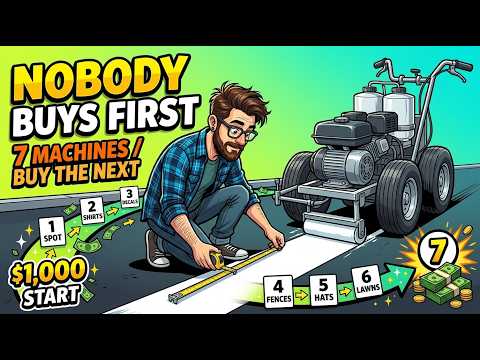
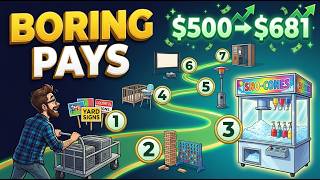
If you lost everything tomorrow and had about five hundred dollars left, which rental business would you buy first? Most people reach for the flashy option they see online. A more practical answer is a sequence of boring rental business ideas, bought in a specific order, where each rental pays for the next. The cheapest rental with the fastest payback goes first, and whatever it earns buys the following one.
This guide walks through seven rentals in buying order: yard sign greetings, giant lawn games, a snow cone machine, baby gear, propane patio heaters, an outdoor movie screen package and a photo booth. For each, you will see what customers already pay, what the gear costs, how many bookings it takes to pay back, and the beginner mistake to avoid. Nothing here is a sure thing, and every rate and price comes from an operator price page, a platform, a retailer or a published data set.
Key Takeaways
- About five hundred dollars covers rental number one and nothing else. Everything after that is bought with rental money, not savings or a loan.
- The order runs from the cheapest, fastest-payback rental (yard signs) to the one that books for the most per night but is out of reach on day one (a photo booth).
- Every rental can earn two ways: direct to families, or as the boring supplier behind a business that already has the customers.
- Each rental has a predictable beginner mistake, and each one has a simple fix.
- A rental does not book itself. Check who already rents it near you, what they charge now, and what could make it fail in your town.
The Rule Behind the Order
The logic is simple. The cheapest rental with the fastest payback goes first, and its income funds the next purchase. As you go, the customers grow too: the sequence starts with a kid's birthday on your own street and ends at weddings, where people already spend real money. The final rental books for the most per night of all seven, but on day one you cannot touch it. That is the whole point of the order.
This is for educational purposes only and is not financial advice. Rates vary by market and local rules differ, so check your city's business license, insurance, sign and propane rules before taking paid bookings. If you want a broader view of this model, see our guide to rental business ideas that make money without doing the work.
Rental 1: Yard Sign Greetings
Yard sign greetings are big plastic letters on stakes that spell out happy birthday, welcome home or congrats grad across a front lawn. It sounds like a craft project, but people already book it every week for birthdays, new babies, graduations and a soldier coming home.
Rental guides put a standard yard greeting at about seventy-five to one hundred twenty-five dollars, with setup, twenty-four hours on the lawn, and pickup. The most common price is right around a hundred dollars.
Two ways to earn: Way one is families on your own side of town. Way two is the boring supplier play: the realtor who wants a welcome home sign on the lawn the day her buyers get the keys, or the school booster club that wants every senior's yard done in one week.
Beginner mistake: pricing it like a yard sign instead of a booking. A ninety-nine dollar price has to cover the design, the drive out, the setup, the drive back, the pickup and the repairs. The fix is to price the whole trip and set a delivery radius from day one.
The numbers: A lean start is three to five greeting sets plus a stork sign and a graduation set, which guides put at about three hundred to eight hundred dollars. Call it five hundred. At around a hundred dollars a booking, that is about five lawns to earn it back. Part-timers report eight to fifteen bookings a month, so by the second month the signs are buying rental number two.
Rental 2: Giant Lawn Games
Giant Jenga and giant Connect Four are the oversized backyard versions of games everyone knows. They are toys, and that is why they rent. Every backyard party, church picnic, brewery trivia night and company cookout needs something for people to do between burgers.
Rental companies charge about thirty-five to sixty-nine dollars per game per day. Way one, you add them to the yard sign customer: same family, same address, same drive. Way two is the supplier behind the brewery or wedding venue that wants something on the lawn every Saturday.
Beginner mistake: no deposit, and nobody counts the pieces, so the tower comes back six blocks short. Operators hold a damage deposit of about fifty to two hundred fifty dollars and count every piece at drop-off and pickup. Do both every time and it stops being a problem.
The numbers: The official giant Jenga runs about one hundred thirty dollars, and a giant Connect Four is seventy to one hundred twenty. Two or three games come to around two hundred to three hundred twenty dollars. Three games at about fifty each is a hundred fifty dollars a party, so two parties pay for them, and that money buys rental number three.
Rental 3: A Snow Cone Machine
The first rental that brings a crowd to you is a commercial shaved ice machine that sits on a folding table. It reads like a summer camp memory, which is exactly why parents rent it.
Party rental shops charge around fifty-five to one hundred dollars a day for one. Columbus is about seventy-five for three hours, and Dallas is about sixty-five a day. Way one is the same backyard party crowd. Way two is the supplier behind the school field day, the church festival and the little league season opener, where people already have the crowd and just want something cold to hand out.
Beginner mistake: the party runs out of ice by two o'clock, because a pound of ice makes only four to six cones. The fix is to put the ice math right in the booking text, one pound for every four to six kids, and to sell the syrup and cups as an add-on.
The numbers: A Paragon Ice Blast runs about three hundred thirty dollars, and their bigger machines are five hundred twenty to six hundred fifty. At around seventy-five dollars a rental, that is four or five parties.
Once you rent three different things, it is time for real insurance. General liability for a small party rental business runs about five hundred to eleven hundred dollars a year.
That cost comes out of the summer money, and the summer money also buys rental number four.
Rental 4: Baby Gear for Traveling Families
Rental four does not go to a party. It goes to a grandparent's house. Cribs, high chairs and strollers are for families who fly in and do not want to haul everything through an airport. The person on the other end of the phone is often the grandparent, who needs a crib in the guest room by Wednesday before Thanksgiving.
BabyQuip, the biggest platform for this, says a basic crib rents for about fifteen to thirty dollars a day, usually with a three-day minimum. One family's review shows a crib and a high chair for eight days came to about two hundred seventeen dollars, delivery included.
Two ways to earn: Way one is families and grandparents in your area, who know your number and book again every holiday. Way two is the supplier behind the vacation rental host, who wants a crib in the listing and does not want to own one.
Beginner mistake: buying a car seat because it rents well, then forgetting about it. Car seats expire, and one that has been in a crash can never be rented again. The fix is to start with cribs and high chairs and write the expiration date on anything that has one.
The numbers: The platform's setup fee is about two hundred dollars, and you keep seventy-eight percent of each booking. A good travel crib costs one hundred to two hundred dollars. After the platform's cut, one crib earns itself back in about eleven nights. One provider told Business Insider she averages around five thousand dollars a month, but that is the very top, not the typical case. Holiday bookings buy rental number five.
Rental 5: Propane Patio Heaters
Rental five only makes money when it is cold outside. These are the tall stainless steel heaters you see on restaurant patios, and a restaurant is exactly the kind of customer who rents them. Party rental shops charge about seventy-five to one hundred dollars per heater, per day.
It is fifth because snow cones and lawn games go quiet in October, right when heaters wake up: fall weddings, tailgates, Christmas parties and a backyard birthday in November. Way one is homeowners hosting outside. Way two is the supplier behind the restaurant or brewery that wants its patio open another two months, and the wedding venue with a cold outdoor ceremony.
Beginner mistake: one tank lasts roughly four to six hours, and weddings run longer, so halfway through the toasts the heaters go out. The fix is a full spare tank for every heater, priced as an add-on.
The numbers: A commercial forty-six thousand BTU heater from Fire Sense runs about one hundred ninety-seven dollars at Home Depot. Four of them is just under eight hundred dollars, and one event with four heaters brings in three hundred to four hundred dollars. Two or three events and they are paid for.
Rental 6: An Outdoor Movie Screen Package
Rental six turns any backyard into a drive-in, and the biggest customers already have a mailing list. The package is a sixteen-foot inflatable screen, a bright projector and a speaker. Outdoor movie companies charge about three hundred to five hundred dollars for a backyard package, and bigger community nights run around eight hundred.
Way one is the backyard birthday, often the same families who booked your yard signs. Way two is the supplier behind the homeowners association, the church youth group, the school, and the apartment manager who needs a resident event every summer. The Foundation for Community Association Research counts about three hundred seventy-three thousand community associations in the country, and a lot of them plan a movie night every summer.
Beginner mistake: starting the movie too early. Even a bright projector looks washed out while the sky still glows. Start thirty to sixty minutes after sunset, and tie the screen down with ropes at all four corners, because a sixteen-foot screen is basically a sail.
The numbers: A sixteen-foot inflatable screen with a blower costs about eighty to one hundred thirty dollars. A bright projector around three thousand three hundred lumens is about six hundred. Screen and projector together come to about seven hundred dollars, plus a speaker you may already own. That is about two movie nights.
Rental 7: A Photo Booth
The last rental books for the most per night of all seven, and on day one it is the one you cannot afford. It is an open-air booth with a camera, lights, a backdrop and a printer that hands people a strip of photos in seconds.
People pay real money for it. Check Cherry, a booking software company, looked at about one hundred eighteen thousand photo booth rentals. The median event was around six hundred eighty-one dollars. Weddings were higher at around eight hundred eighty-six, school proms about six hundred fifty, and corporate events nearly nine hundred. That is more than the entire five hundred dollars this plan started with, for one night. The Knot Worldwide 2026 Real Weddings Study counted about two million weddings in America last year.
Two ways to earn: Way one is weddings, school proms and big birthdays. Way two is the supplier behind the wedding venue, the DJ and the event planner, who already have the couples and just need someone reliable to recommend.
Beginner mistake: buying the trendy gear. The spinning three-sixty video platform looks great online, but the plain open-air booth books for more kinds of events. Start open-air, and spend your effort getting onto the preferred vendor list at two or three local venues.
The numbers: A simple open-air setup starts around two thousand dollars, and most people land between three thousand five hundred and eight thousand once the lights, backdrop and printer are in. At around six hundred eighty dollars a booking, that is about five to twelve events. You would never buy it with five hundred dollars. You buy it with yard signs, lawn games, snow cones, cribs, heaters and movie nights.
Before You Buy Any Rental
A rental does not book itself. You book it. It does not set the price, and it does not make the phone ring. Before buying any rental on this list, check three things:
- Who already rents this near me?
- What are they charging right now?
- What would make it fail in my town?
If all three answers look good, the rental is just inventory for a customer who already exists. For more low-cost starting points, see 6 boring businesses that make money for under $500.
The first step costs nothing: search your town for yard sign rentals, look at three price pages, and text one realtor to ask whether her buyers ever get a welcome home sign. Even if every answer is no, that is useful. You learned what your town actually wants before spending a single dollar.
Watch the Full Video Walkthrough
Want to see the full buying order and the numbers laid out visually? Watch the video 7 BORING Rentals I'd Buy First If I Lost Everything Tomorrow on YouTube. Then tell us in the comments which of the seven you would buy first.