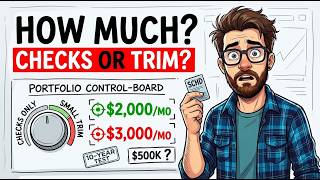
How much money do you need in a dividend portfolio before it pays you $2,000 a month without selling a single share? For the FOREVER Portfolio (SCHD, SCHG, DGRW, VXUS and a 10% DIVO slice), the answer is about $1,042,000 if you live off the checks alone. For $3,000 a month, it is about $1,564,000. That is bigger than most people want to hear, but it is not the whole story. A modelled retiree who put about $872,000 into the same five funds in January 2017 and spent every payment saw the paycheck grow from $2,000 a month to about $4,140 a month, while the shares grew to about $2.5 million.
This article walks through ten checks: what the portfolio costs, what ten years of modelled paychecks looked like, and how long it takes to build. It is a hypothetical model built on published prices and distributions from January 3, 2017 to October 26, 2026. It is not a real account, and it is not financial advice.
Key Takeaways
- Living off the checks alone, the FOREVER Portfolio needs about $1,042,000 for $2,000 a month and about $1,564,000 for $3,000 a month, at a blended payout of about 2.3%.
- With a small yearly trim at Morningstar's 3.9% safe rate, the targets drop to about $615,000 and $923,000.
- A modelled 2017 retiree's paycheck rose from $2,000 to about $4,140 a month in 2025, while consumer prices rose about 34%.
- The paycheck dipped only once, by about 7% in 2020, and it rose in 2022 while the shares fell almost 23%.
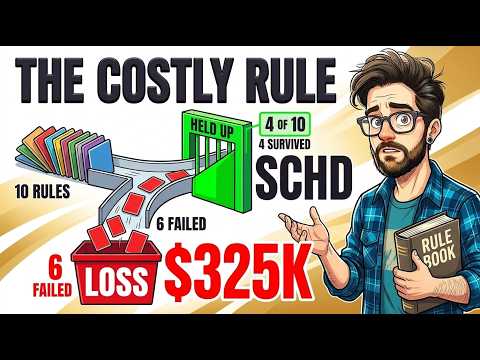
- SCHD alone paid the bigger check, but the FOREVER mix left about $556,000 more behind.
- For most people starting from zero, a $2,000 to $3,000 monthly dividend paycheck is a 20 to 30 year project, and the monthly deposit matters more than the fund picks.
The Portfolio and Its Weights
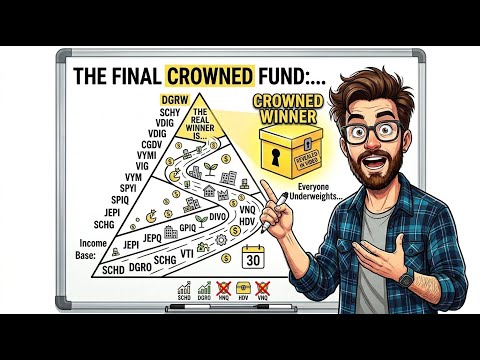
The original FOREVER Portfolio picks were SCHD as the anchor, SCHG as the growth engine, DGRW as the dividend raiser, VXUS as the passport to the rest of the world, and DIVO as a 10% monthly booster. To size the portfolio, this model uses these weights: 40% SCHD, 20% SCHG, 15% DGRW, 15% VXUS and 10% DIVO. They are not the only reasonable weights. If you use your own, the method still works once you swap in your own blended payout rate.
Here is what each fund pays, using the latest published figures:
- SCHD (Schwab U.S. Dividend Equity): about 3% over the last twelve months, about 103 companies, 0.06% a year in fees.
- SCHG (Schwab U.S. Large Cap Growth): about 0.4%, about 189 companies, 0.04% in fees. It is a growth fund, so its job is the share price, not the check.
- DGRW (WisdomTree U.S. Quality Dividend Growth): about 1.2%, 0.28% in fees.
- VXUS (Vanguard Total International Stock): about 2.4%, close to 9,000 companies outside the United States, 0.05% in fees.
- DIVO (Amplify CWP Enhanced Dividend Income): a published distribution rate of about 4.9%, about 34 companies, 0.56% in fees.
Blended by weight, the whole portfolio pays about 2.3% a year.
How Much You Need to Live Off Dividends
Check 1: Living off the checks alone
The math is short. $2,000 a month is $24,000 a year, and $24,000 divided by 2.3% is about $1,042,000. $3,000 a month is $36,000 a year, which takes about $1,564,000.
You may have seen videos claiming $300,000 is all you need to live off dividends. At this portfolio's payout rate, $300,000 pays about $6,900 a year, or about $575 a month. You can get more from $300,000 by buying much higher-paying funds, but that is a different portfolio and it usually gives up growth. For scale, the average Social Security check for a retired worker was about $2,089 a month in September, so $2,000 a month from this portfolio is almost exactly a second Social Security check.
Check 2: The checks plus a small trim
Retirement research usually uses a looser rule: spend a fixed share of the starting value each year, from dividends plus a few shares sold, and raise the amount with inflation. William Bengen published the four percent rule in 1994, and in his 2025 book, A Richer Retirement, he raised his own figure to 4.7%. Morningstar's latest retirement income report puts a safe starting rate at 3.9% for fixed, inflation-adjusted spending lasting 30 years with high confidence. It also found that people willing to cut spending in bad years could start closer to 6%.
At Morningstar's 3.9%, $2,000 a month needs about $615,000 and $3,000 a month needs about $923,000. At Bengen's 4.7%, it is about $511,000 and about $766,000.
The whole difference comes down to one decision: are you willing to sell a few shares? FOREVER means you never sell a fund, not that you never sell a share. Trimming a little SCHG after a great year is like collecting a second paycheck from the seat that hardly pays a first one. For a related look at when dividends can replace a salary, see Dividend Crossover Point: When Passive Income Replaces Your Salary.
Check 3: Dividend ETF vs high yield savings
A common objection is that a savings account pays the same as a 3% dividend fund. Today the number is right: Capital One's 360 Performance Savings paid 3.20% in a report dated October 23, and at that rate $2,000 a month takes only $750,000. But savings rates float. That account launched at 1.9% in 2019, sat at 0.40% through 2021, peaked at 4.35% in December 2023, and has fallen since. The average U.S. savings account pays about 0.38% according to the FDIC.
The same $750,000 at 0.40% in 2021 would have paid $3,000 for the whole year, or $250 a month. In the model, $100,000 put into SCHD on January 3, 2017 paid about $3,070 the first year, about $5,135 in 2021, and about $7,175 last year, and the shares are worth about $242,000 today. The $100,000 in savings is still $100,000. A savings account cannot fall, which is its virtue, so the plan uses both: one to two years of spending in cash, and everything else in the five funds.
Ten Years of Modelled Paychecks
Check 4: A retiree who started in 2017
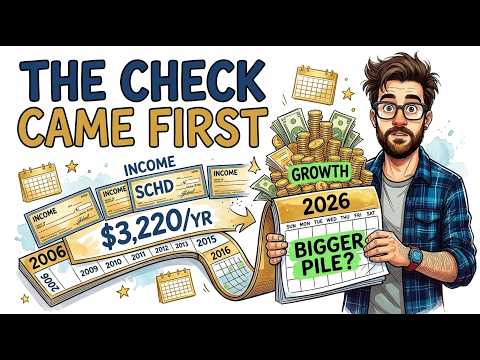
The model invests $871,754 on January 3, 2017, chosen so the first year pays exactly $24,000. There is no rebalancing, nothing reinvested and nothing added, and every payment is spent. Here is the yearly income:
- 2017: $24,000
- 2018: about $26,965
- 2019: about $34,042
- 2020: about $31,550
- 2021: about $36,585
- 2022: about $37,850
- 2023: about $39,620
- 2024: about $43,614
- 2025: about $49,686, or about $4,140 a month
The 2025 figure includes an extra year-end DIVO payment, so do not count on that jump every year. Consumer prices rose about 34% from the end of 2016 to the end of 2025, so $2,000 a month had to become about $2,688 a month to keep up. The paycheck roughly doubled instead, and the shares are worth about $2.5 million today, almost three times what went in. These were very good years for stocks, especially the growth stocks inside SCHG. A retiree who started right before the dot-com bust would have a harder story, which is why the research rates in Check 2 are much lower.
Check 5: The years that hurt
On March 23, 2020, the retiree's shares were worth about $840,000, below the $872,000 they started with. The paycheck dipped that year from about $34,000 to about $31,500, roughly 7%. DIVO paid a big one-time extra in 2019 that did not repeat, and VXUS paid about a quarter less per share. SCHD did not cut. It paid more every single year of the test.
The second stretch was 2022. The shares fell from about $1,720,000 at the end of 2021 to about $1,330,000 on October 12, 2022, a drop of almost 23% in under ten months, with SCHG taking the worst of it. Yet the paycheck rose from about $36,600 to about $37,850. The share price tells you what the portfolio would sell for today, while the payments tell you what it is doing for you. The retiree who waited is sitting on about $2.5 million today.
Check 6: The lumpy months and DIVO's distribution rate
SCHD, SCHG and VXUS pay quarterly, while DGRW and DIVO pay monthly. Over the last twelve months, eight months paid between about $735 and about $1,100. March paid about $8,550, June about $9,220, September about $9,050 and December about $15,500. The fix is one cash account: every payment goes in, and you pay yourself the same amount on the first of each month.
DIVO earns its payout from dividends on about 34 large companies plus covered call options. Amplify's own Section 19A notices estimated that about 68% of one September 2024 payment and about 92% of one January 2026 payment came from return of capital. These are estimates, and the final tax split arrives on the year-end form. That is why it is a distribution rate, not a dividend yield, and why DIVO stays at 10%. Covered calls can also cap gains when stocks run hard. For more on DIVO in a retirement income plan, see 3-Bucket Dividend Strategy: DIVO, NOBL & SCHD for Retirement.
Check 7: Income tilt vs SCHD alone vs the FOREVER mix
Would tilting toward income give a bigger paycheck from a smaller pile? The model compares three retirees, each sized to start at about $2,000 a month. The income tilt is 50% SCHD, 5% SCHG, 10% DGRW, 15% VXUS and 20% DIVO. It pays about 3% today, so $2,000 a month takes about $808,000. SCHD alone also pays about 3%, so it takes about $804,000.
Last year the SCHD-only retiree collected about $57,670 (about $4,800 a month), the income tilt about $57,565, and the FOREVER mix about $49,686. SCHD's dividend grew about 10.5% a year on average over ten years. But the shares are worth about $1,943,000 for SCHD alone, about $1,942,000 for the income tilt and about $2,499,000 for the FOREVER mix, about $556,000 more. The FOREVER mix needed about $68,000 more on day one.
The paycheck gap was about $665 a month, or about $8,000 a year, roughly a third of one percent of a $2.5 million portfolio. Trimming that from SCHG would match the SCHD-only paycheck and still leave more than $500,000 ahead. The caveat is that this decade was great for growth stocks. In a decade where growth lags, SCHD alone or the income tilt could end up worth more. For how the two Schwab funds work together, see SCHD and SCHG: The 70/30 Core Satellite Strategy Explained.
Getting There: Build Time, Fees and Taxes
Check 8: How long it takes to build
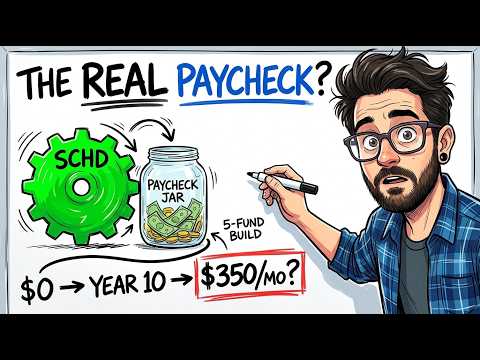
A second model put $1,000 a month into the portfolio from January 2017, with every payment reinvested. That is 118 deposits, or $118,000 of your own money. It is worth about $243,000 today and pays about $5,650 a year, about $470 a month. About $125,000 of the balance is growth and reinvested payouts.
Looking forward, these are plain compound math at 6% and 8% a year total return, before inflation and taxes. They are assumptions, not forecasts. Starting from zero at $1,000 a month:
- About $1,042,000 takes about 31 years at 6% and about 26.5 years at 8%.
- About $1,564,000 takes about 37 years at 6% and about 31 years at 8%.
- At $2,000 a month, the first target takes about 22 years at 6% and about 19 at 8%, and the second takes about 27 years at 6% and about 23.5 at 8%.
- The trim route target of $615,000 takes about 24 years at $1,000 a month and 6%, or about 16 years at $2,000 a month.
Someone starting with the $243,000 and still adding $1,000 a month is about 17.5 years from $1 million at 6% and about 14 years at 8%. The deposit moves the finish line by a decade, while the fund picks move it by a few years. For the early grind, read The $50K Wall: Why Savers Quit Right Before Compounding Works.
Check 9: Fees and taxes
Weighted by the seats, the five funds cost about 0.14% a year, about $1,400 on $1 million. For 2026, the 0% rate on qualified dividends applies up to $49,450 of taxable income for a single filer and up to $98,900 for a married couple filing jointly. The 15% rate runs above that, up to $545,500 for a single filer. Savings interest is taxed like wages.
Not every dollar is a qualified dividend, though. DIVO's option income and any return of capital are treated differently, and part of the international fund's payout can be too. Part of a Social Security check can also become taxable as other income rises. DIVO often fits better in a retirement account, while SCHD can sit comfortably in a taxable one. Have a tax professional check the details.
Check 10: The plan I would use
Households headed by someone 65 or older spent about $61,432 in 2024, about $5,120 a month. $3,000 a month from the portfolio plus an average Social Security check of about $2,089 comes to about $5,089, almost exactly that average. The rules:
- Pick the target, $2,000 or $3,000 a month.
- Pick the route: checks only, or checks plus a small trim. Live on the checks and trim SCHG only in good years.
- Keep one to two years of spending in a savings account.
- Send every payment to the cash account and pay yourself one fixed amount on the first of each month.
- Keep DIVO at 10%.
- Once a year, trim SCHG if it has grown far past 20%, but skip the trim in a year like 2022.
- Never sell SCHD to fund spending in a bad year.
Watch the Full Video Walkthrough
Want to see the charts and year-by-year numbers? Watch the full video, The FOREVER Portfolio: How Much It Takes to Get Paid $2,000 or $3,000 a Month, for a visual walkthrough of all ten checks. To see how the five funds were chosen, watch the companion video, The FOREVER Portfolio: 5 Dividend ETFs I Will Never Sell.
Disclaimer: This is not financial advice. Results are a hypothetical model from one start date, and different dates give different results. The growth rates used for the build timeline are assumptions, not forecasts. DIVO's distribution rate is not a dividend yield, and some of its payments have been estimated as return of capital. Dividends can be cut. Past performance does not guarantee future results.