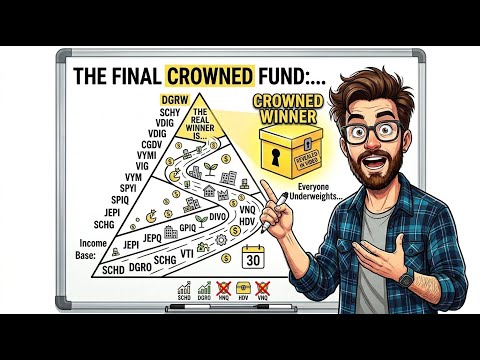
What does investing $25,000 a year in dividend ETFs for 10 years actually build? This model puts $25,000 into each of seven dividend funds on the first trading day of every January from 2016 to 2025, $250,000 in total per fund, with VOO (the S&P 500) as the yardstick. Every dividend is reinvested. Then, in October 2026, the test asks one question: if you switched to spending, what would each fund pay you?
The twist is that the fund with the biggest paycheck built the smallest account, and the fund with the smallest paycheck built the biggest. The details below show why the best dividend ETF for income isn't automatically the best one to own.
These are model portfolios built on published closing prices and each fund's own distribution history. No real account was used. This is educational content, not financial advice, and past performance does not guarantee future results.
Key Takeaways
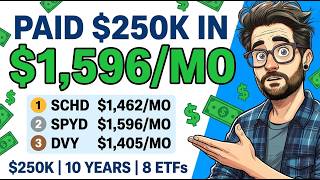
- SPYD built the biggest paycheck, about $1,596 a month, but the smallest account, about $422,000.
- VOO paid the least, about $592 a month, yet built the biggest account at about $677,000.
- SCHD finished second on the paycheck (about $1,462 a month) with a $545,000 account, the fastest payout growth (2.5x since 2016) and no calendar-year cut.
- The highest starting yield did not build the best mix of paycheck and account. Payout growth did the heavy lifting.
- The S&P 500 plus the 4% rule would have produced more cash than any dividend paycheck, but it requires selling shares, including in a crash.
How the 10-Year Test Works
The test uses $25,000 a year because it is realistic for a couple in their peak saving years, and ten deposits add up to a round $250,000. If you invest less, scale everything down: $5,000 a year is exactly one fifth of every number here. A $10,000-a-year version of the SCHD plan would pay about $585 a month today, and a $5,000-a-year version about $292.
The eight funds are the ones dividend savers argue about: SCHD (Schwab U.S. Dividend Equity), VIG (Vanguard Dividend Appreciation), VYM (Vanguard High Dividend Yield), DGRO (iShares Core Dividend Growth), NOBL (ProShares S&P 500 Dividend Aristocrats), SPYD (SPDR Portfolio S&P 500 High Dividend), DVY (iShares Select Dividend) and VOO.
Three numbers are tracked for each fund: the paycheck (every share bought, multiplied by what each share paid over the last twelve months), the account value as of October 2, 2026 (all reinvested dividends included), and the growth in payout per share over the decade.
Real investors deposit through good markets and bad, and so does this test. The January 2016 deposit went in before a quick early-2016 drop. The January 2020 deposit went in six weeks before the COVID crash. The January 2022 deposit went in before the worst year for markets in more than a decade.
Starting Yields and Costs
Measured by 2015 dividends, DVY yielded about 3.5%, VYM about 3.3%, SCHD about 3%, DGRO about 2.5%, VIG about 2.4%, the S&P 500 about 2.1% and NOBL about 2%. SPYD was only a few months old but was built to be the highest yielder.
Expense ratios matter too: VOO 0.03%, VIG and VYM 0.04%, SCHD 0.06%, SPYD 0.07%, DGRO 0.08%, NOBL 0.35% and DVY 0.38%. On $250,000, that is roughly the difference between $75 a year and almost $1,000.
Results From Smallest Paycheck to Biggest
8. VOO: Smallest Paycheck, Biggest Account
The VOO deposits pay about $7,110 a year, or about $592 a month, a yield under 3% on the $250,000 deposited. But the account is worth about $677,000, a gain of about $427,000 and more than $100,000 ahead of every dividend fund. Its payout per share grew about 71% from 2016 to 2025 and dipped once, about 5%, in 2020. The first $25,000 deposit is now worth about $114,600, the best of any fund, but pays only about $1,203 a year.
7. VIG: Patient Growth
VIG pays about $8,674 a year, about $723 a month, the smallest paycheck of any dividend fund, with a yield today of about 1.5%. The account is worth about $559,000, third biggest overall. Its payout per share rose about 95% with no down year, and its account fell about 32% in the 2020 crash, the smallest drop of any fund. The first deposit is worth about $93,850 and pays about $1,456 a year.
6. NOBL: Stable, but Expensive
NOBL pays about $9,474 a year (about $789 a month) on an account worth about $439,000, the second smallest. Its payout per share rose about 94%, but dipped about 6% in 2022, because the fund's own check depends on which companies it holds and when they pay. With a 0.35% cost, almost six times SCHD's, it lands in the bottom half on both measures. The first deposit is worth about $70,200 and pays about $1,517 a year, and the January 2020 deposit is worth only about $41,500.
5. DGRO: Best Account Among Dividend Funds
DGRO pays about $11,095 a year (about $925 a month), and built about $563,000, the biggest account of any dividend fund and a gain of about $313,000. Its payout per share rose about 121%, the second fastest, with no down year. In 2020 its account fell about 35%, similar to the market. Its first deposit is worth about $96,100 and pays about $1,895 a year, roughly 7.5% on the original $25,000. For a closer look at this fund, see DGRO vs SCHD: The Dividend Growth Stall Investors Need to See.
4. VYM: Broad and Steady
VYM pays about $12,326 a year (about $1,027 a month), the first paycheck above $1,000 a month, with an account of about $525,000. It owns more than 500 dividend payers at a 0.04% cost, never cut its payout per share for a full year, but grew the slowest of the four never-cut funds, about 59%. It overlaps heavily with SCHD, so owning both means owning many of the same companies twice. Its first deposit is worth about $82,100 and pays about $1,928 a year, about 7.7% on cost.
3. DVY: Income First, More Bumps
DVY pays about $16,856 a year (about $1,405 a month) on an account of about $483,000. Its payout per share grew about 91% and dipped about 2% in 2020, but its account fell about 42% from February to March 2020. Its 0.38% cost is the highest in the test, roughly $1,800 a year on an account this size. Over the decade it paid about $82,100 in dividends, third most, yet reinvested shares grew slowly. Its first deposit is worth about $75,100 and pays about $2,623 a year, about 10.5% on cost.
2. SCHD: The Only Fund That Didn't Lose a Race
SCHD's ten deposits pay about $17,546 a year, about $1,462 a month, with an account of about $545,000, a gain of almost $295,000 and the fourth biggest. Its payout per share grew about 150% from 2016 to 2025, the fastest in the test, with no calendar-year cut across COVID and the 2022 rate shock. Its account fell about 33% in 2020, less than the S&P 500 and far less than the other two big paychecks.
The honest caution is 2026: SCHD's payout has grown only about 2% over the last twelve months. Even so, nothing in this test grew its paycheck faster over ten years.
The first $25,000 deposit, with dividends reinvested, is worth about $92,100 and pays about $2,967 a year, almost 12% on the original money. The yearly dividend total climbed from about $835 in 2016 to about $5,893 in 2020, about $9,806 in 2022 and about $16,618 in 2025.
1. SPYD: Biggest Paycheck, Smallest Account
SPYD pays about $19,148 a year, about $1,596 a month, more than 7.5% on the $250,000 deposited. It holds the 80 highest-yielding S&P 500 stocks, equally weighted, yields about 4.5% today and costs 0.07%. But the account is only about $422,000, about $123,000 less than SCHD from identical deposits. Its payout per share grew only about 29%, the slowest of all eight, and fell in four of the last eight years: about 7% in 2018, about 6.5% in 2020, about 5% in 2021 and about 8% in 2023. In spring 2020 its account fell about 46%, the worst drop in the test.
On the oldest money, SPYD's first deposit is worth about $64,400 and pays about $2,923 a year, while SCHD's first deposit pays about $2,967. And the January 2020 deposit is worth about $39,800 in SPYD versus about $53,700 in SCHD, a gap of roughly $14,000 from the same week.
The Verdict: Three Rankings, One Consistent Fund
The paycheck ranking is SPYD, SCHD, DVY, with VOO last. The account ranking is VOO ($677,000), DGRO ($563,000), VIG ($559,000), SCHD ($545,000), with SPYD last. The paycheck-growth ranking is SCHD (2.5x), DGRO (about 2.2x), with SPYD last (about 1.3x).
Dividing each paycheck by the $250,000 deposited gives yield on cost: SPYD about 7.7%, SCHD about 7%, DVY about 6.7%, VYM about 4.9%, DGRO about 4.4%, NOBL about 3.8%, VIG about 3.5% and VOO about 2.8%. SCHD yields about 3.2% on today's price but pays about 7% on the deposits, and that gap is ten years of payout growth.
SPYD paid out the most dividends in total (about $97,900), followed by SCHD (about $87,600), DVY (about $82,100) and VOO (about $40,300). Reinvesting into a fund whose price does not grow does not compound like reinvesting into one whose price does.
As a simple assumption only, if each fund kept growing its payout at its own five-year pace, SCHD's paycheck would pass SPYD's in under two years. In five years SCHD's deposits would pay about $2,265 a month against about $1,914 for SPYD. SCHD's slow 2026 makes that less certain: at 2% growth, SPYD keeps the lead for a long time.
Year 11: Living on Dividends vs the 4% Rule
If you live on dividends, the SCHD deposits pay about $1,462 a month without selling a share. VOO's dividends alone pay only about $592 a month. But using the 4% rule on VOO's $677,000 account, you would take about $27,089 a year, about $2,257 a month, more than any dividend fund pays. In pure dollars, the S&P 500 plus the 4% rule wins.
The difference shows up in a bad year. The VOO retiree must sell shares every year, including when an account has fallen about a third in a few weeks, as in 2020. The SCHD retiree collects checks, and in 2020 SCHD's payout per share actually rose. Both approaches are valid; the dividend paycheck buys comfort for people who can't sell in a crash.
A middle path is half SCHD and half VOO. That would have built about $611,000, paying about $1,027 a month in dividends, with half the money in a fund that never cut its payout. For the SCHD saver collecting about $17,500 a year, a cushion of roughly six months of income, about $8,800, in cash or Treasury bills smooths out quarterly payments. To see how the point where income replaces a salary works, read Dividend Crossover Point: When Passive Income Replaces Your Salary.
What the Ten Deposits Teach
- Starting yield is a poor guide. DVY started with the highest yield and finished third; SCHD started in the middle and finished second with the fastest growth.
- Payout growth is the engine. SCHD and DGRO, the two fastest growers, built the best paycheck-plus-account combinations on the dividend side.
- Cuts are expensive. SPYD had the most cuts and the smallest account.
- Taxes matter. In a taxable account, reinvested dividends are taxed in the year they're paid, so high-yield funds like SPYD or DVY create bigger tax bills while you build. Inside an IRA or 401(k), that doesn't apply.
- Costs add up. NOBL and DVY, the two most expensive funds, both finished in the bottom half on account value.
- The habit mattered. Every account fell about a third or more in spring 2020, and deposits that kept going in at crisis prices are a big reason every fund ended well ahead of the money put in.
The takeaway from the model is a SCHD core with VOO alongside for growth, deciding in year eleven whether to spend VOO's dividends or sell a little each year, rather than chasing the highest yield. For a related plan, see 4-ETF Dividend Ladder: How VIG, DGRO, SCHD & DIVO Pay $613/Month.
Watch the Full Video Walkthrough
Want to see every chart, the first-deposit comparisons and the 2020 crash results side by side? Watch the full video, I Invested $25,000 a Year in Dividend ETFs for 10 Years. The natural next step is Stop Saving for $1.16 Million in SCHD - Half That Got to $3,000 a Month, which shows how big the account really needs to be for a $3,000 monthly paycheck. Which fund would you have picked on day one? Tell us in the comments.
Every figure comes from a model built on published prices and payouts over one particular ten-year window. The next ten years will be different. This is not financial advice; do your own research.