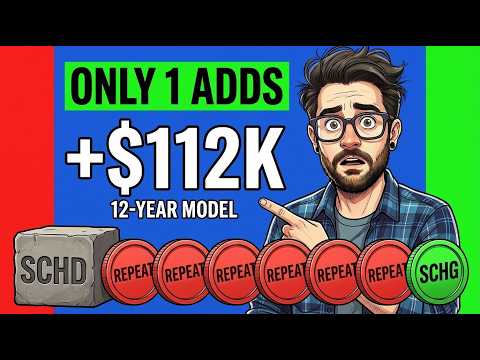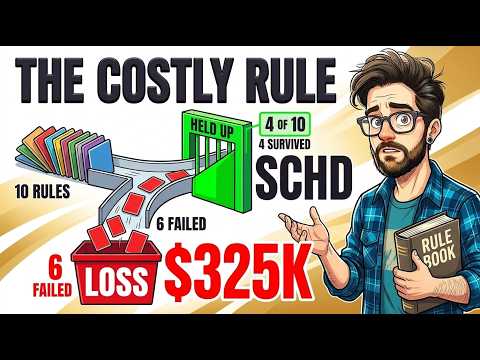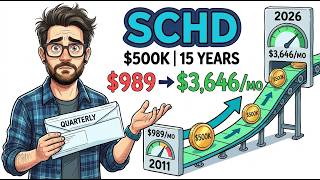
Put $500,000 into three of the most popular dividend funds in America today and it pays about $989 a month. Not $4,000. Not $2,000. Under $1,000. Yet the same $500,000, invested on December 30, 2011, paid about $1,277 a month in its first year, and by 2025 those same shares were paying about $3,646 a month without a single added dollar. Living off dividends looks very different depending on when you start.
This article walks through a 15-year model of what living on dividend income is really like: every quarterly payout from 2012 to September 2026, tested against inflation, three market crashes and a rival growth strategy. It is educational, not financial advice, and past performance does not guarantee future results.
Key Takeaways
- $500,000 spread across VIG, VYM and SCHD pays about $11,870 a year today (a blended 2.37% yield), or about $989 a month.
- The 2011 retiree's shares paid about $44,786 over the last 12 months, almost 9% yield on cost, but that yield cannot be bought today.
- Dividends arrive in four lumps (March, June, September, December), so a cash cushion of about six months of income is essential.
- The paycheck never fell in a calendar year, yet about one quarter in six paid less than the year before, and the account lost a third of its value in under six weeks in 2020.
- A VOO retiree using the 4% rule ended roughly $900,000 richer, while the dividend retiree never had to sell a share.
How This Dividend Portfolio Model Works
This is a model built on published data, not a real brokerage account. Every payout comes from each fund's own distribution history, checked across several sources, and every price is a published closing price. The model invests $500,000 on December 30, 2011, split evenly across three funds:
- VIG: Vanguard's Dividend Appreciation fund, the dividend growers.
- VYM: Vanguard's High Dividend Yield fund, the broad high yielders.
- SCHD: the Schwab U.S. Dividend Equity fund, which had launched just two months earlier.
The rule is simple: spend every dividend, never sell a share, never add a dollar. That is what living off dividends means to most people, and it is the cleanest way to see what the checks really do.
Chapter One: The Dividend Paycheck Is Smaller Than You Think
Truth 1: $500,000 pays less than you expect
Over the last twelve months, VIG paid about 1.5% of its price, VYM about 2.35% and SCHD about 3.2%. Blended evenly, that is about 2.37%, or about $11,870 a year and $989 a month.
Compare that with the old 4% rule, which allows $20,000 a year from $500,000. Morningstar's latest research puts the safe starting rate at 3.9%, about $1,625 a month. Living on these three funds' dividends alone pays about $600 a month less than a cautious withdrawal plan.
Fund by fund, $500,000 in VIG alone pays about $646 a month, in VYM alone about $979, and in SCHD alone about $1,342. Even the highest yielder pays less than the average Social Security check.
Flip the question around. To collect a given paycheck today from this three-fund mix, you would need about $1,011,000 for $2,000 a month, about $1,516,000 for $3,000 a month and about $2,527,000 for $5,000 a month. Prices are high, so yields are low, and the math is harder for anyone starting now than for those who started years ago.
Truth 2: The yield you can buy is not the yield the early retiree got
In 2012, the first year, the portfolio paid $15,323, about 3.1% of $500,000. Over the last twelve months, those same shares paid about $44,786, almost 9% on the original $500,000. A new buyer today gets 2.37%, about a quarter of the early retiree's paycheck.
Same funds. A four-to-one gap in the check. The only difference is fourteen years of waiting.
Yield on cost is real, but you cannot buy it. The only way to reach a 9% yield on cost is to buy at 3% and wait a decade or more. If you start today, the number that matters is 2.37%.
Truth 3: The checks come four times a year
All three funds pay quarterly, in the same months: March, June, September and December. The 2011 retiree did not receive about $3,700 a month; they received about $11,000 four times a year and nothing in the other eight months. Over the last six quarters the checks ran between about $10,600 and $11,500.
In late September 2026, the three funds paid about $11,190, roughly $3,730 a month for October through December, with nothing more until the second half of December. The fix is boring but effective: hold the checks in a cash account or Treasury bill fund and pay yourself the same amount every month.
Truth 4: Living on dividends is not the 4% rule
The 4% rule lets you spend about 4% of your starting balance, raise it with inflation and sell shares when dividends fall short. Living on dividends means spending only what the funds pay. At a 2.37% yield, collecting $20,000 a year from these funds alone would take about $842,000, not $500,000. On $500,000, dividends cover about $11,870 and the other $8,130 would have to come from selling shares, which is a different plan with different risks, especially in a crash.
One quiet advantage: most of what these funds pay is qualified dividends, taxed at lower rates than wages. In 2026 the standard deduction for a married couple is $32,200, so a couple whose only income is $15,000 to $20,000 of qualified dividends would owe no federal income tax. Add Social Security or a pension and that changes.
Chapter Two: The Dividend Paycheck Moves
Truth 5: Even in good years, some checks are smaller
Every calendar year from 2013 to 2025 paid more than the year before. But out of 55 quarters that can be compared with the same quarter a year earlier, nine paid less, roughly one in six. The worst was the third quarter of 2016, about 13% below the prior year, when VIG's share fell from about $1,351 to $1,199, VYM's from about $1,944 to $1,779 and SCHD's from about $1,903 to $1,553. Yet the full year of 2016 still paid about 4.5% more than 2015.
More recently, the second quarter of 2025 came in about 8% lower, and the first quarter of 2026 about 1% lower. In the second quarter of 2024 the three checks totaled about $11,758; a year later, about $10,799, which is $959 less in a year when the full-year paycheck grew about 4%. Plan for the quarter, not just the year.
Truth 6: In 2026 the paycheck is growing slower than prices
From 2012 to 2022 income grew about 9% a year on average. Then it slowed: about 6% in 2023, about 7% in 2024 and about 4% in 2025. Through September 2026 the portfolio has paid about 3.2% more than in the same three quarters of 2025, while consumer prices rose about 3.3% through August. For the first time in this model, the paycheck is roughly flat in real terms.
The main reason is SCHD, whose payout is up less than 1% through three quarters of 2026, after growing about 10.5% a year over the last decade. VIG is up about 3% and VYM almost 7%. Judging a fund by a single year is risky, and SCHD remains the foundation of this portfolio.
Truth 7: Inflation is the cut you never see announced
From December 2011 to December 2025, consumer prices rose about 43.5%. The first-year paycheck of $15,323 would have needed to be about $21,986 in 2025 just to buy the same goods. The actual 2025 income was about $43,750, almost three times the starting paycheck and about double what inflation required.
It stayed ahead the whole way: in 2015 keeping up required about $16,000 and the portfolio paid about $20,761; in 2020, about $17,700 versus about $30,600; in 2025, about $22,000 versus about $43,750.
The growth was uneven. SCHD's share grew from about $5,157 in 2012 to about $20,008 in 2025, almost four times. VIG's grew from about $4,300 to about $10,850, about 2.5 times. VYM's grew from about $5,866 to about $12,890, a bit more than double. The fund with the biggest check today is not always the one that protects you best; growth in the check is what beats inflation.
Truth 8: Your account can lose a third in six weeks while the checks keep coming
On February 12, 2020, the shares were worth about $1,121,000. By March 23, five and a half weeks later, they were worth about $748,000, a paper loss of $373,000. Yet the 2020 paycheck rose about 9.5% and 2021's rose about 10.5% more. In the second quarter of 2020 the three checks totaled about $7,727 versus about $6,424 a year earlier, a raise of about 20% in the scariest quarter of the decade.
In 2022 the account fell about 19% from January to the end of September while the paycheck rose about 10% that year. In spring 2025 the tariff drop took the account down almost 15% in seven weeks, and the yearly paycheck still grew. Because this retiree lived on the checks, they never had to sell.
One honest caveat: the model starts after the financial crisis. In 2008 and 2009 dividend checks did fall, and a mixed dividend portfolio's income dropped by about a fifth before recovering. In this 15-year window they held; they do not always.
Truth 9: For two years, cash paid more than your dividends
In 2023 and 2024 a Treasury bill fund beat all three dividend funds. SGOV, the iShares 0-3 month Treasury fund, paid about 4.85% in 2023 and about 5.1% in 2024. At the end of 2023, VIG yielded under 2%, VYM about 3.1% and SCHD about 3.5%, a blend of about 2.8%. A new retiree with $500,000 in T-bills would have collected about $24,000 a year versus about $14,000 from the dividend funds.
It did not last. SGOV's 30-day SEC yield is about 3.7% as of October 1, and the Federal Reserve moved its target range in September 2026 to between 3.75% and 4%. Cash is the right home for your next six months of bills, but its interest is set by the Fed and does not grow on its own.
Chapter Three: What Living on Dividends Actually Takes
Truth 10: A bigger check is a check that moves more
Many investors reach for JEPI, the J.P. Morgan Equity Premium Income fund. J.P. Morgan's fact sheet puts its 12-month rolling dividend yield at about 8% as of the end of August, or about $3,350 a month on $500,000, more than three times the dividend trio. But the income comes from selling options and moves with the market. In 2026, JEPI's monthly check on $500,000 ranged from about $3,042 to about $3,990. In 2022 it paid about $6.36 per share; by 2024, about $4.22, roughly a third less with no announced cut.
JEPI did its job in 2022: while the S&P 500 fell about 18%, JEPI's price fell about 14% and, counting its checks, it lost only about 4%. A middle path is 80% in the three-fund mix and 20% in JEPI, which would pay about $1,461 a month today, half again more than the trio alone.
Truth 11: Growth funds beat you on total wealth
Picture a second retiree who put the same $500,000 into VOO on the same day and used the 4% rule: $20,000 in year one, raised with inflation, selling shares when dividends fell short. Through September 2026 they withdrew about $341,600 and their account is worth about $2,825,000. The dividend retiree spent about $429,600 and holds about $1,918,000. So the dividend retiree got about $88,000 more to spend, while the growth retiree ended about $900,000 richer.
A third retiree who lived only on VOO's dividends started at about $12,341 in 2012, reached about $30,756 by 2025, spent about $325,000 in total and holds about $3,079,000. On spending, dividend funds came first, the 4% rule second and VOO dividends last; on final wealth the order reversed exactly. The S&P 500 is dominated by fast-growing companies that pay small dividends, and owning dividend funds meant owning less of that growth. What the dividend retiree bought was never selling a share, in 2020 or 2022. Both approaches are valid.
Truth 12: The start matters more than anything after it
The 2011 retiree spent about $429,600 and holds shares worth about $1,918,000, almost four times what they cost: VIG about $717,000, SCHD about $625,000 and VYM about $576,000. But they started two years after the bottom of the worst crash in a generation, before one of the best decades in American stock history. Someone who retired in 2007 watched their account cut in half before their first full year was over. You cannot pick your start date; you control how much you start with, how big a cushion you keep and whether you sit still when the account drops.
What Living Off Dividends Takes in Practice
- Start with the number you can buy today: 2.37%, not 9%. If payouts grew 5% a year (an assumption, slower than this model's history), $11,870 a year would become about $19,300 in ten years, about $1,611 a month.
- Build a cushion: keep at least three months of spending in cash or Treasury bills, and about half a year of income to cover a bad stretch: about $22,400 for the 2011 retiree, about $5,935 for a new retiree on $500,000.
- Own the growers: VIG's checks more than doubled and SCHD's nearly quadrupled.
- Expect the paycheck to move: light quarters and drawdowns are the plan working as it always has.
If you want a related approach, see The Dividend Bridge: Retire 10 Years Before Social Security and DGRO vs SCHD: The Dividend Growth Stall Investors Need to See.
Watch the Full Video
Want the numbers walked through visually? Watch the full video, 12 BRUTAL Truths About Living Off a $500,000 Dividend Portfolio, and for the year-by-year story, continue with I Lived on Dividends for 12 Years. Every figure comes from a model built on published prices and payouts over one particular 15-year window. This is not personal financial advice; do your own research.