- Key Takeaways
- Why Boring Machines Make Better Businesses Than Exciting Ones
- The Seven Self-Service Machines: Cheapest to Most Expensive
- Who Actually Owns the ATM at Your Corner Store
- The Surcharge Toll, Explained
- Which Machine Should You Place First?
- Watch the Full Breakdown
- Frequently Asked Questions
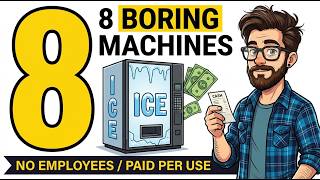
Most people searching for passive income picture rental property or a dividend portfolio. Few picture a gray box bolted to a wall outside a gas station. Yet across the country, ordinary people are quietly collecting fees from machines they bought once, placed once, and now barely think about. No staff to manage, no inventory to chase daily, no storefront lease — just a self-service machine, a host location, and a steady stream of small transactions that add up. This article breaks down eight of those boring machines: seven buy-once, self-service units climbed from cheapest to most expensive, plus the one machine almost everyone misunderstands — the corner-store cash machine, and the surcharge toll that actually pays its owner.
Key Takeaways
- Self-service machines generate revenue from repeat small transactions rather than one-time sales, which is what makes them behave like passive income rather than a job.
- The high upfront capital on machines like an ice vending machine or a crypto ATM is the exact barrier that keeps competition low — the cost itself is the moat.
- Corner-store cash machines (ATMs) are almost never bank-owned; a private individual typically fills the machine with their own cash and negotiates a placement deal with the store.
- That private ATM owner earns through a surcharge toll — a fee charged on every withdrawal, similar in structure to a toll or a lease payment.
- Placement location and the quiet deal with the host business matter more to profitability than the machine itself.
- These machines are best evaluated cheapest-to-most-expensive, since entry cost determines how quickly an owner can reach breakeven and scale to a second or third unit.
Why Boring Machines Make Better Businesses Than Exciting Ones
There is a reason boring business ideas keep resurfacing in passive income discussions: they are unglamorous enough that most people scroll past them, which thins out the competition. A self-service dog wash bay or a water refill station does not photograph well for social media, and it does not come with a founder story. But it also does not require hiring, scheduling, or managing anyone. The owner's main job is choosing the right location, signing the right agreement with that location, and performing light maintenance.
This is the throughline across every boring vending machine business and self-service unit worth considering in 2026: the machine does the selling, the location does the marketing, and the owner collects the difference. It is the same logic behind laundromats and car washes, just scaled down to a single footprint. Readers who want the fuller breakdown of this category can see how it plays out across 6 boring cash-flow machines bought with $30,000 and no special skills.
The Seven Self-Service Machines: Cheapest to Most Expensive
The seven machines in this list are ranked deliberately from the lowest entry cost to the highest, because capital requirement is the first filter most buyers apply. Someone testing the model with a few thousand dollars faces a very different decision than someone ready to deploy tens of thousands into a single unit.
Water Refill Stations
A water refill station sits at the low end of the capital range, making it a common entry point for first-time machine owners. It requires a plumbing connection and a host site with steady foot traffic — grocery store entrances and strip malls are typical placements. Margins come from the markup on filtered water sold by the gallon, repeated across hundreds of small transactions a month.
Self-Service Dog Wash Bays
A self-service dog wash bay appeals to pet owners who want a clean, climbate-controlled space without paying full-service grooming prices. The unit typically needs a dedicated bay with water and drain access, making it slightly more capital-intensive than a simple vending unit, but the price per wash and the repeat-customer nature of pet ownership support consistent revenue.
Ice Vending Machines
The ice vending machine is the pivot point of this list — the example used to illustrate why capital intimidation is itself the advantage. An ice vending machine placed outside a gas station or convenience store runs around the clock, produces its own product on-site, and serves a customer base that needs bagged ice regardless of season in many regions. Because the machine, plumbing, and electrical setup cost more than a basic vending unit, fewer operators attempt it — which is exactly why the owners who do commit tend to face less local competition.
Crypto ATMs
A crypto ATM allows customers to buy or sell cryptocurrency for cash inside a physical retail location, usually hosted inside a corner store or smoke shop. The owner earns a transaction fee on every trade, and because crypto ATMs are less common than traditional ATMs, the fee structure tends to be more favorable to the machine's owner. Hosting agreements and compliance requirements add complexity compared to a vending machine, which is part of why this sits higher on the cost-and-effort scale.
Traditional Vending Machines and Higher-Ticket Units
Rounding out the list are higher-ticket vending and kiosk machines — the kind that command a bigger upfront check but also a bigger potential per-unit payout. As the video notes, the most expensive machine on the list is not necessarily the one that pays the most; placement and the deal with the host location can matter more than the sticker price of the hardware itself. For a broader menu of lower-cost entry points, readers can also compare against 6 boring businesses that make money for under $500 to start.
Who Actually Owns the ATM at Your Corner Store
Here is the detail most people get wrong: the cash machine inside a corner store, bar, or smoke shop is almost never owned or operated by a bank. In the overwhelming majority of cases, it is owned by a private individual or small operator who purchased the machine, filled it with their own cash, and negotiated a placement agreement directly with the store owner.
That cash machine at your corner store is almost never owned by a bank. A regular person owns it, filled it with their own cash, cut a quiet deal with the store, and gets paid every single time somebody hits withdraw.
This is the core of the ATM business model for independent operators: find a host location with enough foot traffic and cash demand, negotiate a revenue split or flat placement fee with the owner, and load the machine with enough currency to meet withdrawal demand. The bank's only role, in most independent ATM setups, is processing the transaction on the back end — not owning the physical machine or the cash inside it.
The Surcharge Toll, Explained
Every time someone withdraws cash from one of these independently owned machines, they pay a surcharge fee — typically a few dollars per transaction. That fee goes to the machine's owner, not the bank. The script frames this plainly: every withdrawal is a car, and whoever owns the box owns the toll.
The comparison to a toll booth is deliberate. A toll operator does not need to do anything new each time a car passes through; the infrastructure is already in place, and the fee is collected automatically on each use. The person who explains this dynamic in the original breakdown negotiates cell tower leases for a living — a business built on the same principle: a piece of infrastructure placed once, generating a recurring fee from everyone who uses it, with the owner doing very little day-to-day work. A corner-store ATM, scaled down to a gray box, runs on the identical logic.
This is also why the quiet deal with the store matters more than the machine itself. The hardware is commoditized — most independent ATM machines use similar components and similar withdrawal fee structures. What separates a profitable placement from a mediocre one is the agreement: how much foot traffic the location generates, how the revenue is split between the machine owner and the store, and whether the store has leverage to demand a larger cut once it sees how much cash is moving through the box.
Which Machine Should You Place First?
For someone evaluating these eight boring machines, the sequencing matters. Starting with a lower-capital option — a water refill station or a basic vending unit — lets a first-time owner learn how to negotiate a host location agreement, manage restocking or maintenance, and read foot-traffic patterns before committing larger sums to an ice vending machine, a crypto ATM, or an independent cash machine. Those with more starting capital and an existing read on local foot traffic may skip straight to the machine with the best combination of fee size and transaction frequency — which, per the surcharge toll logic above, is not automatically the most expensive machine on the list.
Anyone weighing a jump into a higher-ticket machine should also look at how a similarly structured $20,000 machine model pencils out in 5 boring $20K cash-flow machines that pay you every month, since the host-location math is nearly identical across categories.
Watch the Full Breakdown
This article summarizes the key mechanics, but the original video walks through the full cheapest-to-biggest ranking of all seven machines with cost estimates and placement examples, plus the complete explanation of the ATM surcharge toll from someone who negotiates cell tower leases professionally. For the visual walkthrough of how each machine is sourced, placed, and negotiated, watch the full video on YouTube.
Frequently Asked Questions
Is an ATM business actually profitable for an independent owner?
It can be, provided the host location generates enough withdrawal volume to cover the surcharge fee split and the cost of keeping the machine loaded with cash. Profitability depends far more on the location and the agreement with the store than on the machine itself.
How much does an ice vending machine cost to buy and install?
Ice vending machines sit toward the higher end of this list's capital range because they require plumbing, electrical hookups, and a water filtration system in addition to the unit itself. The higher cost is also the reason fewer operators attempt it, which reduces local competition for those who do.
Do crypto ATM owners need a special license?
Requirements vary by state and country, and crypto ATM operators typically need to register as a money services business and follow compliance and reporting rules. Always check local and federal requirements before purchasing a machine.
What is a surcharge fee on an ATM?
A surcharge fee is the charge an ATM owner adds on top of any fee the customer's own bank may charge, collected every time someone completes a withdrawal. On an independently owned machine, this surcharge is the owner's primary source of revenue.
Which boring machine is the best one to start with?
Lower-capital options like a water refill station or a basic vending machine are typically the easiest entry point, letting a new owner learn how to negotiate host-location deals before committing to higher-ticket machines like an ice vending unit or an independent ATM.